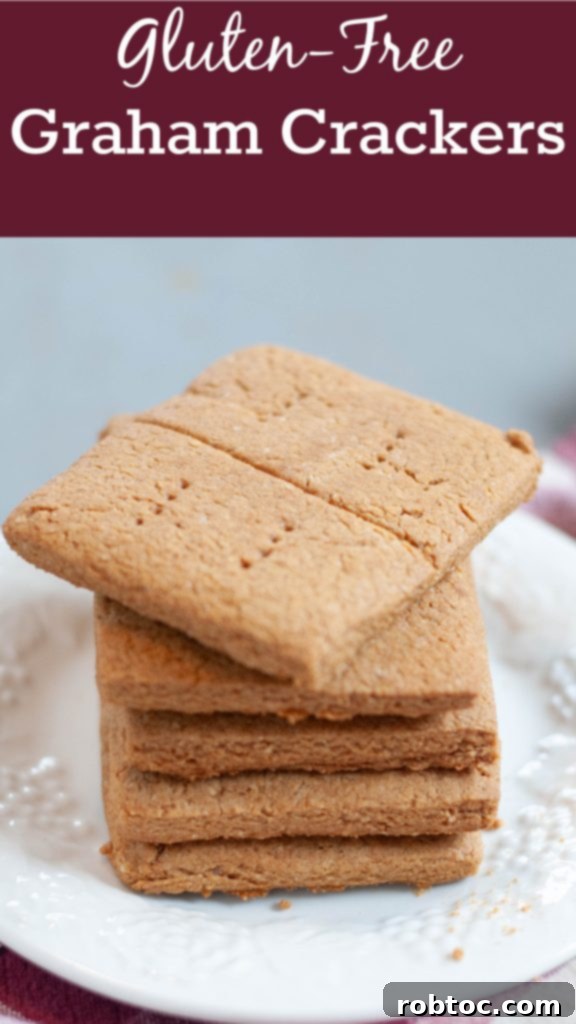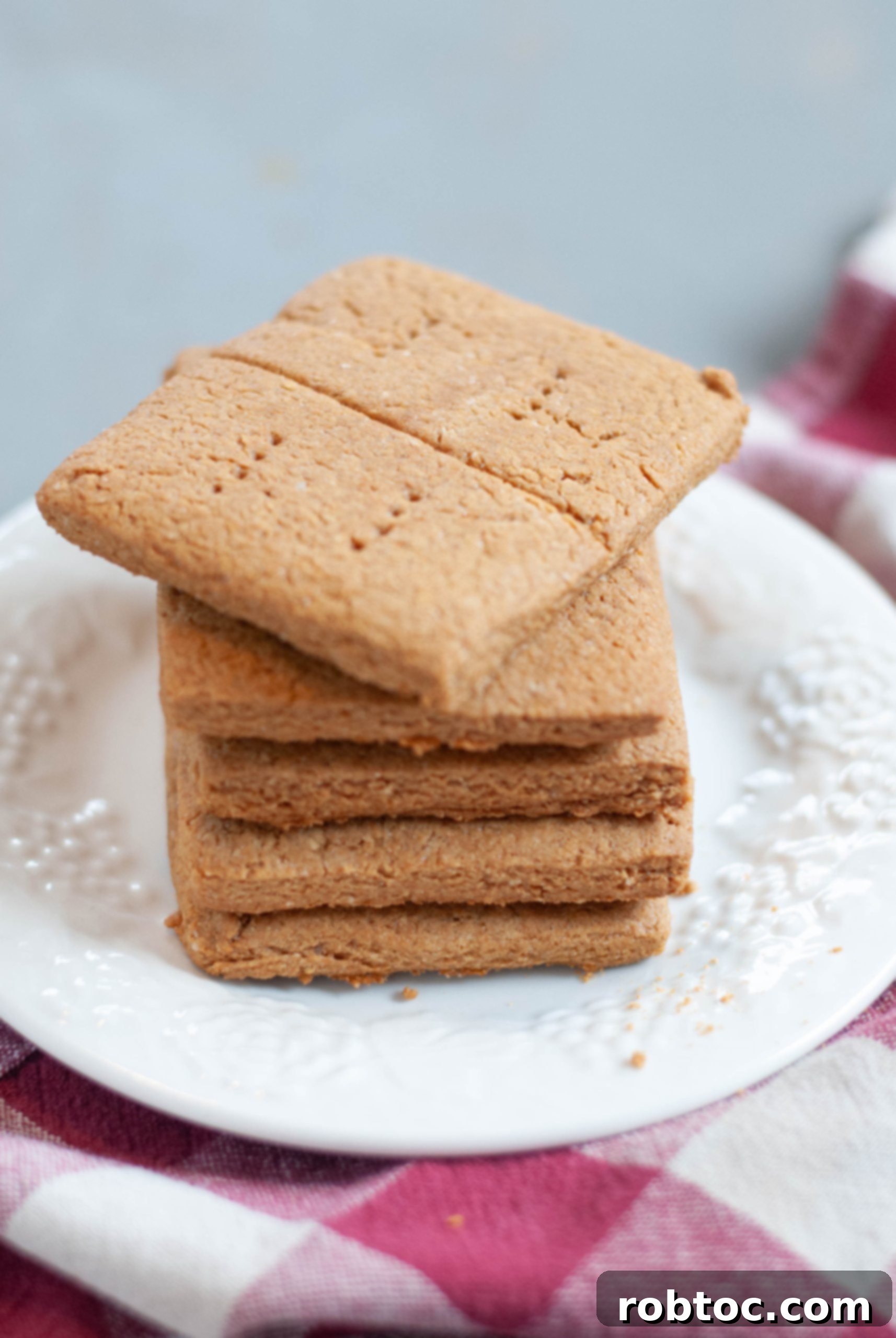
Homemade Gluten-Free Graham Crackers: The Ultimate Guide for S’mores, Pie Crusts & Allergy-Friendly Snacking
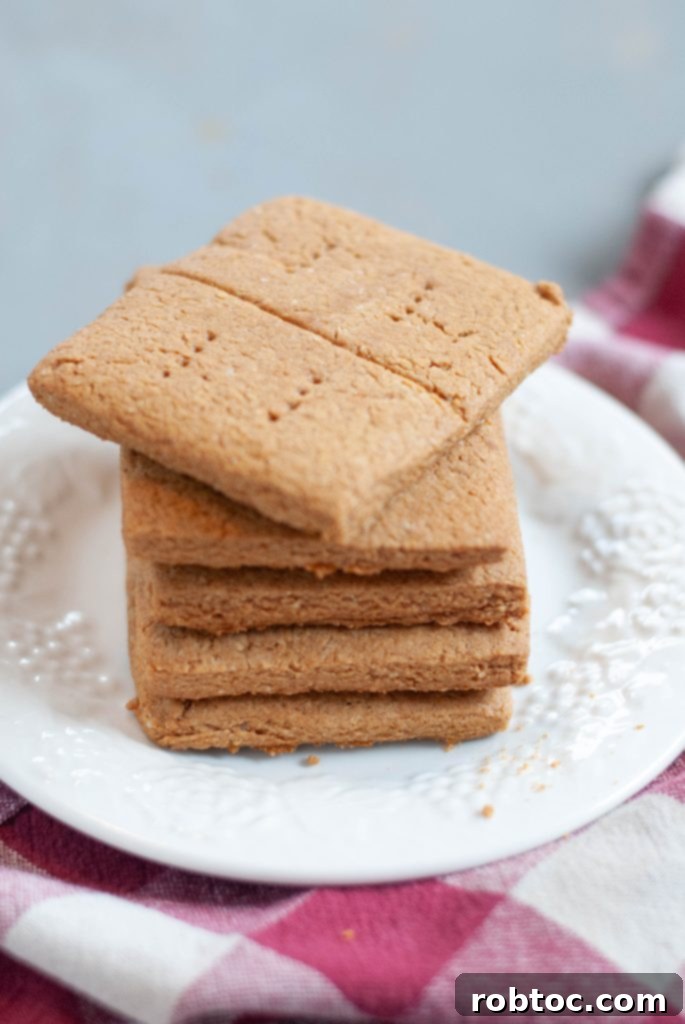
Discover the joy of homemade graham crackers without any gluten, dairy, peanuts, or tree nuts! This simple recipe yields perfectly tender-crisp crackers that are incredibly versatile. Whether you love dunking them in milk, crafting gooey s’mores, or building a delicious pie crust, these homemade treats are far superior to most store-bought options. Skip the expensive, often tiny, and hard-to-find commercial versions and create your own with ease. This recipe is as straightforward as making sugar cookies: just stir, shape, and bake! Plus, with a soy-free option, these crackers cater to a wide range of dietary needs, ensuring everyone can enjoy this classic snack.
This post contains affiliate links, meaning if you make a purchase through these links, I may earn a small commission at no extra cost to you.
Why These Homemade Gluten-Free Graham Crackers Are Exceptional
When embarking on the quest for the perfect homemade gluten-free graham cracker, I meticulously researched existing recipes. Many relied solely on generic all-purpose gluten-free flour blends, often resulting in a bland flavor profile. My recipe distinguishes itself by incorporating a thoughtful blend that includes a crucial ingredient: a touch of oat flour. Traditional graham crackers derive their distinctive, wholesome taste from graham flour, a type of whole wheat flour. Since gluten-free diets exclude wheat, oat flour serves as an excellent substitute, effectively mimicking that desired whole-grain essence and adding a nuanced depth of flavor that plain gluten-free flour simply cannot achieve.
Beyond the oat flour, the addition of rich molasses plays a pivotal role. Not only does it contribute to the crackers’ beautiful golden-brown hue, but it also imparts a unique, slightly caramel-like sweetness and helps achieve that satisfyingly crispy texture you expect from a classic graham cracker. Before going gluten-free, my absolute favorite commercial graham crackers were Nabisco Honey Grahams. With that nostalgic taste in mind, I deliberately included honey in this recipe to infuse that naturally sweet, beloved flavor that evokes childhood memories.
Another significant improvement over many gluten-free graham cracker recipes lies in the choice of sweetener. While many recipes opt for white sugar, I’ve found that using brown sugar makes a remarkable difference. Brown sugar’s inherent moisture helps to keep the crackers from drying out, leading to a more tender crisp rather than a brittle, crumbly snap. This thoughtful inclusion provides a slight flexibility that prevents the entire cracker from disintegrating when bitten into, especially when making s’mores – a common frustration with many gluten-free alternatives. The result is a cracker that holds its shape beautifully while offering an enjoyable bite.
What’s more, you won’t need any specialized equipment like a stand mixer for this recipe. It’s designed for simplicity and accessibility, meaning you can easily prepare this delightful dough entirely by hand, making it a perfect baking project for anyone, regardless of their kitchen setup!
Essential Ingredients for Your Gluten-Free Graham Crackers
To create these delectable gluten-free graham crackers, gather the following ingredients:
- An all-purpose gluten-free flour blend that already contains xanthan gum (or be prepared to add it separately).
- Certified gluten-free oat flour (ensure it’s certified to avoid cross-contamination if you have celiac disease).
- Baking powder
- Baking soda
- Salt
- Brown sugar, preferably light brown sugar for optimal flavor and moisture.
- Honey, for that authentic sweet graham taste.
- Butter-flavored shortening sticks, which enhance the richness and texture.
- Molasses, specifically unsulphured, for deep color and flavor.
- Pure vanilla extract
- One large egg
- Water, as needed, to achieve the perfect dough consistency.
Making Your Own Oat Flour: A Simple & Cost-Effective Option
Absolutely! There’s no need to purchase pre-made oat flour if you have certified gluten-free oats on hand. Making your own is incredibly simple and can save you money while ensuring freshness. I routinely take my certified old-fashioned oats and process them in my high-powered blender (I use a Blendtec, but any robust blender will work). Simply pulse the oats until they transform into a fine, soft flour. This quick step allows you to control the fineness of your flour and guarantees that your oat flour is as fresh as possible, contributing to the overall quality and flavor of your graham crackers.
Essential Tools for Your Graham Cracker Baking Adventure
Gathering the right tools beforehand will make the baking process smooth and enjoyable. Here’s what you’ll need:
- A large mixing bowl for combining your dry and wet ingredients.
- A sturdy large mixing spoon, as this recipe can be done entirely by hand.
- Accurate measuring cups and spoons to ensure precise ingredient ratios.
- Parchment paper or a silicone baking mat, essential for rolling out the dough and preventing sticking.
- A rimmed cookie sheet (you’ll likely need two) to bake your crackers evenly.
- A rectangular cookie cutter, a ruler and knife, or a pizza cutter for shaping your crackers into uniform rectangles.
- A reliable rolling pin to achieve an even thickness for consistent baking.
- A fork for scoring the crackers, giving them that classic, perforated look.
- A spatula for transferring the baked crackers once cooled.
Step-by-Step Guide: How to Craft Perfect Gluten-Free Graham Crackers
Making these gluten-free graham crackers is a rewarding process, yielding delicious results. Follow these steps carefully for the best outcome:
- Preheat Your Oven: Start by preheating your oven to 350°F (175°C). This ensures the oven is at the correct temperature when your dough is ready.
- Combine Ingredients: In your large mixing bowl, accurately measure and stir together all the dry ingredients until well combined. Next, pour in your wet ingredients. Stir vigorously to combine everything into a cohesive dough. The dough should feel similar to a sugar cookie dough batter – soft and pliable. If it seems too dry or isn’t coming together, you can gradually add 1 to 2 tablespoons more water, mixing thoroughly after each addition. I often find it helpful to knead the dough a bit by hand at the end to ensure all ingredients are fully incorporated and the dough is smooth.
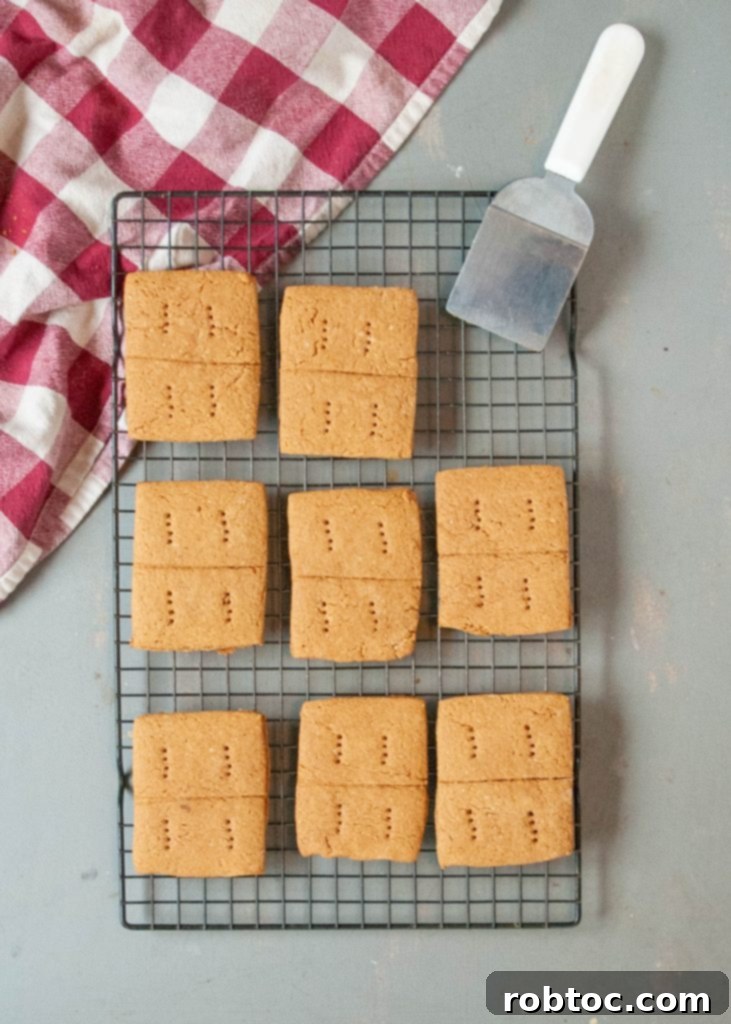
- Shape the Dough: Place your prepared dough onto a piece of parchment paper or a silicone baking mat. Using your rolling pin, roll the dough evenly to approximately 1/4 inch thick. Aim for consistent thickness across the entire sheet of dough for even baking. Once rolled, use your preferred tool – a rectangular cookie cutter, a ruler and knife, or a pizza cutter – to cut the dough into your desired size of rectangles. Carefully arrange the cut rectangles on the silicone mat, ensuring each cracker has a small space around it (they shouldn’t be touching). Transfer the entire silicone mat, with the shaped crackers, onto a rimmed cookie sheet. (You will likely need two cookie sheets to fit all the dough). If you plan to break your crackers in half after baking, use a pizza cutter to make a slight indentation down the middle of each cracker – don’t cut all the way through, just halfway, so they snap cleanly once baked. Finally, for that iconic graham cracker aesthetic, gently score each cracker with a fork a few times on each side.
- Bake to Golden Perfection: Place the cookie sheets in your preheated oven and bake for 18-20 minutes. The crackers are done when their edges begin to turn a light golden brown and they feel firm to the touch. Baking time can vary slightly depending on your oven, so keep an eye on them.
- Cool and Crisp: Once baked, remove the cookie sheets from the oven. Resist the urge to move the crackers immediately; instead, leave them on the hot cookie sheet for an additional five minutes. This residual heat helps them set and contributes to their crispness. After five minutes, use a spatula to carefully transfer the crackers to a wire cooling rack to finish cooling completely. As they cool, the crackers will continue to crisp up, achieving that perfect tender-crisp texture.
- Store and Enjoy: These homemade gluten-free graham crackers are incredibly versatile! Enjoy them plain as a wholesome snack, dunk them in your favorite milk, use them to construct epic s’mores, or incorporate them into a delicious pie crust recipe. To maintain their freshness, store the cooled crackers at room temperature in an airtight container for up to 5 days. For longer storage, they can be frozen in an airtight container for up to two months. Simply thaw them at room temperature when you’re ready to enjoy them again.
*A note on shaping: While some bakers choose to roll the dough into one large rectangle and then merely score where the crackers will be broken, I’ve found that shaping them into individual rectangles upfront yields superior results. This method allows the heat to circulate more directly around each cracker, resulting in more consistent color and crispness on all edges. You also avoid the common issue of the middle crackers being less done or having an uneven snap when trying to break them from a single large sheet. I would only recommend the ‘large rectangle and score’ method if your sole intention is to immediately crush the entire batch for a pie crust, where uniformity isn’t as critical.
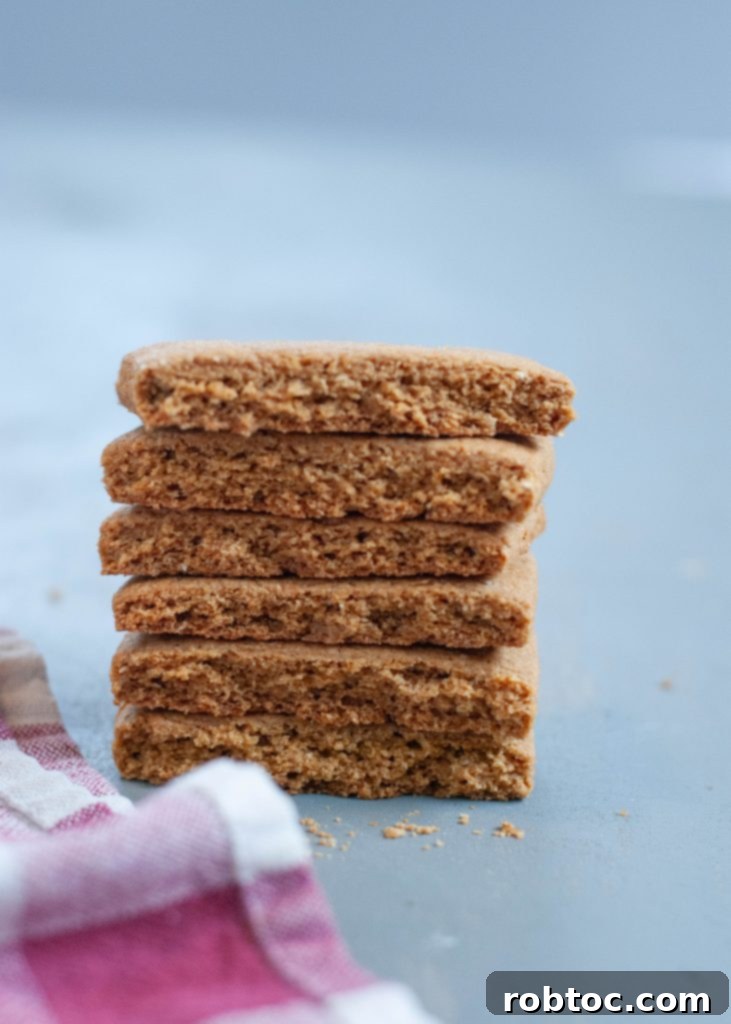
Choosing the Right Molasses for Your Graham Crackers
For this recipe, the type of molasses you use matters for achieving the authentic graham cracker flavor and color. I personally recommend Grandma’s Original Unsulphured Molasses or Brer Rabbit Unsulphured Molasses. The key here is “unsulphured,” which simply means the molasses has not been treated with sulfur dioxide during processing. Unsulphured molasses has a milder, sweeter, and cleaner flavor profile, making it ideal for baking where its taste is meant to complement other ingredients, rather than overpower them. Any brand of unsulphured molasses should work beautifully in this recipe, contributing to the distinct, rich taste and golden-brown appearance of your homemade graham crackers.
Selecting the Best Gluten-Free Flour Blend
The choice of gluten-free flour blend can significantly impact the texture and outcome of your graham crackers. To keep this recipe accessible and budget-friendly, I often use Walmart’s Great Value All Purpose Gluten-Free Flour, and I highly recommend it for its consistent results in this recipe. While you are welcome to experiment with other blends, be aware that different flour compositions can affect the final texture and moisture content of your crackers. For optimal results and if you choose to experiment, I suggest sticking to high-quality all-purpose gluten-free blends that primarily consist of a combination of rice flour, potato starch, and tapioca starch, such as those offered by King Arthur Flour. It’s also crucial that your chosen blend either already contains xanthan gum or that you add the specified amount separately, as xanthan gum is vital for providing structure and elasticity in gluten-free baking.
Choosing the Ideal Shortening
For these graham crackers, I prefer to use Crisco buttery sticks. The “butter flavored” aspect adds an extra layer of richness and depth to the crackers that plain shortening doesn’t offer, enhancing the overall taste without requiring actual butter (which is important for a dairy-free recipe). If you need a soy-free option, you can easily substitute the buttery shortening with palm shortening. Palm shortening is an excellent alternative that maintains the desired texture and crispness while adhering to soy-free dietary requirements.
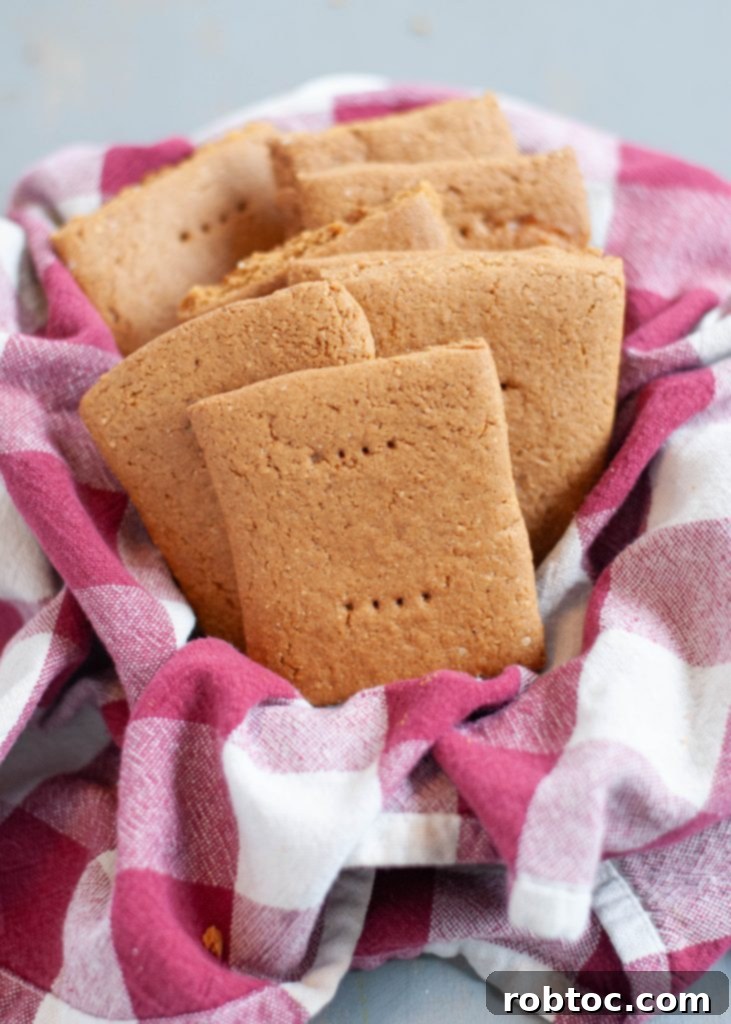
Transforming Your Graham Crackers into Irresistible Pie Crusts
Absolutely! Using these homemade graham crackers for pie crusts (often called cookie crusts) is one of my favorite applications. In fact, I often find them a million times easier to prepare and significantly more flavorful than traditional pastry crusts. The tender-crisp texture and distinct sweetness of these crackers create an ideal foundation for a wide variety of fillings. Here’s how to easily transform your freshly baked gluten-free graham crackers into a perfect pie crust:
- Measure the Crackers: Begin by weighing out 6.5 ounces of your cooled graham crackers. Precision here ensures a consistent crust.
- Process into Crumbs: Place the measured crackers into a food processor and pulse until they form a fine, uniform crumb. Alternatively, for a no-fuss method, place the crackers in a sealed zip-top bag and crush them thoroughly with a rolling pin until you achieve fine crumbs. Pour the crumbs into a medium-sized bowl.
- Combine with Fat and Sugar: Melt 1/3 cup of butter (or your preferred vegan butter substitute for a dairy-free crust) and add it to the graham cracker crumbs. Stir well until all the crumbs are moistened. Then, add 1/2 tablespoon of sugar and mix thoroughly to combine.
- Press and Bake: Firmly press the mixture into a 9-inch pie tin, ensuring it’s evenly distributed across the bottom and up the sides. Bake the crust in a 350°F (175°C) oven for 8-10 minutes. This step helps to set the crust and deepen its flavor. Allow the baked crust to cool completely before adding your favorite pie filling.
*These graham cracker crusts are also fantastic for cheesecakes! Simply swap the pie tin for a springform pan. Depending on the size of your springform pan and how high you prefer your crust sides, you might consider doubling the recipe to ensure ample crust. The robust flavor and texture of these homemade crumbs truly elevate any dessert.
You can use these versatile graham cracker crumbs in an array of delightful recipes, including:
- Strawberry Jell-O Pie
- S’mores Brownie Bars
- S’mores Parfait Cups
- Pumpkin Mousse Pie
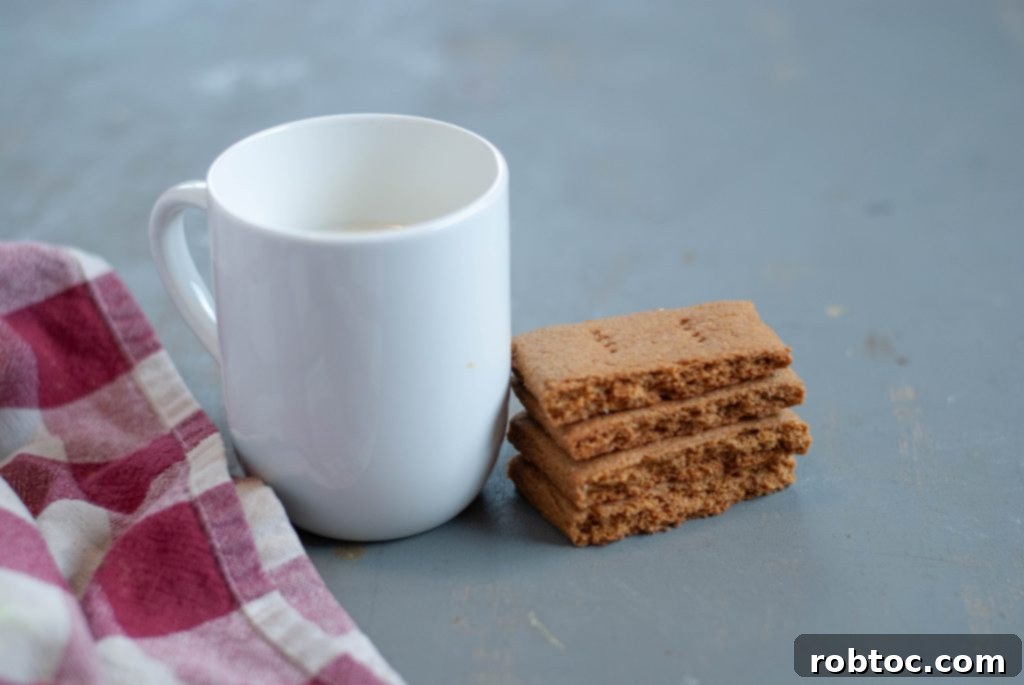
Navigating Store-Bought Gluten-Free Graham Cracker Options
While making your own gluten-free graham crackers from scratch is incredibly rewarding and often superior, there are certainly moments when convenience calls. Whether it’s a last-minute dessert craving or a busy schedule, sometimes heading to the store is the only option. Over the years, I’ve identified four reliable brands that offer gluten-free graham crackers, although they each have their pros and cons compared to homemade:
- Kinnickinnick S’moreables: Known for their sturdy texture, often a good choice for s’mores.
- Pamela’s Honey Grahams: A popular option with a distinct honey flavor.
- Partake Classic Grahams: Often praised for their allergen-friendly qualities, catering to multiple restrictions.
- Schar’s Honeygrams: These are our family’s go-to store-bought choice. They are readily available at major retailers like Walmart and offer a pleasant taste. However, I must confess, their small size for s’mores is a minor annoyance!
Despite the availability of these brands, store-bought gluten-free graham crackers often come with a few drawbacks: they can be considerably more expensive, their shapes are sometimes inconveniently small, and the texture doesn’t always live up to the tender crispness of a fresh homemade batch. This is precisely why investing a little time in making your own is such a worthwhile endeavor.
Customizing Your Graham Crackers: Cinnamon and Sugar Variation
While I personally lean towards the plain, classic graham cracker for its versatility in pie crusts and s’mores, many people adore the cinnamon variety offered by traditional gluten-filled brands like Nabisco. If you’re looking to replicate this beloved flavor, it’s quite simple to do with this recipe. To infuse a warm, spiced note into your crackers, you’ll want to add 1 teaspoon of ground cinnamon directly into the dry ingredient mixture when you’re preparing the dough. For an extra layer of flavor and a beautiful sugary crunch, prepare a topping consisting of 1/2 cup sugar mixed with 1 and 1/2 teaspoons of ground cinnamon. Once your dough is shaped into rectangles and laid out on the cookie sheet, generously sprinkle this cinnamon-sugar mixture over the top of each cracker before baking. Then, proceed with the baking instructions as originally directed. The result will be a delightfully aromatic and subtly spiced graham cracker perfect for snacking or a cinnamon-infused s’more experience.
Exploring Egg-Free Options for a Fully Vegan Graham Cracker
This recipe is thoughtfully crafted to be gluten-free, dairy-free, peanut-free, and tree nut-free, with an additional soy-free option available by swapping the shortening. For those seeking a fully vegan graham cracker, the next logical step would be to eliminate the egg. While I have not personally tested this recipe with an egg substitute, my best educated guess would be to try using one Ener-G egg replacer, prepared according to package directions, in place of the single egg. If this substitution proves successful, it would make these delicious graham crackers not only gluten-free and dairy-free but entirely vegan! If you do experiment with an egg-free version and find success, please consider leaving a comment below. Your feedback would be invaluable to other readers looking to adapt this recipe for their specific dietary needs.
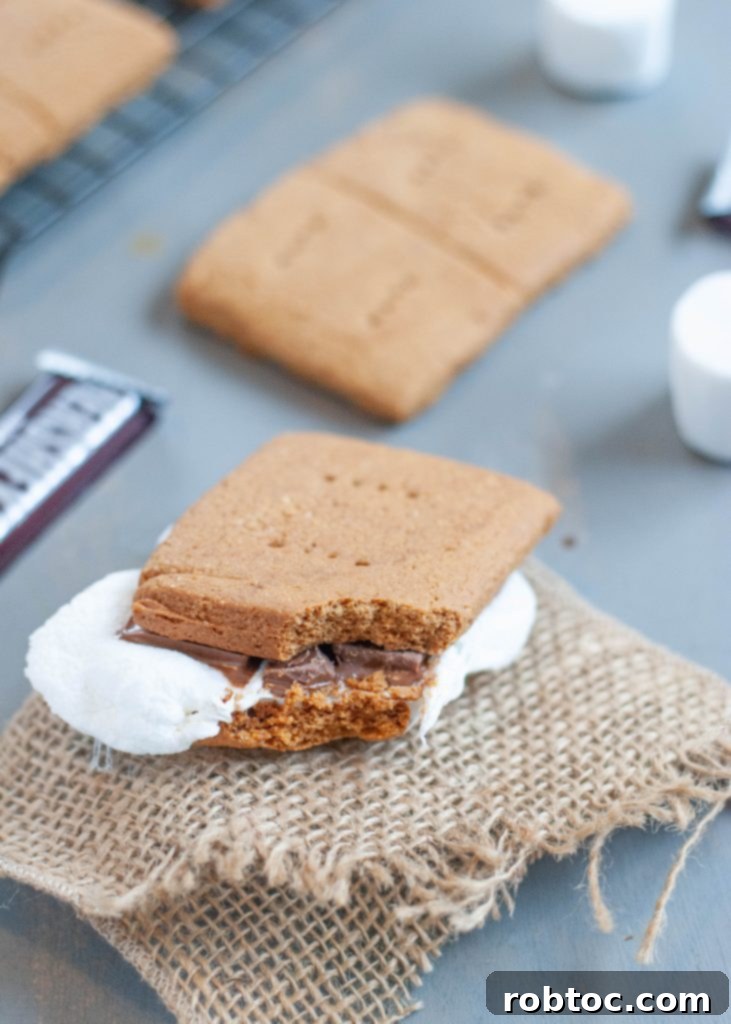
Crafting the Perfect Gluten-Free and Dairy-Free S’more
Yes, absolutely! Creating a delicious and allergy-friendly s’more is entirely possible with these homemade graham crackers. My son has both gluten and dairy allergies, so I understand the importance of making sure he can enjoy classic treats like s’mores. When we gather around the campfire, we use these homemade crackers (or the store-bought Schar’s Honeygrams if we’re in a pinch). Instead of a traditional Hershey’s chocolate bar, we opt for an Enjoy Life chocolate bar, which is reliably free from common allergens like dairy and gluten. For marshmallows, most commercial brands are naturally free of both gluten and dairy, so you can generally use your regular preferred brand without concern. This simple combination ensures that everyone can partake in the joy of s’mores, making summer campouts and backyard gatherings feel as normal and inclusive as possible.
Watch the Video: A Visual Guide to Making These Graham Crackers
For those who are visual learners, rejoice! I’ve created a comprehensive video that walks you through every step of making these gluten-free graham crackers, from combining ingredients to shaping and baking, ensuring your success. The video should auto-populate and play within this page. However, if for any reason it doesn’t appear, it is also conveniently embedded at the bottom of the recipe card. If you still encounter any issues, you can always find and watch the video directly on my YouTube channel.
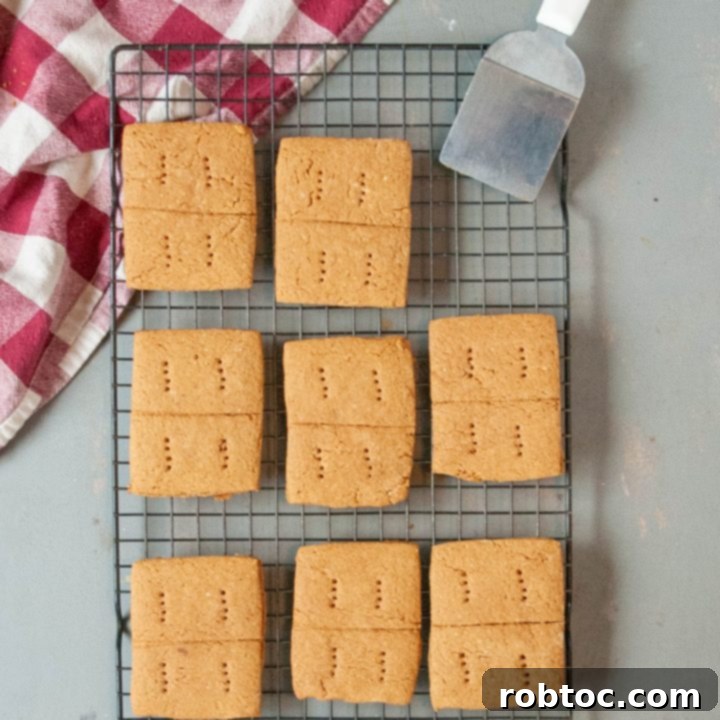
Gluten Free Graham Cracker + VIDEO
18
15 minutes
20 minutes
5 minutes
5 minutes
These crisp, golden, gluten free graham crackers are great for getting dunked in milk or made into a s’more (or even a pie crust). Milk, peanut and tree nut free too, with a soy-free option.
Ingredients
- 1 and 3/4 cup all purpose gluten-free flour
- 1/4 cup certified gluten-free oat flour (you can make your own in a blender!)
- 1/2 tsp baking powder
- 1/2 tsp baking soda
- 1/4 tsp salt
- 1/2 cup brown sugar
- 2 TBSP honey
- 2 TBSP molasses
- 6 TBSP butter flavored shortening, melted (72 g)
- 1 tsp vanilla
- 1 egg
- 3 TBSP water, up to 5 if needed
- 1 tsp xanthan if not included in flour
Instructions
- Preheat your oven to 350.
- Measure and stir the dry ingredients in your large mixing bowl. Pour in your wet ingredients. Stir to combine. If the dough still isn’t coming together (should feel like a sugar cookie dough batter) you can add 1 to 2 TBSP more water. I like to knead it a bit to make sure it all comes together at the end.
- Place the dough on a piece of parchment paper or silicone baking mat. Roll flat to around a 1/4 inch thick.
- Cut out your desired size of rectangle using either a cookie cutter, or ruler and knife or pizza cutter. Once you have the silicone mat filled, (each rectangle shouldn’t touch each other) place the entire silicone mat (with cut shapes) onto a rimmed cookie sheet. (It took me two sheets to fit all the dough).
- If you’re wanting to cut them in half after baking, be sure to use a pizza cutter to leave an indentation down the middle (don’t press all of the way through, just half way through, so you can snap them in half once baked). Score each side with a fork if you’re looking for that classic look.
- Bake 18-20 minutes, or until edges are starting to get golden and cookies feel done.
- Take out of the oven and leave on the hot cookie sheet for five additional minutes. Then, using a spatula, move to a cooling wrack to finish cooling. Cookies will crisp up as they cool.
- Eat plain, dip in milk, make s’mores or use in a pie crust recipe (listed above the recipe card). These stay good at room temperature for up to 5 days, as long as they’re covered. Or, can freeze in an airtight container for up to two months. Thaw at room temperature.
*Conversely, some people choose to roll the dough into one large rectangle, and just score where the crackers will be broken off. While this saves work up front, I find shaping them into individual rectangles works better. It gives the edges more color and crispness because the heat is getting to it directly to it, and that way you don’t have to worry about them not snapping right when trying afterwards. By shaping up front into individual crackers. you also don’t have to worry about the middle not getting as done. I’d only use this method if I was only going to turn around and use the entire thing for a pie crust that will get crushed anyways.
Notes
Tweaked and inspired by Gluten Free on a Shoestring and Let Them Eat Gluten Free Cake.
All FAQs are above the recipe card. Be sure to watch the video below too for best results.
*Our allergies, while severe and that get re-tested frequently, are such that we can go strictly by what’s on the label. I do not call companies to see what things are derived from, or call manufacturers to see about potential cross contact. If your allergies require you to do so, please do your own homework. I cannot assure you of any ingredient’s safety, only you can do that. I simply share what works for our family.
**If you are going to feed this to someone with food allergies, and you yourself do not have food allergies, I HIGHLY recommend having them check every single brand and ingredient you are using, to ensure they’re OK with each part of the recipe. And, to make sure you’ve talked to them about how to avoid cross contamination in your kitchen.
Nutrition Information:
Yield: 2
Serving Size: 1
Amount Per Serving:
Calories: 1008Total Fat: 25gSaturated Fat: 9gTrans Fat: 0gUnsaturated Fat: 14gCholesterol: 112mgSodium: 833mgCarbohydrates: 174gFiber: 16gSugar: 63gProtein: 25g
DON’T FORGET TO PIN IT, SO YOU DON’T LOSE IT. BE SURE WHILE YOU’RE THERE TO CHECK OUT MY OTHER GLUTEN-FREE PINS.