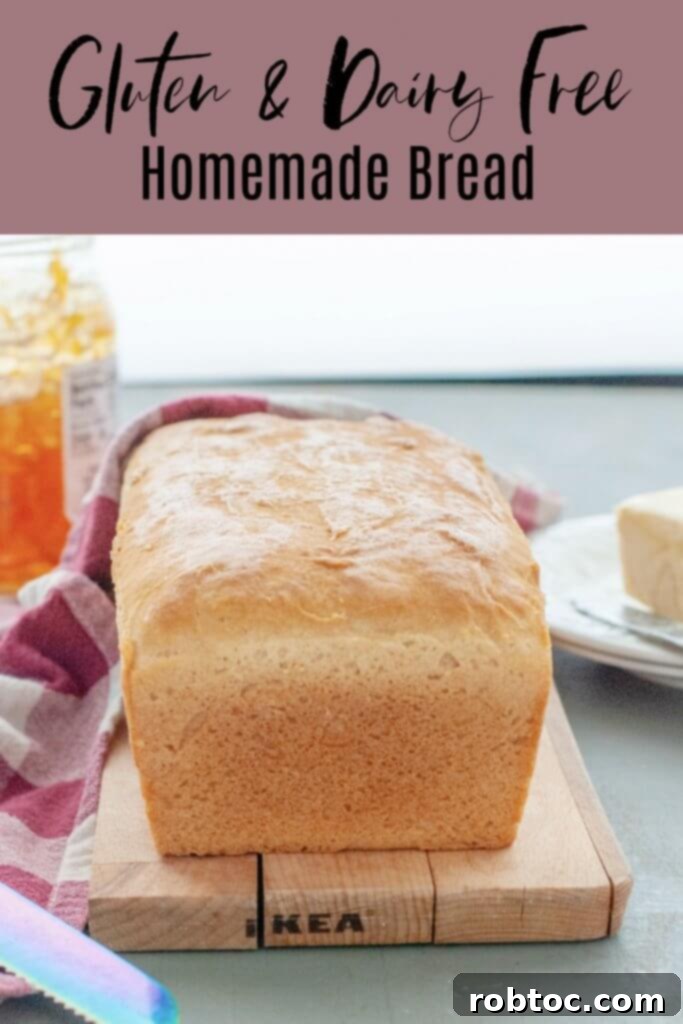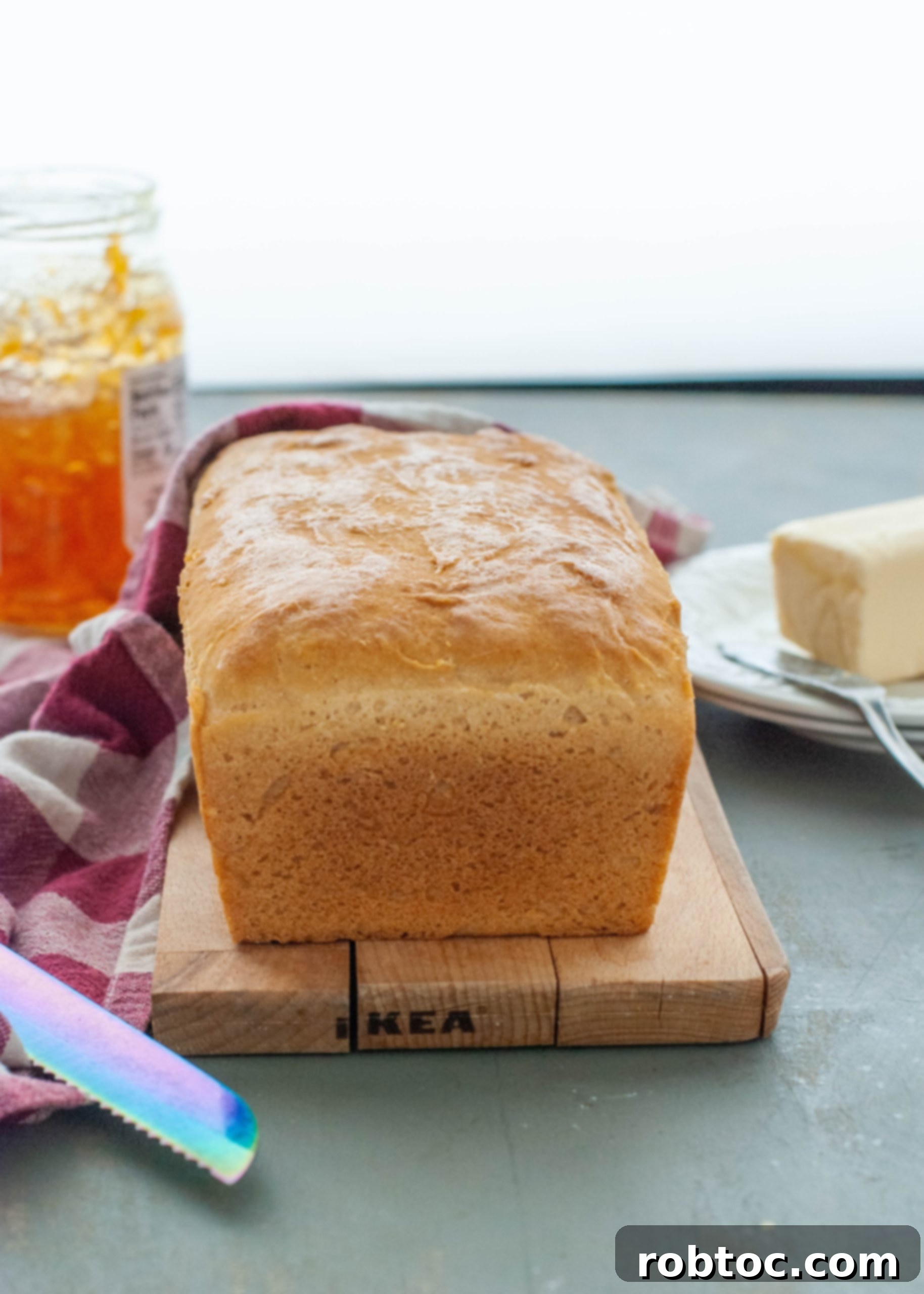
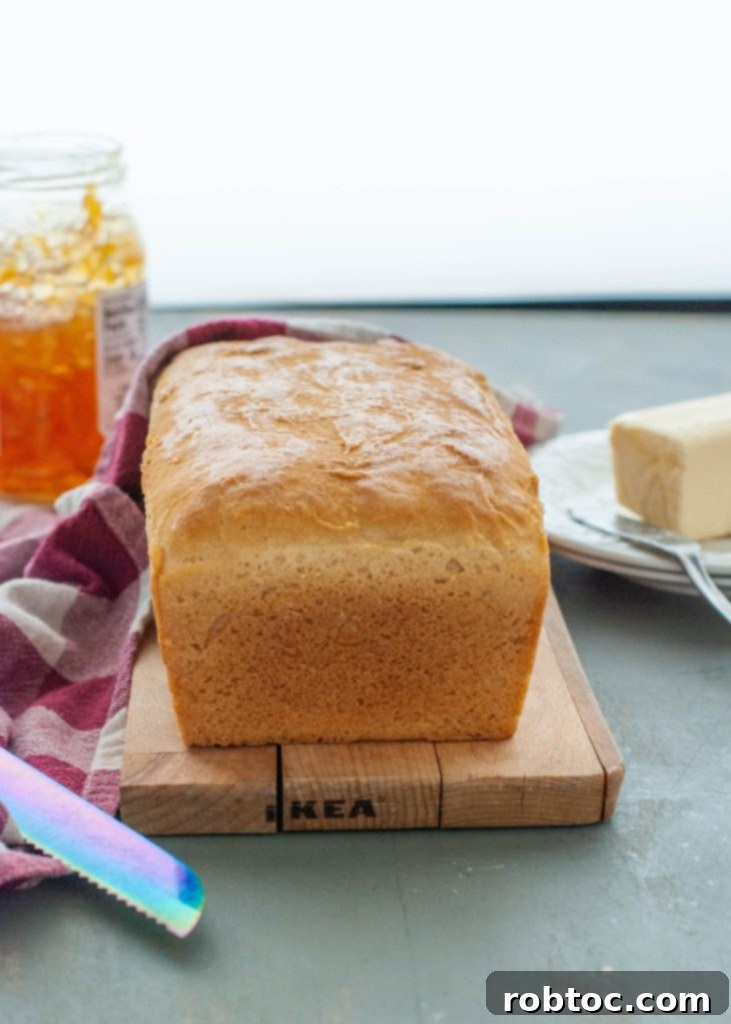
The Ultimate Gluten-Free, Dairy-Free, & Egg-Free Bread Recipe: Soft, Easy, and Allergy-Friendly!
FINALLY! A homemade bread recipe that truly caters to complex dietary needs. This isn’t just another gluten-free loaf; it’s a revelation for anyone navigating food allergies. Our meticulously crafted recipe delivers a bread that is not only completely gluten-free but also entirely dairy-free AND egg-free, making it a dream come true for those seeking genuinely inclusive baking options. Unlike many gluten-free recipes that lean heavily on eggs or dairy for structure and moisture, this innovative approach achieves incredible results without them. The outcome is a wonderfully soft, incredibly flavorful bread that defies expectations for allergy-friendly baking. What’s more, it’s designed to be remarkably easy to make, even for novice bakers. Forget complicated kneading techniques or specialized equipment; this recipe is straightforward and accessible. Imagine slicing into a warm loaf, the aroma filling your kitchen, ready to be transformed into a delicious sandwich or a perfectly toasted slice with your favorite spread. This homemade gluten-free, dairy-free, egg-free bread is also a beacon for those with multiple sensitivities, proudly standing as a top-8-allergen-free option. Dive into the detailed guide below, where we answer all your questions, ensuring you can master this recipe with confidence and joy.
This post contains affiliate links, meaning if you make a purchase through my links, I may earn a commission at no extra cost to you.
My Decade-Long Journey to Reclaim Homemade Bread
For ten long years, the comforting ritual of baking homemade bread felt like a distant memory. Living with food allergies often means saying goodbye to beloved culinary experiences, especially when it comes to staples like bread. I patiently waited, hoping to stumble upon an allergy-friendly recipe that wasn’t overly complicated, didn’t require a pantry full of obscure ingredients, and was truly worth the effort. And now, I can confidently say that the wait is over – I believe I’ve finally found it! For years, readers would ask me, “Do you have a homemade bread recipe that’s safe for allergies?” My answer was always a reluctant, “No, it’s just easier to buy it; it’s not worth the hassle.” But oh, how I missed it. There’s an undeniable magic in the aroma of freshly baking bread, a warmth that permeates the entire home. There’s nothing quite like indulging in a soft, warm slice, slathered with jam and honey. This breakthrough has been a long time coming, and I am absolutely thrilled, not just for my own enjoyment and my tummy’s happiness, but for all of you who can now savor this simple pleasure once again. This recipe brings back a piece of culinary joy that many of us thought was lost forever due to dietary restrictions, proving that delicious, wholesome, and allergy-safe bread is indeed possible to make right in your own kitchen.
Selecting the Best Gluten-Free Flour for This Loaf
Choosing the right gluten-free flour blend is paramount to the success of this recipe. The original recipe, which served as my inspiration, recommended Cup 4 Cup. However, for those of us avoiding dairy, this blend isn’t suitable due to its dairy content. Therefore, I embarked on a quest to find a equally reliable, dairy-free alternative. My personal preference, and one that consistently yields excellent results, is the King Arthur Gluten Free All-Purpose Baking Flour. This blend has proven to be incredibly consistent, providing the ideal texture and structure for a soft, pliable loaf. It’s important to note that while this is my primary recommendation, there have been instances where my local grocery store, Walmart, only stocked their gluten-free all-purpose flour *baking mix*. According to King Arthur, this mix contains additional leavening agents like baking powder and salt. In a pinch, I’ve used it, and the bread still turned out beautifully, so don’t despair if that’s your only option. However, I strongly advise sticking to the specific “all-purpose baking flour” for optimal results if available. I haven’t ventured to try other brands extensively because once you find a blend that works wonderfully, the risk of experimenting and potentially ruining a batch feels too high. Should you try this recipe with a different gluten-free flour blend, please share your experience; your feedback is invaluable! It’s crucial to understand that different brands and types of gluten-free flours can behave wildly differently due to variations in their starch and gum content, leading to significantly varied outcomes. For those who prefer to create their own blend, you can also experiment using my homemade gluten-free flour mix, specifically designed to be free from common allergens.
Is This Dairy and Egg-Free Bread Also Suitable for Vegans?
While this recipe achieves the challenging feat of being both dairy and egg-free, I must clarify that it is not strictly vegan. My baking is almost exclusively vegan, so I truly wish this loaf could join that category. The reason it falls short is the inclusion of honey, which is not considered vegan by most definitions due to its animal origin and production process. I understand this might be disappointing for some, and I sincerely apologize for this limitation. If a completely vegan bread recipe is essential for your dietary needs, please don’t worry! I have a fantastic alternative that I highly recommend. You can click here to find my dedicated gluten-free vegan bread recipe, which offers all the deliciousness and allergy-friendliness you’re looking for, without any animal products whatsoever. This ensures that everyone, regardless of their specific dietary requirements, can enjoy the pleasure of freshly baked bread.
Unpacking the Allergy-Friendly Nature of This Gluten, Dairy, and Egg-Free White Bread
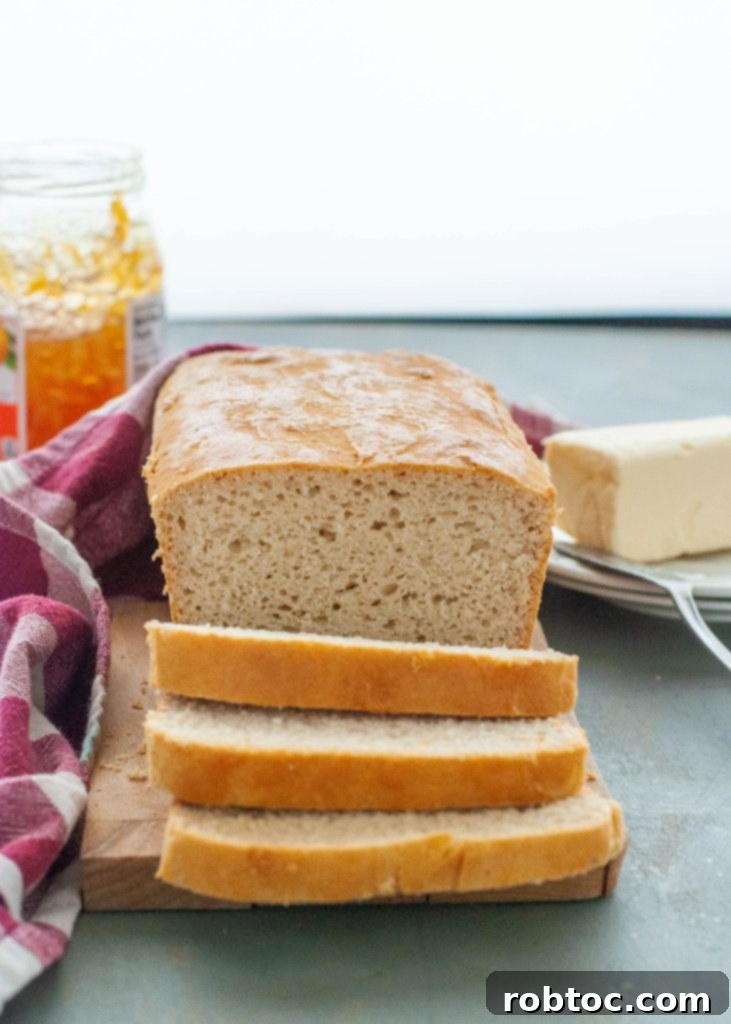
One of the most significant triumphs of this recipe is its exceptional allergy-friendliness, offering peace of mind to individuals and families managing complex dietary restrictions. This beautiful white loaf of bread has been meticulously developed to be free from the top 8 major allergens, which are responsible for the vast majority of food allergy reactions. This means you can confidently enjoy a slice knowing it contains absolutely no wheat, gluten, dairy, egg, soy, peanuts, tree nuts, fish, or shellfish. Navigating the world with multiple food allergies can be incredibly challenging, and finding a delicious, everyday staple like bread that is safe on so many fronts is a genuine game-changer. Our commitment to being top-8-free means this bread isn’t just a treat; it’s a foundational food that opens up a world of culinary possibilities for those who often feel left out. It provides a safe and satisfying option for sandwiches, toast, or simply enjoying a warm piece of bread straight from the oven, without the constant worry of an allergic reaction. This recipe is a testament to the fact that allergy-friendly food can be just as, if not more, delicious and comforting as its traditional counterparts.
The Essential Role of Rapid Rise Yeast in This Recipe
For this specific gluten and dairy-free loaf, the type of yeast you use is not just a recommendation—it’s a critical component for success. You absolutely need to use rapid rise instant yeast. This isn’t a recipe where you can easily substitute with active dry yeast, as rapid rise yeast is formulated to activate and leaven much quicker, eliminating the need for a separate proofing step in warm water before mixing. Its efficiency is perfectly suited for the no-knead, quick-rise method employed here. I personally rely on the Fleischmann’s RapidRise Yeast brand, which has consistently delivered excellent results in terms of rise and texture. However, I’ve also heard numerous positive reviews about Red Star Platinum Superior Baking Yeast, which is also a rapid-rise variety and could be a suitable alternative. When working with yeast, remember that proper water temperature is vital for activation. Ensure your water is around 110 degrees F (43 degrees C) – too cold, and the yeast won’t activate; too hot, and you risk killing it. An instant-read digital thermometer is an invaluable tool for precise temperature control, guaranteeing your yeast is happy and ready to work its magic, giving your bread that beautiful, airy rise without any fuss.
Ensuring Celiac Safety: A Deep Dive into Ingredients
For individuals with Celiac disease, safety is paramount, and I’m delighted to confirm that this homemade loaf of bread is indeed safe for you! The foundation of this recipe relies on a certified gluten-free flour blend, which is the most crucial step in preventing cross-contamination with wheat. Beyond the flour, every other ingredient in this recipe—including rapid rise yeast, psyllium husk powder, baking powder, salt, water, aquafaba (or eggs if tolerated), honey, and vegetable oil—should be naturally gluten-free. However, as a diligent practice for anyone with severe allergies or Celiac disease, I always, always recommend reading every single label on every ingredient you use. Manufacturers’ processes can change, and cross-contamination warnings might appear even on naturally gluten-free products. It’s essential to verify that the specific brands you purchase explicitly state “gluten-free” or have no hidden gluten-containing ingredients. If you’re ever in doubt about a product’s gluten-free status or potential for cross-contamination, the safest approach is to call the company directly. Their customer service lines can provide the most current and accurate information regarding their manufacturing practices and allergen policies. Your vigilance is your best defense, ensuring that every delicious slice of this bread is not only delightful but also completely safe for your dietary needs.
Substituting Aquafaba with Eggs: An Option for Those Who Can
Aquafaba, the liquid from a can of chickpeas or garbanzo beans, is a remarkable ingredient that acts as an excellent egg substitute in many vegan and allergy-friendly recipes. In this bread recipe, it plays a crucial role in providing binding, moisture, and helping with the structure that eggs typically offer. However, if you are fortunate enough to be able to consume eggs and are simply avoiding dairy or gluten, you absolutely have the option to use them instead of aquafaba. In fact, if eggs are not an issue for you, I would wholeheartedly recommend using two regular eggs in place of the six tablespoons of aquafaba. Eggs can lend a slightly richer flavor and potentially an even softer, more tender crumb to the bread, enhancing its overall texture and mouthfeel. They also contribute to a beautiful golden-brown crust. So, if your dietary needs allow, don’t hesitate to make this substitution; it can elevate an already fantastic loaf to new levels of deliciousness, providing a familiar and comforting quality that many traditional bread recipes boast.
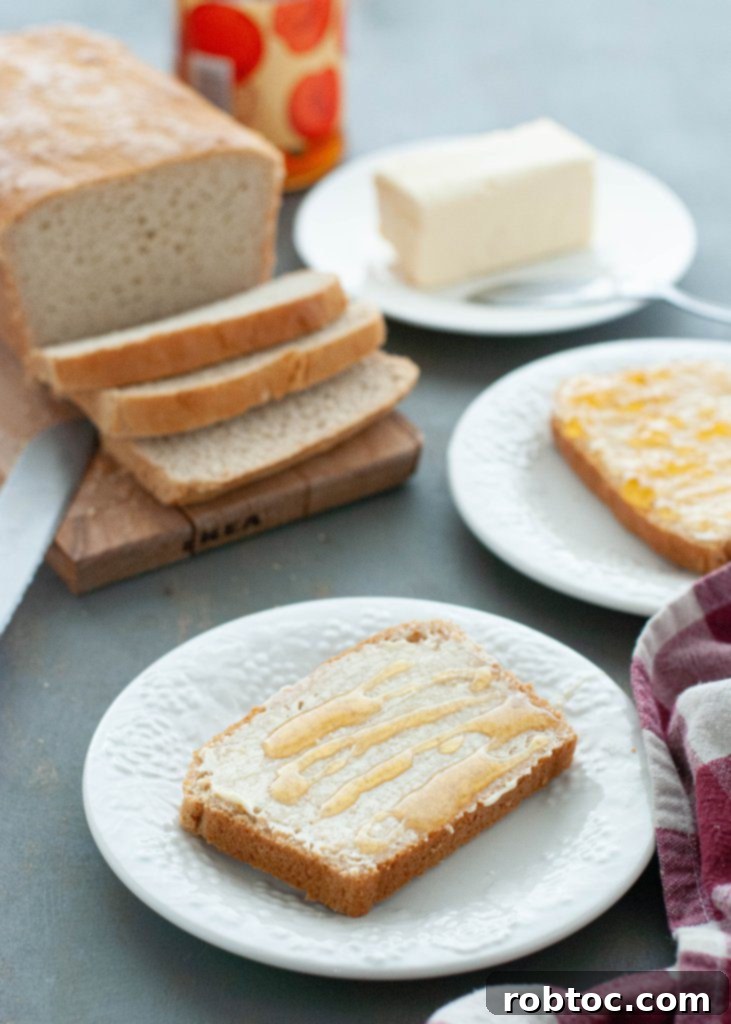
Choosing the Right Bread Pan for Perfect Gluten-Free White Bread
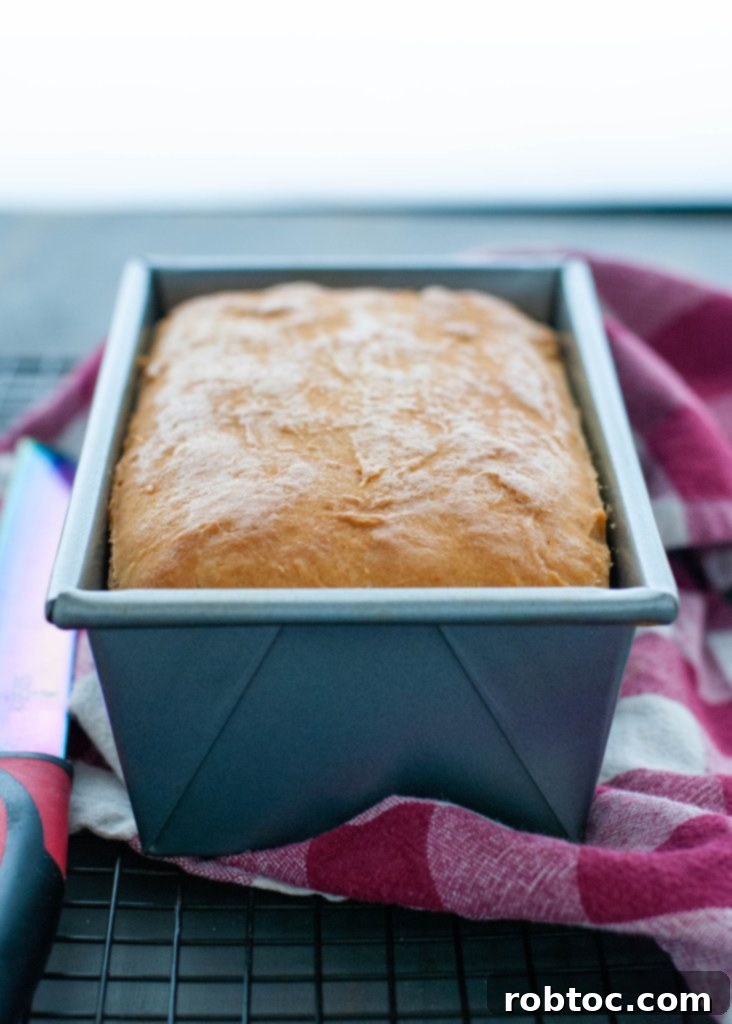
The size of your bread pan plays a more critical role in gluten-free baking than you might expect, especially when it comes to achieving that ideal rise and preventing overflow. The original recipe, from which this adaptation sprang, suggested a bread pan measuring 9×4 or 9×5 inches. While those dimensions are certainly suitable, I’ve found that my 8.5-inch Caphalon bread pan works just right, producing a beautifully shaped loaf. However, it’s essential to consider your environment. Readers in warmer or more humid climates have occasionally reported that the dough can rise quite vigorously, sometimes overflowing the pan if allowed to proof for too long or in a smaller pan. To err on the side of caution and ensure a successful bake every time, particularly if you live in a warmer climate or are unsure about your pan size, a 9×5-inch loaf pan is a safer bet. This larger size provides a little extra room for the dough to expand without spilling over. Additionally, and this is a crucial tip for proofing: watch your dough, not just the clock. Once your bread has risen to near the top of the pan, approximately three-quarters full, it’s time to stop the proofing process, even if the recommended time hasn’t elapsed. Gluten-free doughs, especially in varying elevations and humidity levels, can rise at different rates. Over-proofing can lead to the dough collapsing in the oven or overflowing during baking, resulting in a less desirable texture. Trust your visual judgment over strict timing for the best possible outcome.
The Importance of Psyllium Husk Powder for Optimal Texture
While it might seem like an optional ingredient, psyllium husk powder plays a surprisingly significant role in elevating the texture and structure of this gluten-free bread. If you choose not to use psyllium husk powder, your bread will likely still turn out edible, but its overall quality will be noticeably different. Psyllium husk acts as a natural binder and provides much-needed elasticity and structure, mimicking some of the properties that gluten would typically offer. In gluten-free baking, where dough often lacks the stretch and chewiness of traditional bread, psyllium husk helps to create a more cohesive dough, improves moisture retention, and contributes to a softer, less crumbly crumb. It helps the bread hold its shape better, preventing it from becoming too dense or falling apart. I often find my psyllium husk powder in the bulk section of health food stores, where it’s usually unbranded but of good quality. If you don’t have a health food store nearby or prefer the convenience of online shopping, you can easily purchase high-quality psyllium husk powder on Amazon. Investing in this ingredient is a small step that makes a huge difference in achieving a truly excellent gluten-free, dairy-free, and egg-free loaf that stands up to slicing and toasting.
Optimal Storage for Your Homemade Gluten, Dairy, and Egg-Free White Bread
Freshly baked bread is always at its absolute best, and this gluten-free, dairy-free, egg-free loaf is no exception. Once it has completely cooled after baking (which is crucial for the internal structure to set), it is perfectly soft and delicious to enjoy immediately. For optimal freshness, I recommend consuming it within the first day at room temperature. If you anticipate having leftovers, you can store the bread in an airtight container at room temperature for up to 24 hours. This helps to prevent it from drying out too quickly. After the first day, the bread tends to lose some of its initial softness when stored at room temperature. To maintain quality and extend its shelf life, I advise transferring it to an airtight container and storing it in the refrigerator. In the fridge, it will keep well for several more days. When consuming refrigerated slices, I find that toasting them dramatically improves their texture, restoring warmth and a pleasing crispness. While I personally rarely have enough left to freeze (we usually eat it all up quickly!), freezing is an excellent option for longer-term storage. To freeze effectively, first slice the cooled loaf completely. Then, place the slices in a single layer on a baking sheet to freeze individually for about an hour, which prevents them from sticking together. Once firm, transfer the frozen slices to a freezer-safe bag or airtight container, removing as much air as possible. When you crave a slice, simply pull one out and toast it directly from frozen for a quick and delicious treat. This method ensures you always have a piece of wonderful homemade bread ready to enjoy.
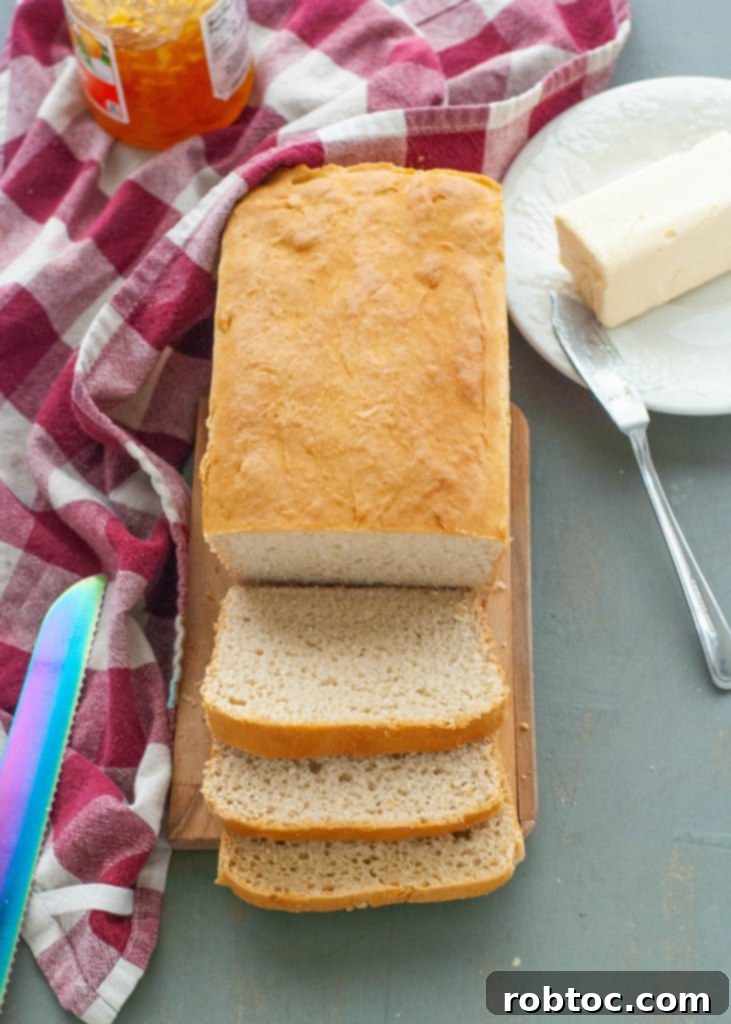
Baking Without a Stand Mixer: Alternative Mixing Methods
While a stand mixer isn’t strictly mandatory for this recipe, I truly believe it’s one of the wisest investments you can make, especially if you manage food allergies and frequently find yourself baking from scratch. A stand mixer provides consistent, thorough mixing with minimal effort, saving you time and ensuring uniform results – a huge advantage when working with finicky gluten-free doughs. If you don’t own one yet, consider adding it to your wish list for holidays like Christmas, or as a thoughtful wedding gift, or start saving up; it’s a kitchen workhorse that pays for itself in convenience and quality. However, if a stand mixer isn’t currently an option, don’t let that deter you! I haven’t personally tried making this bread entirely by hand, but I am confident that it can be achieved with a good old-fashioned wooden spoon and some elbow grease. Hand mixers are also a viable alternative. When using a hand mixer, ensure you scrape down the sides of the bowl frequently to incorporate all ingredients evenly. For hand mixing, expect a bit more effort, and be prepared for the dough to be quite thick and sticky. Mix vigorously until the dough comes together and appears consistent, resembling a thick batter rather than a traditional kneadable dough. The key is to achieve a uniform mixture, and with patience, both methods should yield a successful loaf, albeit with varying degrees of exertion. Your determination to bake allergy-friendly bread is what truly matters!
The Oven Light Trick: Why It’s Your Secret to Perfect Proofing
Achieving the ideal proofing environment is crucial for any bread, and gluten-free doughs can be particularly sensitive to temperature fluctuations. During colder months, like winter, I often worry that my kitchen isn’t warm enough to allow the bread to rise properly. Seeking reliable solutions, I turned to America’s Test Kitchen for proofing ideas, a trusted source for scientific baking advice. A recurring tip in their comments section caught my eye: using the oven light bulb. Intrigued, I went straight to the source, King Arthur Baking Company (since we’re using their flour), and was pleased to find they also recommend this ingenious method! The radiant heat from a standard oven light bulb generates a gentle, consistent warmth within the oven cavity, creating a perfect, draft-free microclimate for yeast activation and dough rising. While King Arthur suggests turning the light on an hour beforehand to pre-warm the oven, I found a simpler approach worked perfectly for this recipe without adding extra steps. By simply turning the oven light on at the very beginning of the recipe preparation and leaving it on throughout the entire proofing period, I achieved consistent and robust rises. This subtle warmth encourages the yeast to work efficiently, resulting in a beautifully airy and soft loaf. It’s a simple, energy-efficient trick that makes a significant difference, ensuring your gluten-free bread gets the optimal start it needs.
Explore More Allergy-Friendly Bread Creations
While this versatile white bread is a fantastic staple, the world of allergy-friendly baking offers many other delightful bread options! If you’re looking to expand your repertoire of gluten-free, dairy-free, and egg-free baked goods, I’ve got you covered. Each of these recipes is crafted with the same commitment to flavor, texture, and dietary safety, ensuring there’s something delicious for every occasion. From savory sticks perfect for dipping to sweet, zesty loaves, and hearty cornbreads, you’ll find a variety of fantastic choices here:
- Gluten-Free Vegan Breadsticks: Perfect for dipping in soup or serving with pasta.
- Lemon Bread with Lemon Glaze: A bright and zesty sweet bread, ideal for brunch or dessert.
- Pumpkin Cornbread: A seasonal favorite, offering a comforting and moist texture.
- Top-8-Free Cornbread: A classic side dish, perfectly safe for most common allergies.
- 10+ Best Gluten-Free Vegan Muffins: A collection of sweet and savory muffins for any time of day.
Perfect Pairings: What to Enjoy with This Gluten and Dairy-Free Bread
This wonderfully soft and flavorful gluten and dairy-free bread is incredibly versatile and pairs beautifully with a wide array of dishes. My absolute favorite way to enjoy it is as a warm, toasted slice, generously spread with some rich dairy-free butter and a dollop of my favorite fruit jam. The combination of the crisp crust and soft interior with creamy butter and sweet jam is simply irresistible for breakfast or a snack. Beyond toast, this bread makes an exceptional partner for hearty soups, perfect for soaking up every last drop of delicious broth. Here are some of my top recommendations for delicious gluten, dairy, and egg-free soups that would be absolutely perfect for dunking:
- Instant Pot Dairy-Free Loaded Baked Potato Soup: Creamy, comforting, and packed with flavor.
- Instant Pot Gluten & Dairy-Free Chicken, Mushroom, and Wild Rice Soup: A nourishing and wholesome meal.
- Allergy-Friendly Taco Soup: Zesty and satisfying, great with a side of bread.
- Gluten & Dairy-Free Thai Coconut Soup: An aromatic and exotic flavor profile.
- Potato & Sausage Soup: A hearty and filling soup for colder days.
- Slow Cooker Green Enchilada Soup: Rich and mildly spicy, perfect for a cozy evening.
- Slow Cooker Pizza Soup: All the flavors of pizza in a comforting bowl.
- Gluten-Free Vegan Minestrone: A classic vegetable soup, vibrant and nutritious.
- Dairy-Free Tomato Basil Soup: Simple, elegant, and timeless.
Beyond soups, this bread is also fantastic for creating delicious and safe sandwiches. Think turkey and avocado, a classic “BLT” with vegan bacon, or simply a spread of hummus and fresh veggies. Its soft texture makes it perfect for holding various fillings without crumbling. You can also cube stale pieces to make allergy-friendly croutons for salads!
Watch the Magic Happen: A Video Guide to Homemade Bread
Sometimes, seeing is believing, especially when tackling a new baking project, or one that seems as challenging as allergy-friendly bread. To provide you with an even clearer understanding and boost your confidence, I’ve created a concise and engaging video demonstrating exactly how to make this fantastic homemade bread. I chose TikTok as the platform for this video because I appreciate its ability to deliver clear, actionable instructions in a short, succinct format. By watching this video, you’ll get a visual overview of each step, from mixing the ingredients to the final rise and bake. It effectively highlights just how easy and approachable it is to create this soft, delicious, gluten-free, and dairy-free bread in your own kitchen. It’s the perfect complement to the written instructions, ensuring you feel fully equipped to achieve baking success!
@allergyawesomeness It does exist! #glutenfreebread that uses #nomilk and #noeggs. Soft, delicious and easy! #glutenfreedairyfreebread #glutenfreedairyfreerecipe #foodallergies #homemadebread ♬ FEEL THE GROOVE – Queens Road, Fabian Graetz
Gluten Free Dairy Free Bread (With Egg Free Option!)
12
15 minutes
45 minutes
45 minutes
1 hour 45 minutes
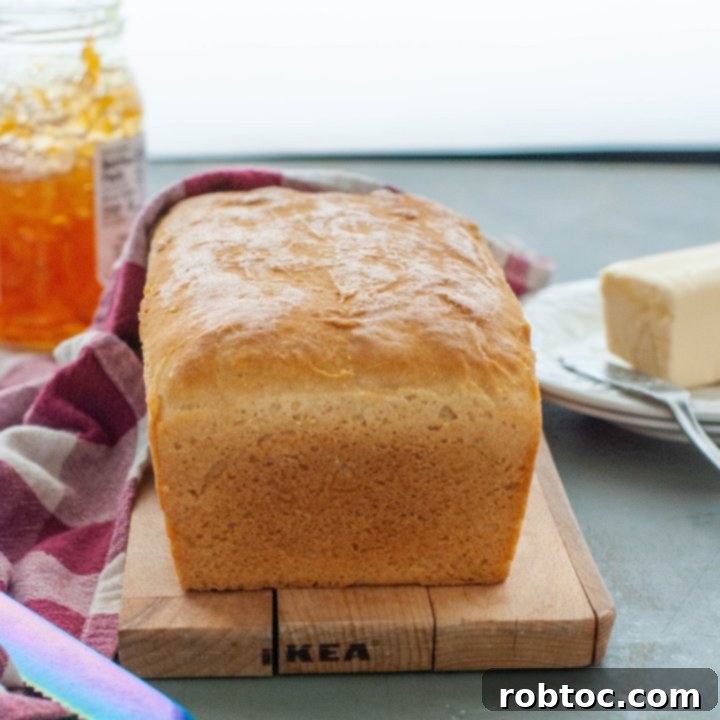
A loaf of bread that is not only gluten free but ALSO dairy and egg free. This bread is soft, tastes delicious and isn’t hard for those who aren’t used to making homemade bread.
Ingredients
INGREDIENTS:
- 3 cups King Arthur Gluten Free All Purpose Flour (spoon and level to measure)
- 1 packet (2 and 1/4 tsp) rapid rise instant yeast
- 1 Tablespoon psyllium husk powder
- 1 tsp baking powder
- 1 tsp salt
- 1 and 1/2 cups warm water (110 degrees F)
- 6 Tablespoons aquafaba (the liquid from a can of chick peas/garbanzo beans) OR two eggs if you can have them
- 1/4 cup honey
- 1/4 cup canola oil
TOOLS NEEDED:
- 8.5 inch bread pan
- Instant read digital thermometer
- Plastic wrap
- Non-stick spray of choice
- Recommended, but not required: stand mixer
Instructions
- Turn the light on your oven. This will help the oven become just the right temperature for proofing.
- Place the paddle attachment on your stand mixer, and add to the mixing bowl the gluten free flour, yeast, psyllium husk powder, baking powder and salt. Combine on low speed.
- Add the liquids: aquafaba (or eggs), honey, oil and water (being sure to use an instant read thermometer that your water is the correct temperature). Mix on low until the dough has started to form.
- Increase the speed to medium and mix for 2 and a half minutes. Scrape the sides of the bowl, and mix for an additional 2 and a half minutes.
- Pour batter into your greased bread pan. Smooth the top of the batter if necessary. Measure your plastic wrap, but spray the side that will be facing down with non-stick spray before placing on top.
- Place the covered pan in your oven with the oven light on for 45 minutes. Be sure to check it every once in awhile, some gluten-free flours, and climates have the bread rise faster than that and it can rise above the bread pan line in certain areas if allowed to rise too long.
- Once your bread has risen (filling about 3/4 the pan), take your bread out and preheat your oven to 350 degrees F.
- Take the plastic wrap off and place the bread in the middle of the oven and bake for 40-45 minutes. If your top starts to brown too much, place a piece of aluminum foil over the top.
- To ensure the bread is done in the middle, place your instant read thermometer in the center of the bread. It should read 205 degrees F.
- Remove the bread from the oven. Allow the bread to cool for five minutes in the pan. Turn out onto a cooling rack and allow the bread to cool completely before slicing (2-3 hours). I know it’s hard to wait!
- Bread is best served fresh after cooling at room temperature with your favorite dairy free butter and jam/honey. See post above on storing options.
Notes
I owe this bread recipe and tips to Mama Gourmand’s Soft White Gluten Free Bread, and I just tweaked her recipe. Thank you!
Nutrition Information:
Yield: 12
Serving Size: 1
Amount Per Serving:
Calories: 205Total Fat: 5gSaturated Fat: 1gTrans Fat: 0gUnsaturated Fat: 5gCholesterol: 0mgSodium: 276mgCarbohydrates: 35gFiber: 2gSugar: 6gProtein: 4g
DON’T FORGET TO PIN THIS GLUTEN-FREE, DAIRY-FREE, EGG-FREE BREAD RECIPE, SO YOU DON’T LOSE IT. WHILE THERE, CHECK OUT MY OTHER DIET-SPECIFIC PINTEREST BOARDS FOR MORE INSPIRATION!