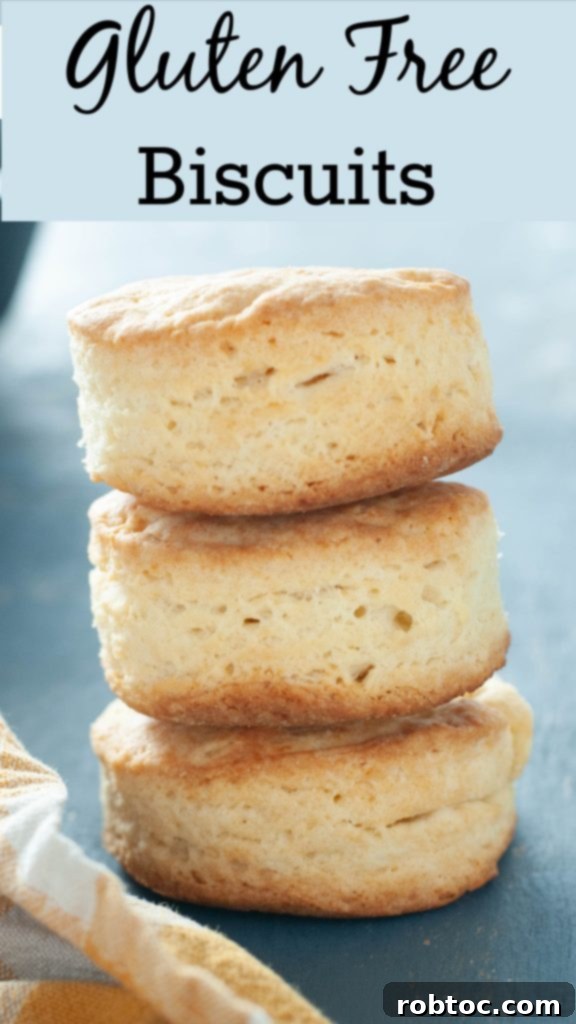
Ultimate Fluffy & Flaky Gluten-Free Biscuits: Your Go-To Recipe for Southern Comfort
Soft, fluffy, and unbelievably tall biscuits, just like the cherished ones from your memories. Achieving truly flaky, tender gluten-free biscuits might seem like a challenge, but with a few clever tweaks and smart ingredient additions, this recipe delivers that classic texture and rich flavor you remember, even without gluten. Plus, we’ve included excellent dairy-free options for everyone to enjoy!
This post contains affiliate links, meaning if you purchase through them, I may earn a small commission at no extra cost to you.
Why This Gluten-Free Biscuit Recipe Stands Out
Creating exceptional biscuits, especially gluten-free ones, hinges on a few crucial factors, with high fat content being paramount. While many traditional recipes rely solely on buttermilk, which provides a wonderful tang, it often lacks the robust fat needed for truly tender and flaky layers. That’s why my recipe takes a unique approach: instead of a full cup of buttermilk, I split it. We use half a cup of buttermilk for that essential tangy flavor and half a cup of heavy whipping cream to significantly boost the fat content. This simple switch ensures your biscuits are incredibly rich and moist, yielding that melt-in-your-mouth texture you crave.
Furthermore, while traditional biscuit recipes typically omit eggs, gluten-free baking greatly benefits from their inclusion. Adding an egg in this recipe dramatically improves both the flavor and the structural integrity of the biscuits, resulting in a more cohesive, less crumbly product. These carefully selected ingredient modifications, combined with precise techniques, come together to produce visually stunning and absolutely delicious gluten-free biscuits that rival their gluten-filled counterparts.
The Power of Fat: Buttermilk and Heavy Cream
The secret to wonderfully tender and flaky biscuits lies in fat. By combining buttermilk’s acidity with the high fat content of heavy whipping cream, we achieve a superior texture. The buttermilk reacts with the baking powder, aiding in the lift, while the cream contributes an abundance of fat that creates those coveted flaky layers and a rich, buttery flavor that buttermilk alone cannot provide. This thoughtful balance is key to overcoming common challenges in gluten-free baking, where moisture and fat are essential for combating dryness.
The Role of the Egg in Gluten-Free Baking
You might notice an egg in this biscuit recipe, which is uncommon for traditional biscuits. However, in the world of gluten-free baking, eggs are invaluable. They act as a binder, providing structure and elasticity that gluten would normally offer. The egg also adds moisture and enriches the flavor, contributing to a more stable and less crumbly biscuit. It helps ensure a softer crumb and a beautifully golden exterior, making a significant difference in the final product’s quality.
Dairy-Free and Egg-Free Alternatives
For those navigating dairy allergies or preferences, transforming these delicious biscuits into a dairy-free treat is straightforward. You’ll need to substitute traditional butter with a high-quality dairy-free butter. I highly recommend Country Crock Plant Butter with Olive Oil for its excellent flavor and texture. To replace the buttermilk and heavy whipping cream, combine 1 tablespoon of lemon juice in a one-cup measuring cup, then fill the rest with Country Crock’s Plant Cream. This combination provides the best fatty, tangy dairy-free liquid substitute I’ve discovered, mimicking the richness of traditional ingredients. While I haven’t personally tested it, Silk’s Heavy Whipping Cream might also work well.
Some people explore nut creams like cashew cream, but given our family’s nut allergies, I haven’t been able to test them. Be aware that nut flavors can be quite prominent and might alter the classic, simple buttery profile of biscuits. If you do experiment with nut creams, please share your results in the comments below to help other readers!
As for making these biscuits entirely egg-free, I haven’t personally tested a recipe. My best recommendation would be to use an egg replacer such as Ener-G egg replacer, following the package instructions for one egg equivalent. If you successfully make an egg-free version, please let us know in the comments – your feedback is incredibly valuable to the community!
Understanding the American Biscuit: A Culinary Staple
It often comes as a surprise to many, especially those outside the United States, that the term “biscuit” can mean different things across cultures. For instance, in the UK, a “biscuit” refers to what Americans commonly call a “cookie.” My recipe, however, focuses on classic American Southern-style buttermilk biscuits. These are savory, fluffy, and tender bread-like rolls, distinct from their sweeter British counterparts (which are more akin to our “scones”).
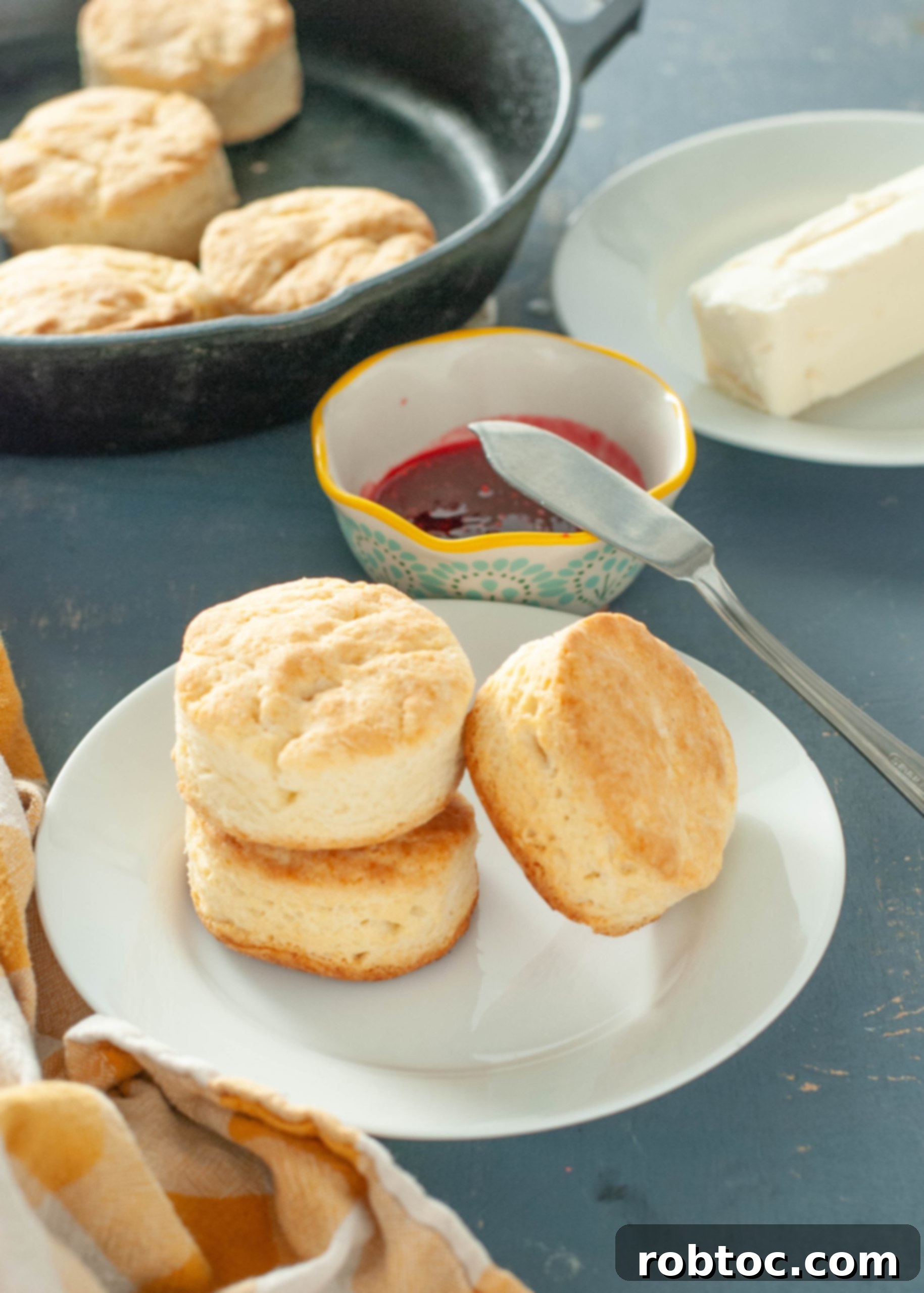
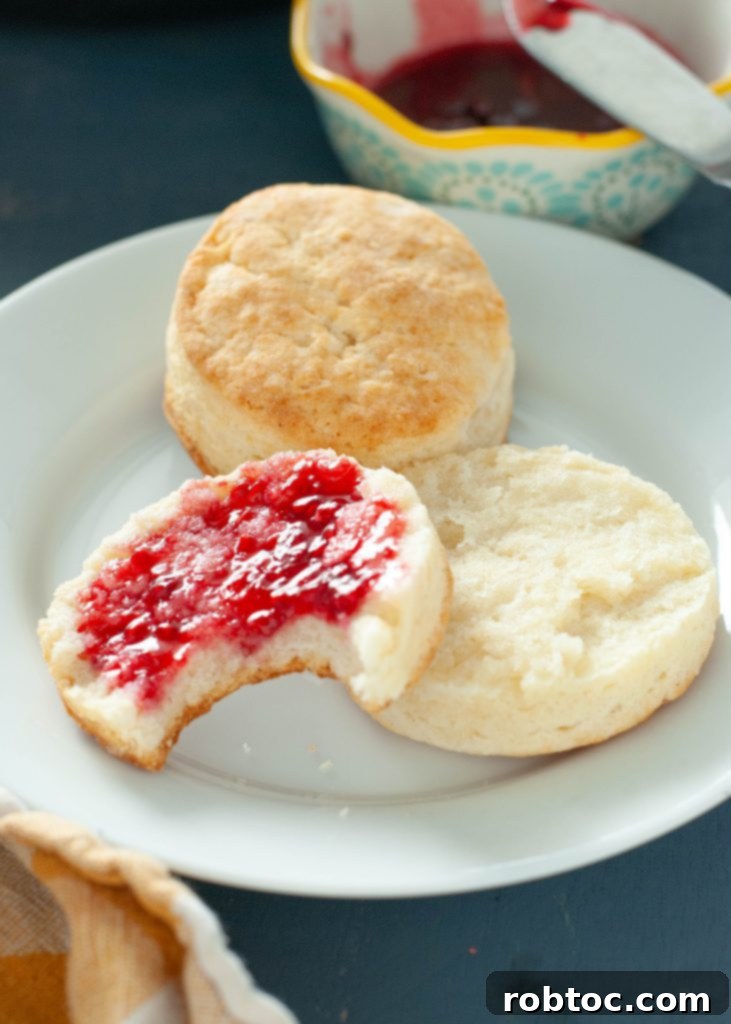
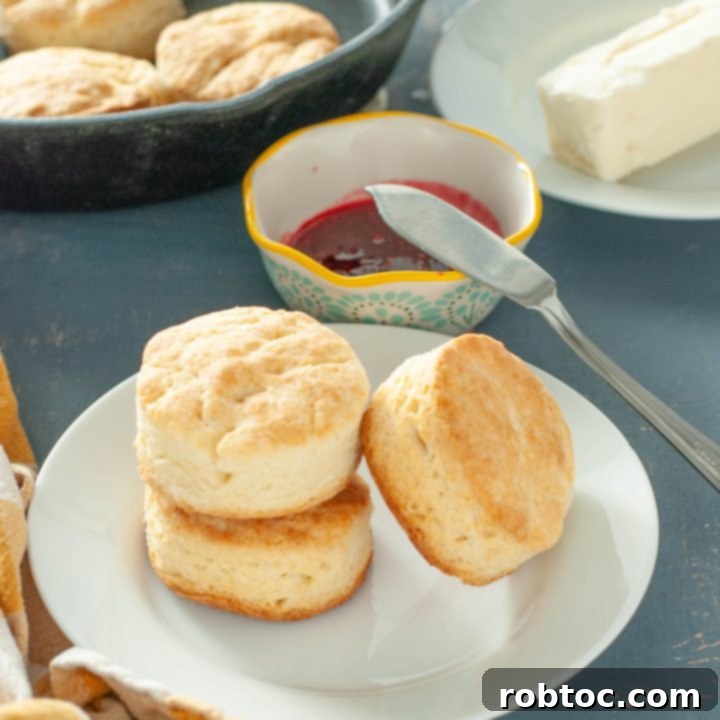
American biscuits are incredibly versatile. They are most often served plain, with a smear of butter, a drizzle of honey, or a dollop of fruit jam. They serve as an essential side dish, a comforting carby accompaniment perfect for soaking up gravies or wiping plates clean of delicious entree sauces. They are also the foundational base for iconic Southern dishes like Biscuits and Sausage Gravy. Unlike yeast rolls, biscuits are a fantastic, quicker alternative since they require no proofing time, making them a convenient option for any meal.
Essential Tools for Perfect Biscuits
Having the right tools can make all the difference in your biscuit-making journey, ensuring efficiency and superior results. Here’s what you’ll need:
- Food processor: Highly recommended for effortlessly cutting in cold butter.
- Clean surface: A large, clean, and lightly floured surface for shaping your dough.
- Biscuit cutter: Essential for perfectly round biscuits, or any round object like a drinking glass.
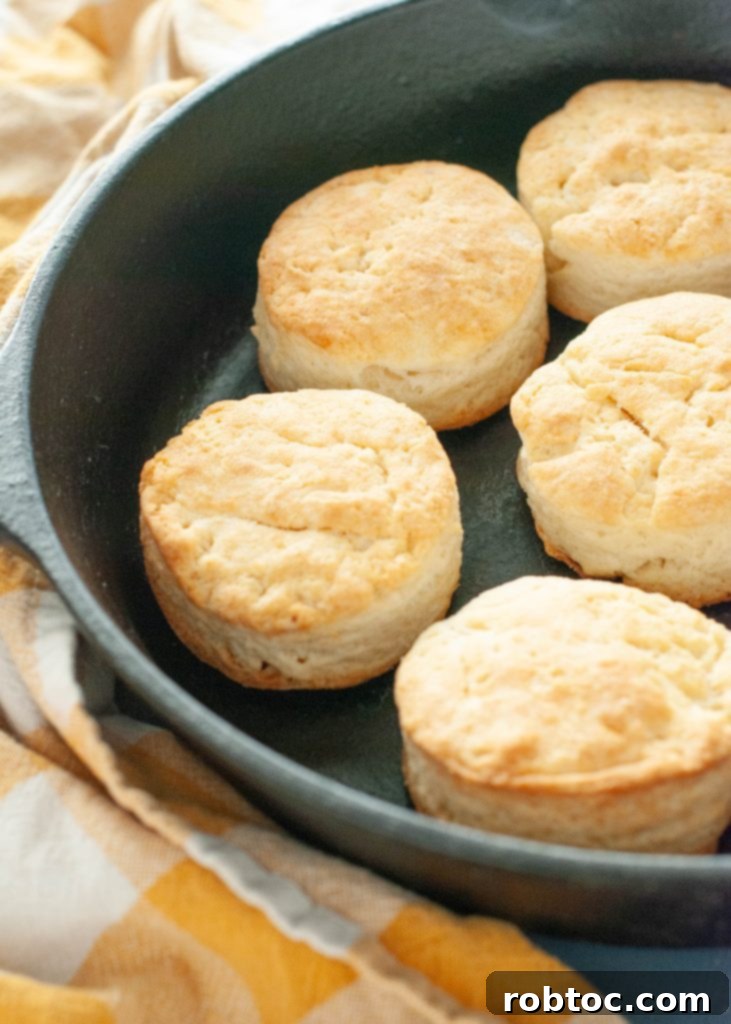
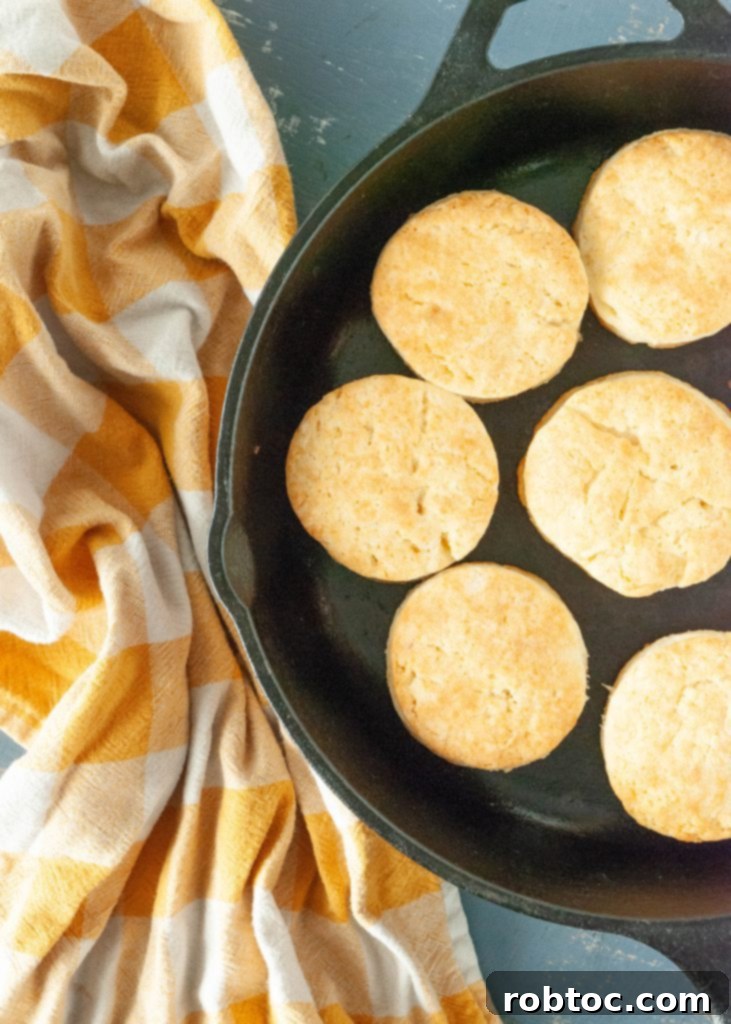
- Cast iron pan: Ideal for even baking and a beautiful golden crust, though a baking sheet works too.
- Measuring cups and spoons: For precise ingredient measurements.
The Food Processor Advantage: Speed & Cold Butter
While you can certainly make biscuits by hand, I personally swear by my food processor. The key to truly flaky biscuits is keeping the butter as cold as possible throughout the mixing process. The less your warm hands interact with the butter, the better. A food processor excels at this, cutting cold butter into the flour in a mere six quick pulses of a button, saving your wrists from the laborious task of doing it by hand with a pastry cutter.
The rapid, efficient action of the food processor ensures that the butter remains in small, distinct pieces within the dough. These tiny pockets of butter melt during baking, creating steam that pushes apart the layers of dough, resulting in that signature flaky texture. If you’re serious about gluten-free baking, a food processor is a worthwhile investment. I use mine not only for biscuits but also for my gluten-free pie crust, pan de bono, and even savory dishes like Avocado Basil Pasta, making it a versatile kitchen workhorse.
Key Ingredients for Gluten-Free Biscuits
To achieve the best possible gluten-free biscuits, starting with quality ingredients is crucial. Here’s a list of what you’ll need:
- Better Batter gluten-free flour blend
- Baking powder (I recommend aluminum-free)
- Table salt
- Unsalted butter, kept very cold
- Large egg, whisked
- Buttermilk, chilled
- Heavy whipping cream, chilled
Choosing the Best Gluten-Free Flour
Since biscuits are a relatively simple recipe, the quality of your ingredients, especially the gluten-free flour, significantly impacts the final taste and texture. I consistently achieve excellent results using Better Batter gluten-free flour in this recipe. Its balanced blend of starches and flours provides the necessary structure and absorbency for tender, well-risen biscuits.
It’s important to note that gluten-free flour blends can vary significantly between brands in terms of composition and performance. While I haven’t extensively tested this specific recipe with other brands, if you decide to use a different gluten-free flour, results may vary. I encourage you to share your experiences in the comments if you try an alternative brand – your insights can be incredibly helpful to others!
Expert Tips for Flawless Gluten-Free Biscuits
Achieving perfect gluten-free biscuits requires attention to detail. Follow these expert tips for the best possible outcome:
- Keep Ingredients Cold: This is arguably the most crucial tip! For at least 15 minutes before you begin mixing, freeze your cut butter, chilled buttermilk, and heavy whipping cream. Cold ingredients are paramount to preventing the butter from melting prematurely, which is essential for creating those beautiful, flaky layers during baking. If the butter melts before hitting the oven, your biscuits will be dense, not flaky.
- Minimize Dough Handling: Do not worry about achieving a perfectly blended or perfectly smooth dough. The goal is to work the dough as little as possible. When you’re patting it out onto your floured surface, aim for a somewhat smooth, uniform rectangle, but don’t overwork it. The less you handle the dough, the better, as the warmth from your hands can melt the butter. You want small, visible bits of butter remaining in the dough; these pockets of fat are what produce flakiness.
- Avoid Twisting the Biscuit Cutter: When pressing your biscuit cutter into the dough to form shapes, press straight down firmly and lift straight up. Do not twist the cutter. Twisting seals the edges of the biscuit, which can prevent them from rising tall and creating those lovely, distinct layers. A clean cut allows the biscuits to puff up beautifully.
- Watch Your Oven: Baking times can vary considerably between ovens. Keep a close eye on your biscuits, especially towards the end of the baking cycle. Once the tops and bottoms begin to turn a light golden brown, they should be done. They should also look visibly puffed up and feel firm to the touch.
- Ensure Fresh Baking Powder: Gluten-free baking relies heavily on leavening agents like baking powder to provide lift and structure, effectively doing the “heavy lifting” that gluten normally provides. If your baking powder is old or expired, it will lose its potency, and your biscuits will not rise as well. Always check the expiration date and ensure it’s fresh for optimal rise and a light, airy texture. Consider using an aluminum-free brand like Rumford if you’re sensitive to taste.
Visual Guide: Watch the Tutorial Video
I understand that sometimes seeing is believing, especially when embarking on a new baking adventure. To ensure your success, I’ve created a comprehensive tutorial video that walks you through each step of this gluten-free biscuit recipe. Watch the video to get a clear visual of the dough’s texture, understand the techniques like folding, and see the entire process from start to finish. The video should auto-populate on this page; if not, it is embedded within the recipe card below. For direct access, you can also find it on my YouTube Channel.
Gluten Free Biscuits
9 biscuits
20 minutes
17 minutes
37 minutes
Soft, fluffy & tall biscuits just like you used to enjoy. Flakey biscuits even though they’re gluten-free. (DF options too)
Ingredients
- 2 cups Better Batter`gluten-free flour
- 1 and 1/2 Tablespoons baking powder
- 1/2 tsp salt
- 1 egg, whisked
- 6 TBSP butter, chilled
- 1/2 cup buttermilk, chilled
- 1/2 cup heavy whipping cream, chilled
Instructions
-
Before beginning, measure your butter, and cut it into Tablespoons, and place in the freezer. Place your measured buttermilk and heavy whipping cream in the freezer too. Let them stay in there for 15 minutes while you prep the rest of the recipe.
-
Preheat oven to 425 degrees F.
-
In a food processor, place your gluten-free flour, baking powder and salt. Pulse to combine.
-
After the 15 minutes, place your butter in the food processor and pulse 6 times, just enough to break it down slightly. Pour in your chilled buttermilk, heavy whipping cream and whisked egg. Pulse until the mixture just begins to come together. It doesn’t need to be perfectly mixed; it will be wetter than regular biscuit dough due to the egg, but it shouldn’t be totally combined. You want small bits of butter remaining in the dough. (See video for visual guidance).
-
Scoop the dough onto a clean and lightly floured surface. Work quickly and try to touch it as little as possible to prevent the heat from your hands from melting the butter. Gently form the dough into a rough rectangle; perfection isn’t necessary. Take the right one-third of the dough and fold it over to the middle. Repeat this with the left side, folding it into the middle (these are known as “book folds”). You should now have a rough rectangle again. Gently press it down with your hands, then rotate the dough 90 degrees and repeat the folding process. Perform these folds a total of 3 times. Refer to the video if you need visual instructions.
-
Gently press the dough down until it’s uniform and flat, approximately 1 to 1 and 1/2 inches thick. Use your biscuit cutter to shape the dough. Remember not to twist the cutter; simply press it straight down firmly and lift straight up. Place the cut biscuits into your greased cast iron skillet, or onto parchment paper on a baking sheet. Brush the tops of the biscuits with a little extra heavy whipping cream or melted butter, whichever you prefer, for a beautiful golden crust.
-
Bake for 17-19 minutes, or until the biscuits are nicely browned on top and bottom and have puffed up significantly. (Note: The browning comes from the milk products. If you’re making these dairy-free, they may not achieve as dark a golden color).
-
Serve your warm biscuits immediately with more butter, your favorite jam, or a drizzle of honey. They are truly at their best when eaten on the same day, especially warm from the oven! If you have leftovers, store the room temperature biscuits in a sealed bag or airtight container at room temperature for 1-2 days.
-
*If you’re concerned about a potential aluminum taste from baking powder (since this recipe uses a generous amount, which is common in gluten-free baking for adequate rise), you can opt for an aluminum-free brand like Rumford.
Notes
For optimal results, be sure to read through the FAQs above and watch the instructional video before you begin baking.
For the dairy-free option, ensure you use Country Crock Plant Based Butter with Olive Oil, and substitute the buttermilk/heavy cream combination with 1 cup of Country Crock Plant Cream (or similar dairy-free heavy cream alternative) combined with 1 tablespoon of lemon juice.
*Our family’s allergies, which are severe and re-tested yearly, allow us to adhere strictly to product labels. I do not contact companies to inquire about ingredient derivations or potential cross-contact issues during manufacturing. If your specific allergies require such diligence, please perform your own research. I cannot guarantee the safety of any ingredient for all allergy sufferers; that responsibility rests solely with you. I simply share what works safely for our family.
**If you are preparing this recipe for someone with food allergies, and you do not personally have allergies, I strongly advise you to have them verify every single brand and ingredient you plan to use. This ensures they are comfortable with each component of the recipe. Additionally, discuss with them the best practices for avoiding cross-contamination in your kitchen.
This recipe was inspired by techniques and insights from Sally’s Baking Addiction, There is Life After Wheat, Serious Eats, and Mama Know’s Gluten Free.
Nutrition Information:
Yield: 9
Serving Size: 1
Amount Per Serving:
Calories: 228Total Fat: 13gSaturated Fat: 8gTrans Fat: 0gUnsaturated Fat: 4gCholesterol: 57mgSodium: 438mgCarbohydrates: 22gFiber: 1gSugar: 1gProtein: 4g
BE SURE TO PIN THIS RECIPE, SO YOU DON’T LOSE IT! EXPLORE MY OTHER GLUTEN-FREE PINS FOR MORE DELICIOUS INSPIRATION.