Irresistible Chewy Gluten-Free Peanut Butter Cookies: The Ultimate Allergy-Friendly Recipe
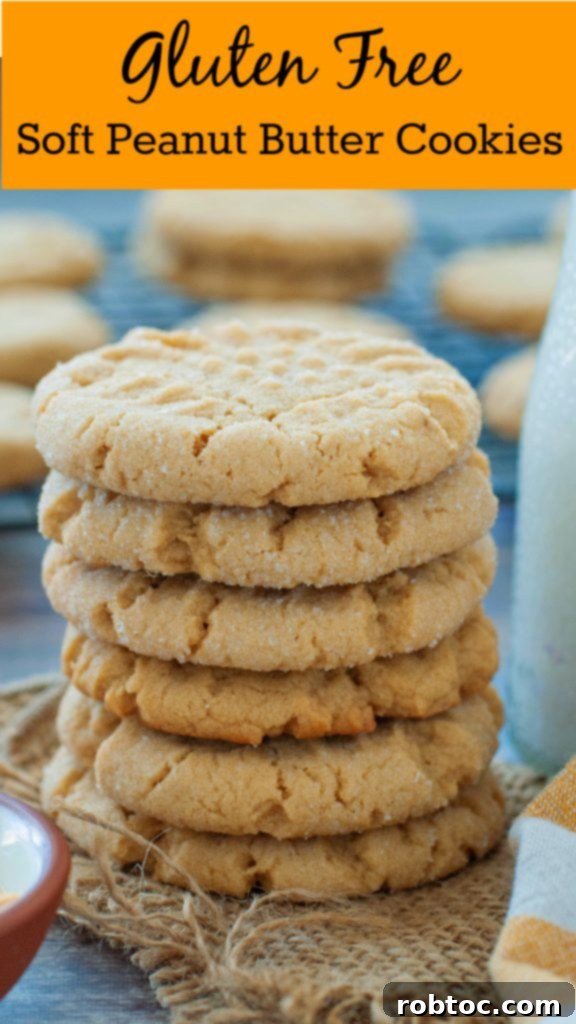
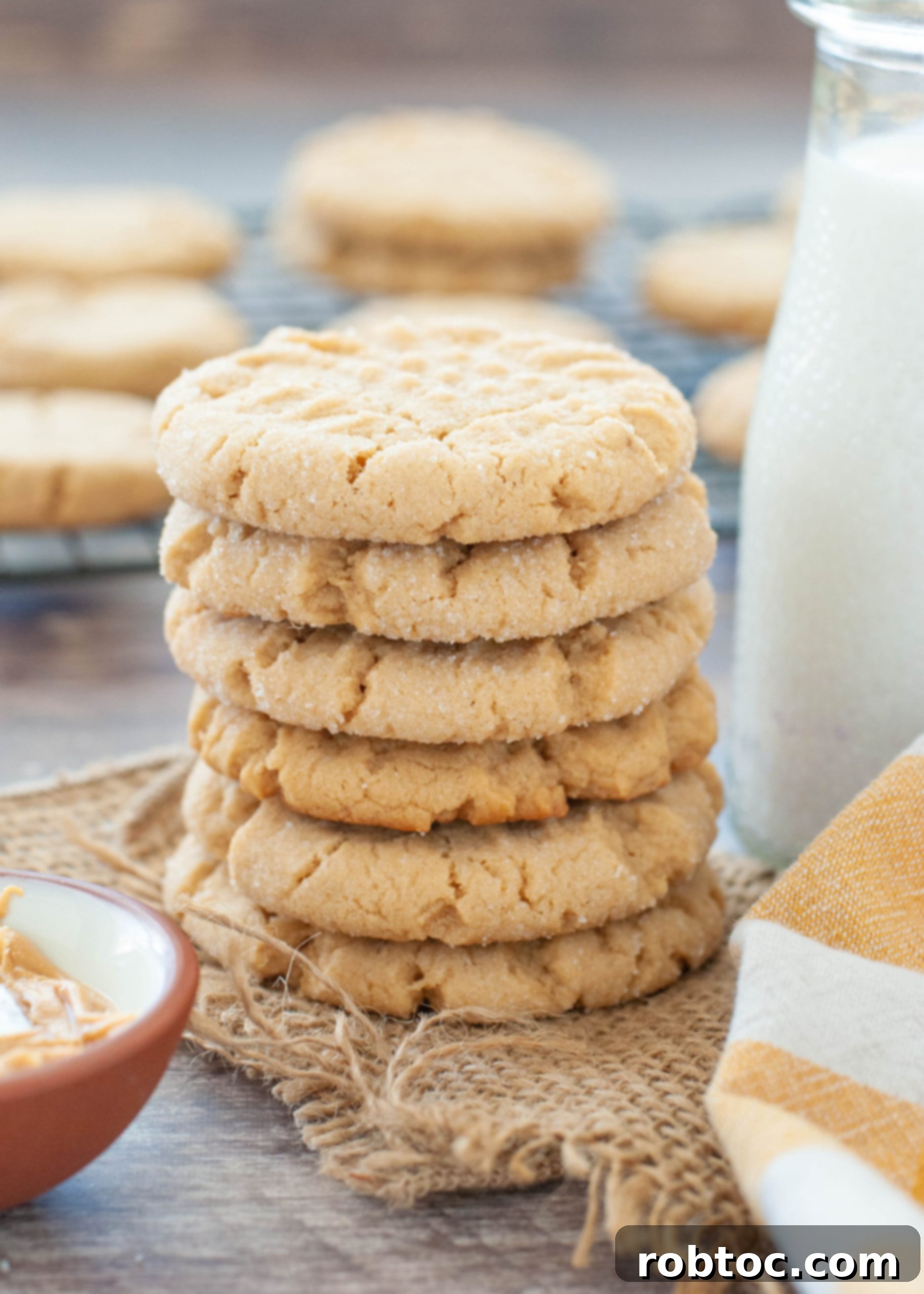
Discover the magic of soft peanut butter cookies boasting perfectly crisp edges and a wonderfully chewy center. These gluten-free delights are incredibly tender and utterly wonderful, especially when enjoyed warm, fresh out of the oven. Whether you prefer them plain, lightly rolled in sugar for an extra sparkle, or paired with a cold glass of milk, these cookies are a dream come true for any peanut butter enthusiast. What’s more, this thoughtfully crafted recipe is free of common allergens including wheat, gluten, soy, fish, shellfish, tree nuts, and sesame, making them a safe and delicious treat for many.
This post contains affiliate links, meaning I may earn a small commission if you make a purchase through my links, at no extra cost to you. These commissions help support my work in creating allergy-friendly recipes.
Why These Gluten-Free Peanut Butter Cookies Will Become Your New Favorite
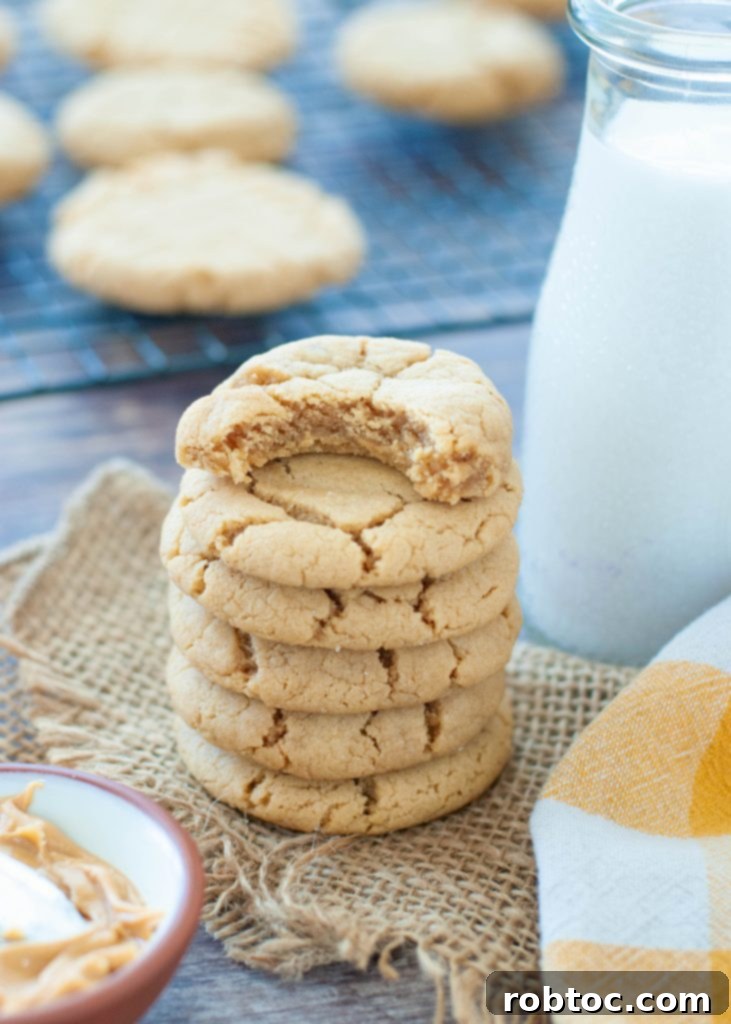
Many gluten-free cookie recipes often result in a stiff or dry texture, even when they look appealing in photos. My mission was to create a gluten-free peanut butter cookie that defies this expectation – one that is truly chewy, tender, and an absolute delight with every single bite. I wanted that perfect balance of a slightly crisp edge giving way to a soft, yielding interior that makes you reach for another.
To achieve this desired soft and moist texture, I implemented a few crucial adjustments that truly set this recipe apart. Firstly, I exclusively use brown sugar. Unlike white sugar, brown sugar contains molasses, which adds not only a richer flavor but also significantly more moisture to the dough. This increased moisture content is key to keeping the cookies wonderfully soft and preventing them from drying out during baking. Secondly, I incorporated an extra egg yolk into the recipe. Egg yolks are rich in fat and act as a natural emulsifier, contributing to unparalleled moisture, richness, and tenderness in the final product. The added fat also helps create a melt-in-your-mouth texture that’s hard to achieve with just whole eggs.
Finally, I believe a generous splash of vanilla extract elevates the flavor profile. Most recipes call for a standard amount, but I’ve found that a little extra vanilla truly enhances the warmth and depth of the peanut butter, bringing all the flavors together beautifully. These three simple yet impactful tweaks – brown sugar for moisture, an extra egg yolk for richness and tenderness, and a little more vanilla for enhanced flavor – make all the difference. Once you try these soft and chewy gluten-free peanut butter cookies, I’m confident they’ll become your go-to recipe whenever a cookie craving strikes!
Choosing the Best Peanut Butter for Your Cookies
The type of peanut butter you use can significantly impact the texture and consistency of your cookies. For this recipe, I highly recommend using regular, creamy peanut butter rather than natural peanut butter. Natural peanut butter, which typically separates oil from solids, tends to be much runnier and can lead to a greasier, less predictable cookie dough. The emulsifiers in regular peanut butter create a more stable and consistent base, which is crucial for achieving the perfect cookie texture.
I personally used Walmart’s Great Value brand, and it worked beautifully. In my experience, most conventional creamy peanut butter brands will yield similar results, so you shouldn’t need to be overly particular about the brand as long as it’s not “natural.”
For those navigating soy allergies, it’s worth noting that many people with a soy allergy can safely consume soy lecithin, an oil commonly used in numerous peanut butter brands. However, if your allergy requires you to avoid soy lecithin entirely, I’ve discovered that Peter Pan peanut butter typically does not use soy oils in its formulation, making it a potentially safer alternative. Always double-check ingredient labels to ensure suitability for your specific dietary needs.
Can I Adapt This Recipe to Be Peanut-Free?
As a parent of two children with severe peanut allergies, I completely understand the complexities and concerns around managing nut-free environments. It’s why I rarely make peanut butter cookies, usually reserving them for times when my allergic children are at school, and I meticulously sanitize my kitchen afterward. However, my other two children, and myself, absolutely adore them!
For those looking for a peanut-free alternative, SunButter, a delicious spread made from roasted sunflower seeds, is often a popular choice. Unfortunately, when used in baking, SunButter can sometimes react with baking soda (due to chlorophyll naturally present in sunflower seeds) and turn the baked goods an unappealing greenish hue. This discoloration is purely cosmetic and does not affect the taste or safety of the cookie, but it can be a surprise! I haven’t had the chance to extensively test this specific recipe with SunButter as a direct substitute yet, but it’s high on my list for future recipe testing, and I will report back with my findings. If you decide to experiment before I do, please leave a comment below and share your results! My initial assumption is that it would be a 1:1 substitution, though you might need to adjust for its slightly runnier consistency compared to regular peanut butter.
Selecting the Right Gluten-Free Flour Blend
With a family of six, I’m always looking for ways to make my grocery budget stretch further without compromising on quality or taste. For this recipe, I extensively tested and perfected it using Walmart’s Great Value all-purpose gluten-free flour blend. I’ve found this particular blend to be quite reliable and accessible. Interestingly, its ingredient composition is remarkably similar to more premium blends like King Arthur Measure for Measure, suggesting that King Arthur’s blend would also work exceptionally well in this recipe.
It’s crucial to understand that gluten-free baking requires a specific blend of various flours and starches to mimic the structure and texture provided by traditional wheat flour. Therefore, you cannot simply substitute a single-grain gluten-free flour (like almond flour, oat flour, or rice flour alone) for a blend in this recipe. Doing so would likely result in cookies with a drastically different and undesirable texture. Every brand’s gluten-free all-purpose flour blend has its unique mix of grains and starches, as well as varying proportions of binding agents like xanthan gum. While I recommend the brands mentioned, if you choose to use a different blend, please do so at your own risk, as results may vary. For the best outcome, stick to a reputable, all-purpose gluten-free flour blend that explicitly states it contains xanthan gum or a similar binder.
To Fork Mark or Not to Fork Mark?
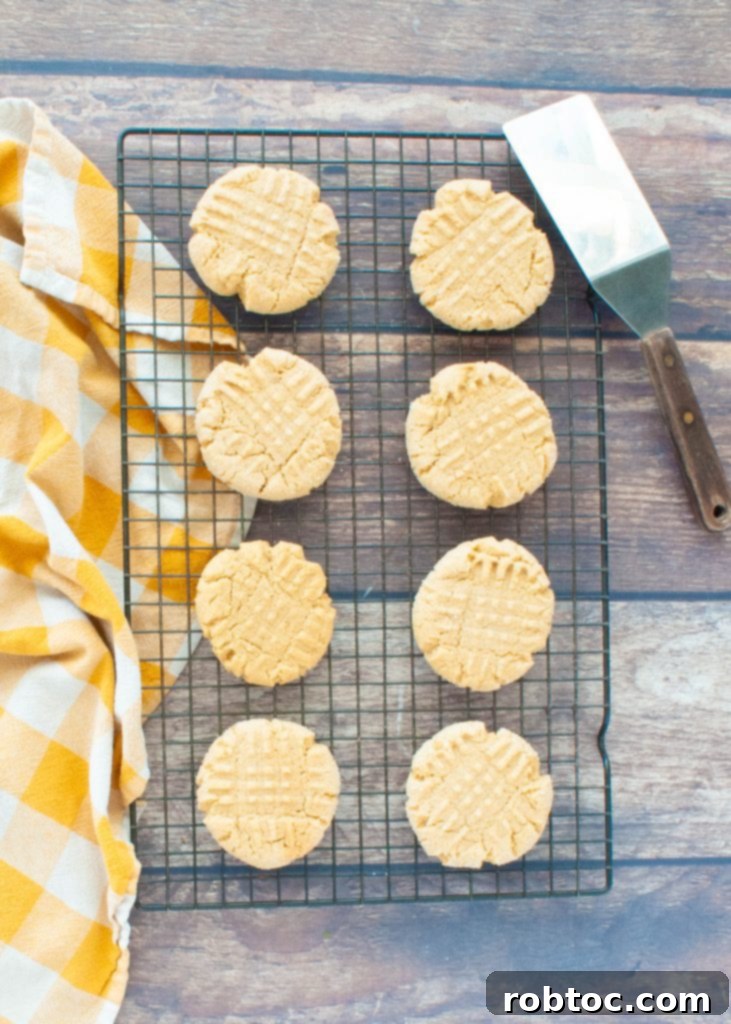
The iconic crosshatch indentations on peanut butter cookies are undeniably a classic and beloved visual trademark. However, when it comes to my personal preference, I often skip them, and for good reason! Firstly, bypassing this step allows me to get the cookies into the oven much faster, which, let’s be honest, means they land in my tummy sooner! Secondly, creating those distinct fork marks can sometimes lead to crispier sections on the cookie. The raised lines and deeper indentations get more direct heat exposure, causing them to crisp up more than the rest of the cookie. While some might enjoy this added crunch, I generally prefer an overall softer and chewier cookie.
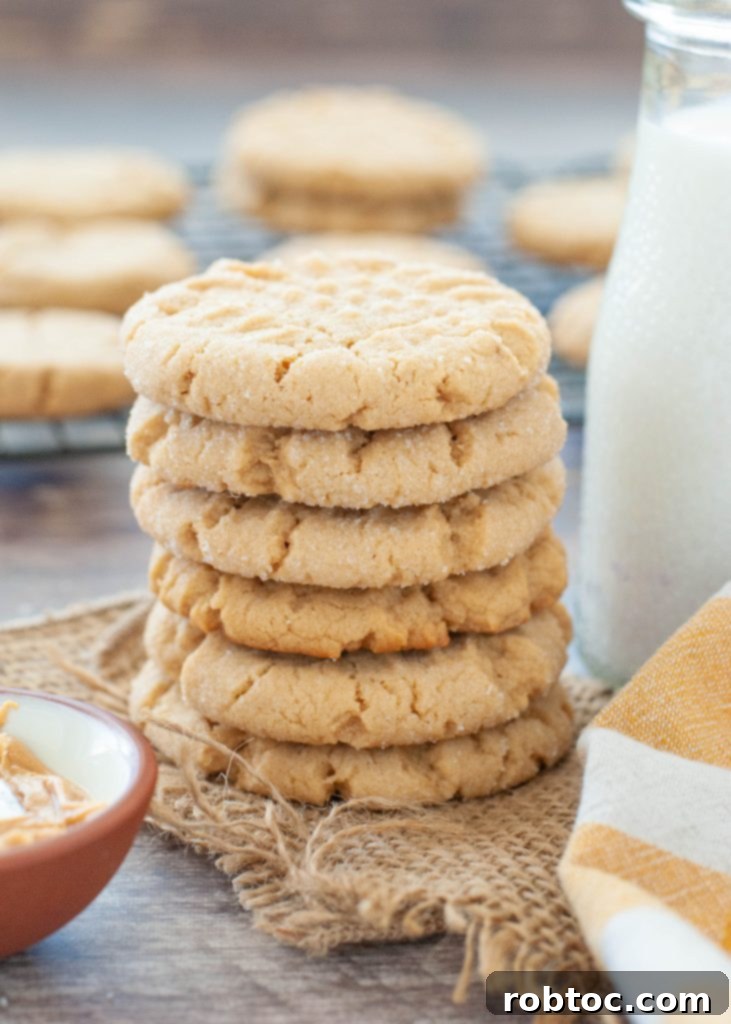
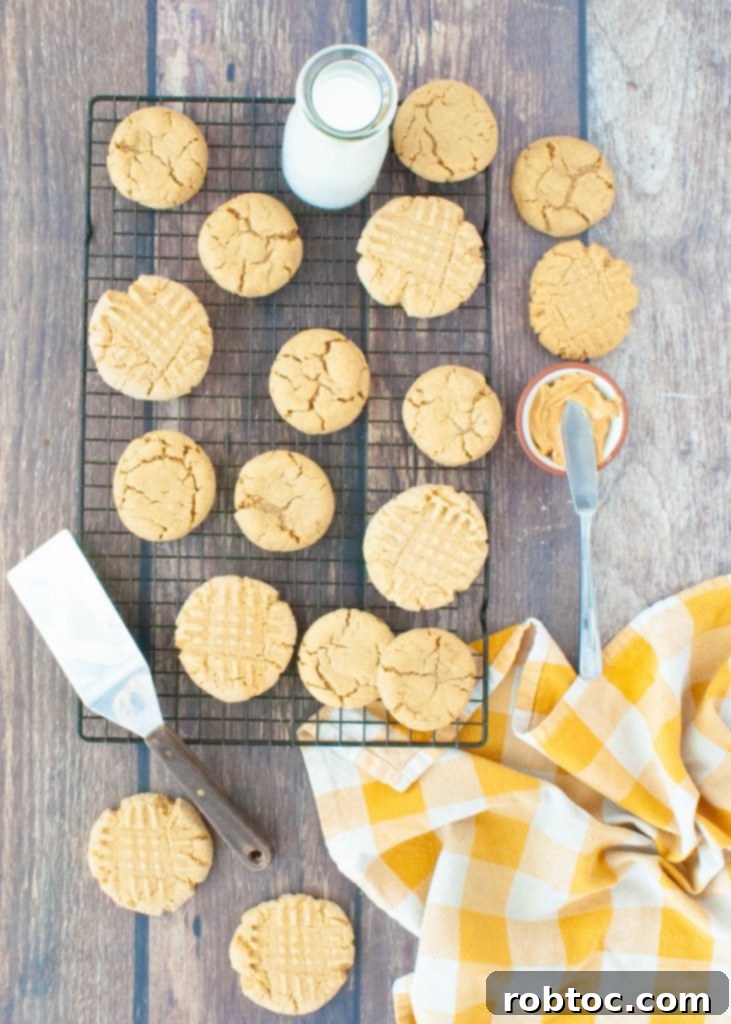
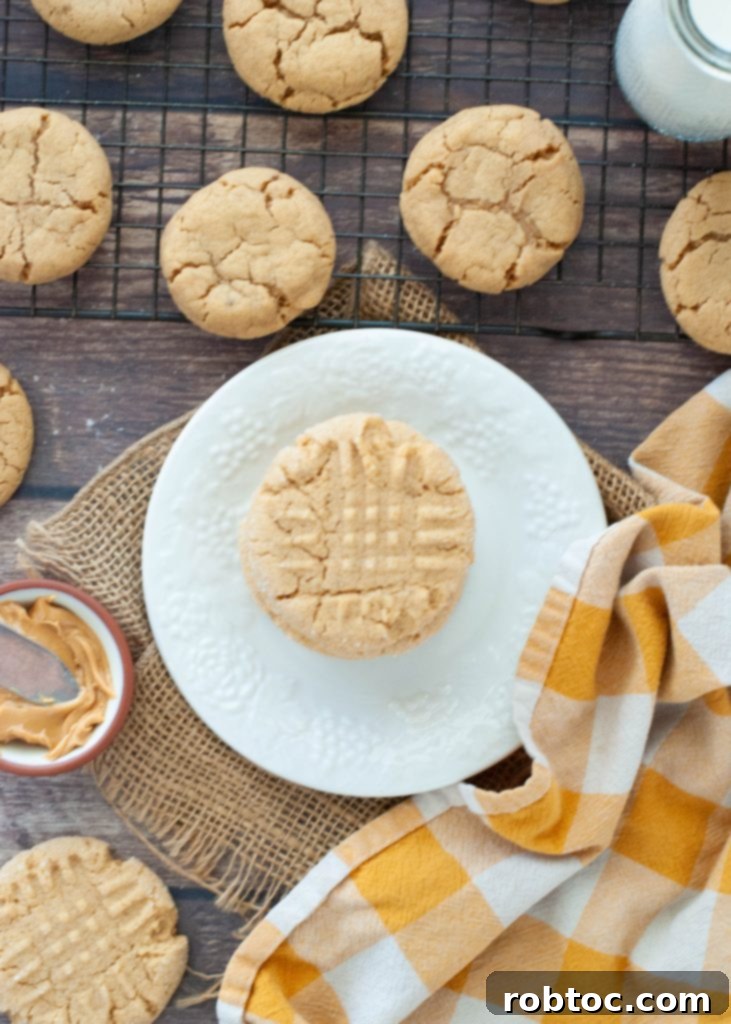
That being said, there’s absolutely no wrong answer here! If you love the traditional look and the slightly varied texture, by all means, go for it. To achieve the classic crosshatch pattern, simply press the tines of a fork gently onto the center of each cookie dough ball, creating an indentation. Then, rotate your fork 90 degrees and press down again, so the lines intersect, forming a neat “X” shape. As you can see in the photos provided, I’ve baked a mixture of both styles, allowing you to visualize what your gluten-free peanut butter cookies will look like either way.
Why Does This Recipe Use Flour When Some Peanut Butter Cookies Don’t?
You might have encountered some “easy” peanut butter cookie recipes that boast being naturally gluten-free because they entirely omit flour. While these flourless versions can certainly be quicker to prepare, I’ve found that they often result in a flatter, denser cookie with a texture that is more akin to a fudge than a traditional chewy cookie. They can also sometimes be greasier due to the higher proportion of fat from the peanut butter without the flour to absorb it.
My goal with this recipe was to create a gluten-free peanut butter cookie that tastes and feels exactly like the classic, beloved version you grew up with – soft, chewy, and slightly puffed. Including a carefully selected gluten-free flour blend provides the necessary structure, body, and chewiness that flourless recipes simply can’t replicate. If you’re going to take the time to bake a batch of cookies, I believe it’s worth it to make a recipe that delivers the authentic, satisfying texture and flavor of an original, well-crafted peanut butter cookie. This recipe ensures you get that true cookie experience, without any gluten.
Essential Tips for Baking Perfect Gluten-Free Peanut Butter Cookies
Achieving the perfect chewy and soft gluten-free peanut butter cookie is all about paying attention to a few key details. Here are my top tips to ensure your batch comes out flawlessly every time:
- **Accurately Measure Your Flour:** When measuring your gluten-free all-purpose flour, always use the “spoon and level” method. Instead of scooping the measuring cup directly into the flour container (which compacts it and can lead to too much flour), spoon the flour lightly into your measuring cup until it overflows, then level it off with the back of a knife or straight edge. This prevents adding too much flour, which can result in dry, crumbly cookies.
- **Compact Brown Sugar Correctly:** Brown sugar, with its added molasses, is crucial for moisture and chewiness. When measuring, make sure you firmly compact the brown sugar into the measuring cup. It should hold its shape when inverted. This ensures you’re adding the correct amount of sweetness and moisture to the dough.
- **Do Not Overbake:** This is perhaps the most critical tip for soft, chewy cookies. Bake these cookies for no more than ten minutes. Remember, all ovens can vary slightly in temperature, so keep a close eye on them. When you pull them out, the cookies should still appear a little undone or slightly soft in the middle. The edges should look set and lightly golden, but the center will still be very pliable. They will continue to set up and firm as they cool on the warm baking sheet. If you wait until they look fully “done” and firm in the oven, they will inevitably turn hard and crunchy once completely cooled. Embrace the slightly underbaked look for ultimate chewiness!
- **Fork Marks are Optional for Texture, Not Essential for Taste:** As discussed, the classic fork marks are primarily for aesthetics. If you choose not to press the dough down with a fork, your cookies will naturally puff up a bit more during baking, creating a rounder, softer profile. For those who prefer a slightly flatter cookie with that beautiful crackling on top (my personal preference!), a little trick is to gently smack the hot baking sheet flat onto the counter immediately after removing it from the oven. This causes the cookies to deflate slightly, helping them flatten out and creating those lovely crinkled surfaces.
Is Rolling the Cookies in Sugar Necessary?
Absolutely not! Rolling the cookie dough balls in granulated sugar before baking is an entirely optional step. It’s purely a matter of personal preference and desired aesthetic. If you’re aiming for that extra sparkly, crystalline topping and a slight boost in sugary taste and texture, then go ahead and include this easy extra step. The sugar coating also adds a subtle crunch to the exterior, contrasting beautifully with the chewy interior. However, if you prefer a less sweet cookie or want to save a little time, skipping this step will not compromise the deliciousness or fundamental texture of your gluten-free peanut butter cookies.
Can This Recipe Be Used for Peanut Butter Blossoms?
Yes, without a doubt! This recipe is an absolutely perfect base for making the beloved and iconic peanut butter blossoms. These festive treats, traditionally a peanut butter cookie rolled in granulated sugar and then topped with a Hershey’s Kiss, are incredibly popular, especially around the Christmas holiday season. To transform these chewy gluten-free peanut butter cookies into delightful blossoms, simply follow these easy modifications:
- **Skip the Fork Marks:** As with regular peanut butter blossoms, you won’t need to make the crosshatch indentations.
- **Roll in Sugar:** Once you’ve scooped and rolled your dough into balls, roll each one generously in granulated sugar before placing them on your baking sheet.
- **Add Hershey’s Kisses:** Bake the cookies as directed. Immediately after taking them out of the oven, gently press a Hershey’s Kiss (or any small, unwrapped chocolate candy) into the center of each warm cookie. The residual heat will slightly melt the chocolate, allowing it to adhere perfectly to the soft cookie.
There truly wouldn’t be a better, more tender, and reliably chewy gluten-free cookie base for your holiday (or anytime!) peanut butter blossoms than this recipe!
Essential Tools for Baking Gluten-Free Peanut Butter Cookies
Having the right kitchen tools can make your baking experience smoother and more enjoyable. Here’s what you’ll need to create these delicious cookies:
- **Stand Mixer or Electric Hand Mixers:** A stand mixer with a paddle attachment makes creaming the wet ingredients effortless. Alternatively, a large mixing bowl and electric handheld beaters will work just as well.
- **Measuring Cups and Spoons:** For accurate ingredient measurements, which is crucial in gluten-free baking.
- **Rimmed Half-Sheet Baking Pan:** Essential for baking cookies evenly and containing any spills. Paired with a silicone baking mat or unbleached parchment paper, it ensures non-stick baking and easy cleanup.
- **Cookie Scoop:** While not strictly essential, a cookie scoop ensures uniform cookie sizes, which leads to even baking. It’s a wonderful tool for consistent results.
- **Rubber Spatula:** Perfect for scraping down the sides of your mixing bowl and folding in ingredients gently.
- **Metal Spatula:** Ideal for carefully transferring warm cookies from the baking sheet to the cooling rack.
- **Cooling Rack:** Allows air to circulate around the cookies, ensuring they cool evenly and prevent sogginess.
Key Ingredients for Chewy Gluten-Free Peanut Butter Cookies
To whip up a batch of these incredibly chewy gluten-free peanut butter cookies, you’ll need a few common pantry staples and one special ingredient:
- **Creamy Peanut Butter:** Remember, opt for regular, creamy peanut butter, not the natural, oil-separated kind, for the best texture.
- **Brown Sugar:** Provides essential moisture and a rich, deep sweetness.
- **Butter:** Melted butter adds richness and contributes to the cookies’ tender crumb.
- **Vanilla Extract:** A generous amount enhances the overall flavor profile.
- **Eggs (plus an extra yolk!):** Eggs provide structure, while the extra yolk adds moisture, richness, and tenderness.
- **Baking Soda:** The leavening agent that helps the cookies rise and spread slightly.
- **Salt:** Balances the sweetness and enhances the flavors.
- **Gluten-Free All-Purpose Flour Blend:** This is crucial. Ensure you use a high-quality blend that includes xanthan gum for proper structure and elasticity. Remember to spoon and level for accurate measurement!
Explore More Delicious Gluten-Free Cookie Recipes!
My love for cookies runs deep – seriously, I’d choose a cookie over almost any other dessert! So, it’s no surprise that my site is brimming with a wide array of fantastic gluten-free cookie recipes for you to explore. If you’ve enjoyed these chewy peanut butter cookies, you’ll surely love my other creations, such as the incredibly popular DoubleTree Chocolate Chip Cookies, a rich and decadent experience. For chocolate lovers, the Double Chocolate Cookies are a must-try. And don’t forget the comforting flavors of my Maple Cookies, or the seasonal favorite, Pumpkin Chocolate Chip Cookies. With so many tempting options and so little time, it’s a good problem to have! Every single recipe on my website is gluten-free, so feel free to browse wildly through my comprehensive recipe index and uncover all sorts of scrumptious allergy-friendly treats to bake and enjoy. Happy baking!
Looking for a Video Guide to Make These Cookies?
Absolutely! For those who prefer visual guidance when baking, I’ve created a comprehensive video that walks you through the entire process of making these gluten-free peanut butter cookies, from start to finish. Watching the steps in action can often clarify any uncertainties and boost your confidence in the kitchen. The video should auto-populate and begin playing on this page. If for any reason it doesn’t appear automatically, you can always find it conveniently embedded into the bottom of the recipe card section below. And if all else fails, or if you simply prefer to view it directly, you can easily access the full tutorial on my dedicated YouTube Channel. Happy baking and watching!
Gluten Free Peanut Butter Cookies + VIDEO
24
10 minutes
10 minutes
20 minutes
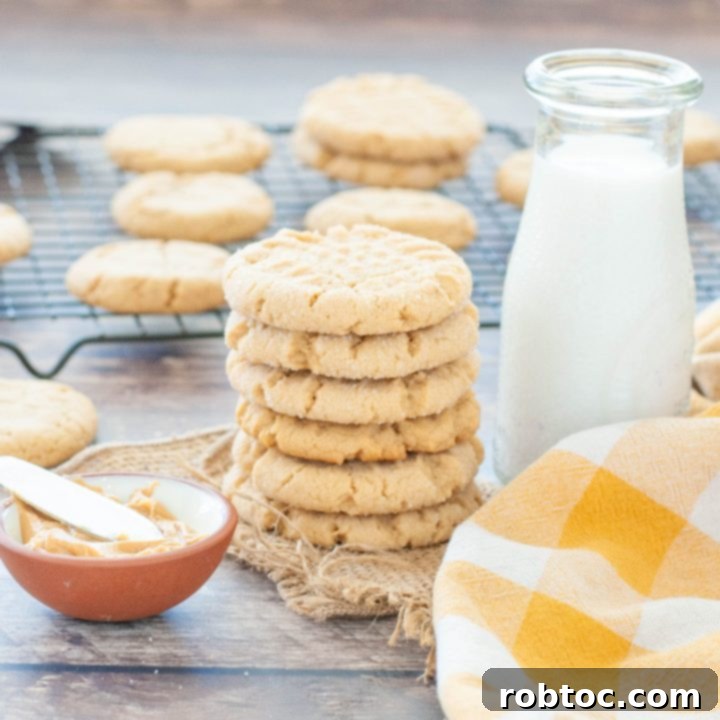
Soft peanut butter cookies with crisp edges and a chewy center. SO tender and wonderful, especially warm out of the oven. Eat them plain, rolled in sugar, or just with a glass of milk for a peanut butter lover’s dessert. This recipe is free of: wheat, gluten, soy, fish, shellfish, tree nuts and sesame.
Ingredients
- 1 cup peanut butter
- 1 and 1/4 cup brown sugar
- 6 TBSP butter, melted
- 2 tsp vanilla
- 2 eggs + 1 yolk
- 1 tsp baking soda
- 3/4 tsp salt
- 1 and 3/4 cups gluten-free all purpose flour, spoon then leveled to measure
Instructions
- Preheat your oven to 350 degrees F.
- In a large mixing bowl, or in the bowl of a stand mixer, add your creamy peanut butter, melted butter, brown sugar, vanilla and eggs. Cream with the paddle attachment or your handheld electric beaters until smooth.
- Add in your baking soda and salt. Mix.
- Add in your flour and mix until combined.
- Use your cookie scoop to evenly partition the dough, and then roll each mound of dough until it’s a round ball in your hands.
- OPTIONAL: roll in granulated sugar.
- Place on the silicone baking mat, or unbleached parchment paper spaced evenly apart. (I fit 13 on each sheet.)
- Bake for ten minutes, no more. Cookies will seem slightly underdone–that is good.
- Bake for ten minutes, no more. Cookies will seem slightly underdone–that is good. The cookies will finish setting up as they cool on the warm baking sheet, ensuring a soft and chewy center.
- Set on your counter and leave the cookies on the warm pan for five minutes to finish setting up.
- Remove to a wire cooling wrack until fully cooled.
- Eat and enjoy.
- Cookies are good room temperature, covered for up to three days.
- Cooled cookies can freeze for up to 3 months in an airtight container.
Notes
For optimal results and to answer any lingering questions, be sure to read the comprehensive FAQ section above and watch the instructional video.
*Regarding allergies: Our family’s allergies are severe and regularly re-tested. We strictly adhere to what is listed on product labels and do not contact companies for derivation information or cross-contact specifics. If your allergies necessitate these additional precautions, please conduct your own research and due diligence. I cannot guarantee the safety of any ingredient; only you can determine what is safe for your family. I simply share what works for us.
This recipe was inspired by a lively Reddit thread discussing an America’s Test Kitchen peanut butter cookie recipe.
Nutrition Information:
Yield: 24
Serving Size: 1
Amount Per Serving:
Calories: 119Total Fat: 9gSaturated Fat: 3gTrans Fat: 0gUnsaturated Fat: 5gCholesterol: 31mgSodium: 206mgCarbohydrates: 8gFiber: 1gSugar: 3gProtein: 3g
DON’T FORGET TO PIN THIS RECIPE, SO THAT YOU DON’T LOSE IT. WHILE YOU’RE THERE, BE SURE TO EXPLORE MY OTHER GLUTEN-FREE PINS FOR MORE INSPIRATION!