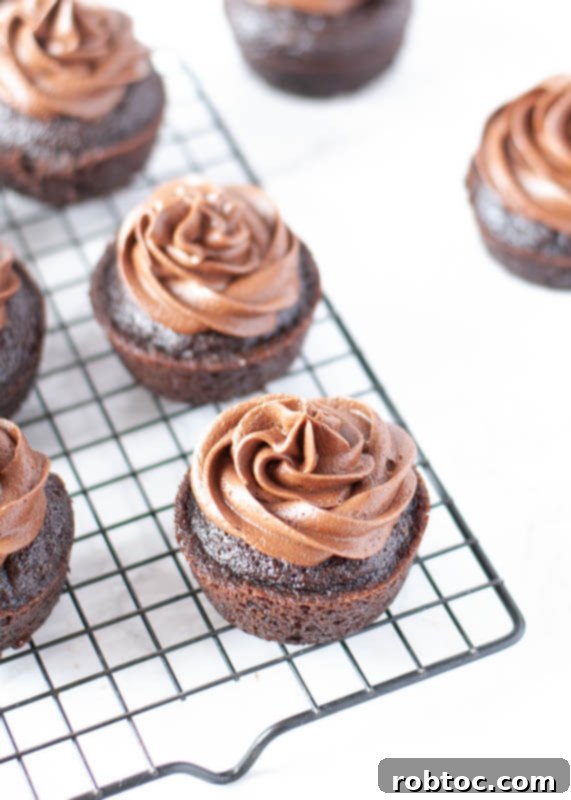
Decadent Dairy-Free Chocolate Frosting: Vegan, Allergy-Friendly & Top-8-Free Buttercream
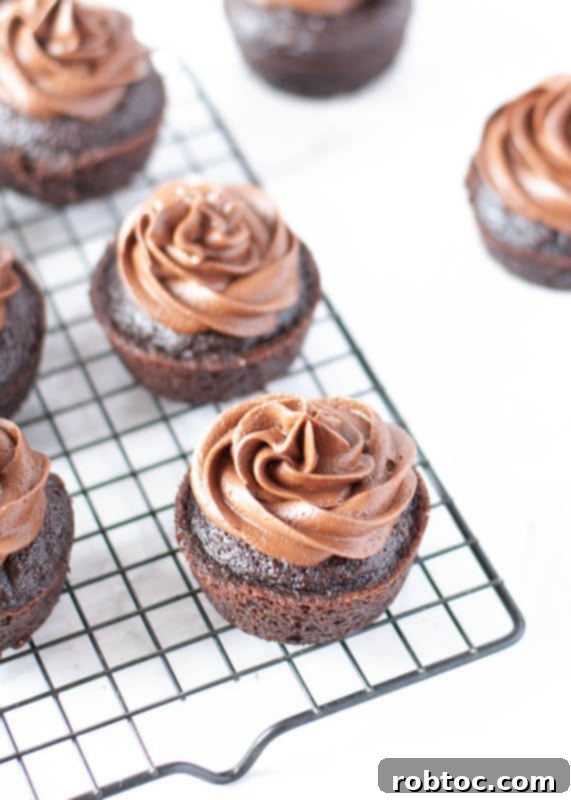
This rich, yet perfectly balanced, dairy-free chocolate “buttercream” is the frosting that will have you eagerly anticipating every bite, especially the glorious edges of the cake! Crafted with care to be exceptionally allergy-friendly, this delightful frosting is completely free of common allergens including gluten, dairy, egg, soy, peanuts, and tree nuts. Yes, it’s truly vegan and top-8-free, making it a safe and delicious choice for almost everyone. Expect a soft, incredibly creamy, and easily pipeable texture that’s perfect for decorating elaborate cakes or simply enjoying straight from the spoon!
This post contains affiliate links.
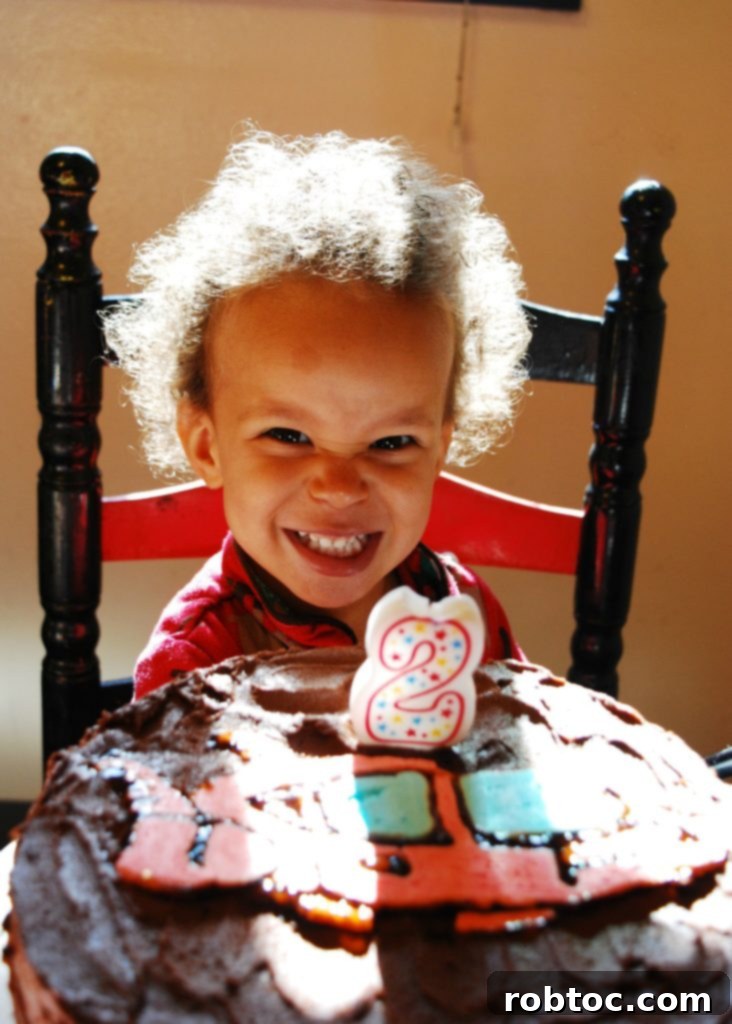
Today marks a very special occasion: my youngest’s 2nd birthday! Time truly flies, and while he might not be a “baby” anymore, his love for chocolate remains as strong as ever. So, it was a no-brainer—chocolate cake with a generous layer of chocolate frosting was absolutely essential. What can I say? My little guy has impeccable taste! Once you experience the velvety texture and deep chocolate flavor of this vegan chocolate buttercream frosting, you’ll understand exactly why he (and everyone else) adores it so much.
Essential Ingredients for Our Milk-Free Chocolate Buttercream Recipe
Crafting this incredible dairy-free chocolate frosting is surprisingly simple, requiring just seven common ingredients. If you’re already accustomed to a dairy-free lifestyle, chances are these staples are already in your pantry!
- Vegetable Shortening: This is a key player for achieving that classic buttercream texture and stability without dairy. Make sure to use a soy-free vegetable shortening if you have a soy allergy.
- Coconut Oil: When combined with shortening, coconut oil helps to create a luscious creaminess and prevents the frosting from feeling too greasy. Opt for refined coconut oil if you prefer no coconut flavor in your frosting.
- Powdered Sugar: Also known as confectioners’ sugar, this provides the essential sweetness and fine texture crucial for a smooth frosting.
- Unsweetened Cocoa Powder: The star of the show! We’ve had great success with readily available brands like Nestle or Hershey’s. For an even deeper chocolate flavor, consider using Dutch-processed cocoa.
- Rice Milk (vanilla or plain): This plant-based milk adds the necessary liquid to thin the frosting to a spreadable consistency. Rice milk is often preferred for its mild flavor, but see our FAQ section for other excellent dairy-free milk options.
- Vanilla Extract: A touch of vanilla enhances the chocolate flavor beautifully, adding a layer of warmth and complexity.
- Pinch of Salt: Don’t skip this! A small amount of salt balances the sweetness and truly makes the chocolate flavor pop.
Tools for Whipping Up Perfect Dairy-Free Chocolate Frosting
Making this dairy-free chocolate buttercream is a breeze with the right equipment. Here’s what you’ll need to ensure a smooth and perfect finish:
- Measuring Cups and Measuring Spoons: Essential for accurate ingredient ratios.
- Large Mixing Bowl + Handheld Electric Mixer: A great option for beginners or if you’re working with smaller batches. It gets the job done efficiently.
- OR a Stand Mixer with the Paddle Attachment: For serious bakers, a stand mixer is a game-changer. I personally prefer the paddle attachment over the whisk attachment for frosting as it creates a denser, creamier texture and minimizes air bubbles, but use whichever you’re most comfortable with. A stand mixer is truly a worthy investment, especially if you adhere to a specialty diet and frequently prepare items from scratch.
- Spatula: Crucial for scraping down the sides and bottom of the mixing bowl, ensuring all ingredients are thoroughly incorporated for a consistently smooth frosting.
- Piping Bag (or a Ziploc bag): If you plan on decorating, a piping bag is invaluable. A sturdy Ziploc bag with a corner snipped off can also work in a pinch for simple designs.
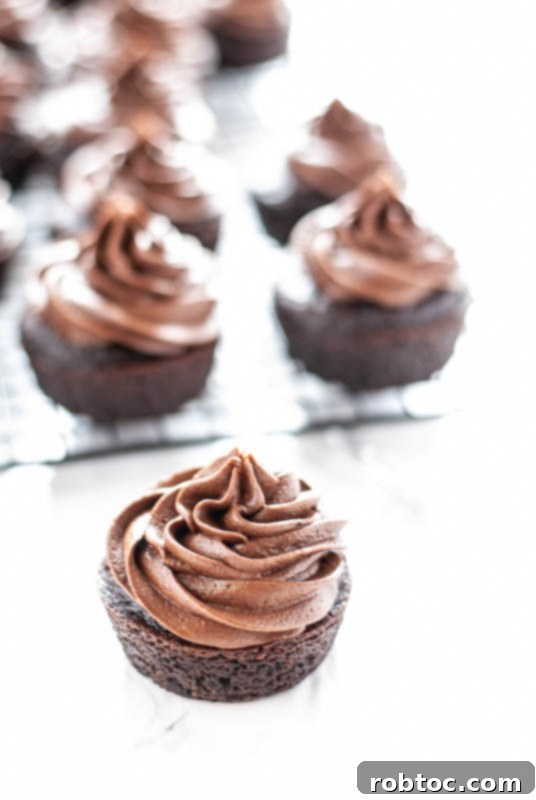
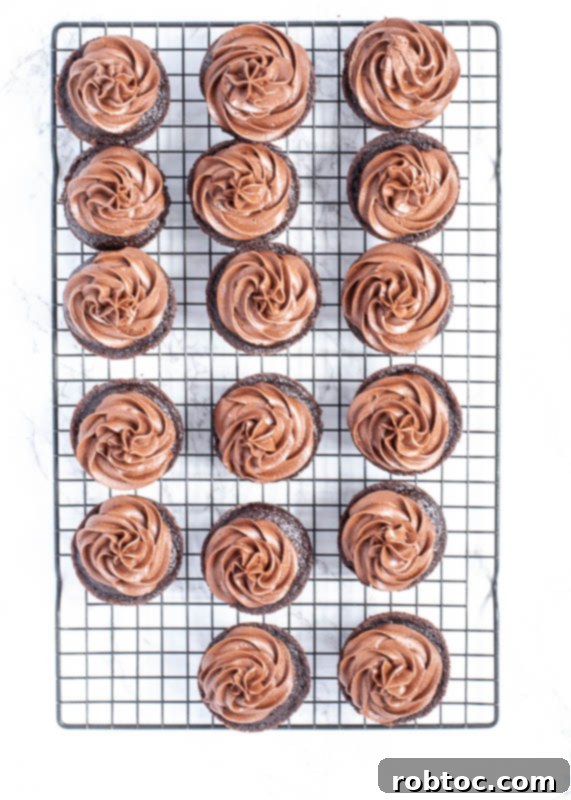
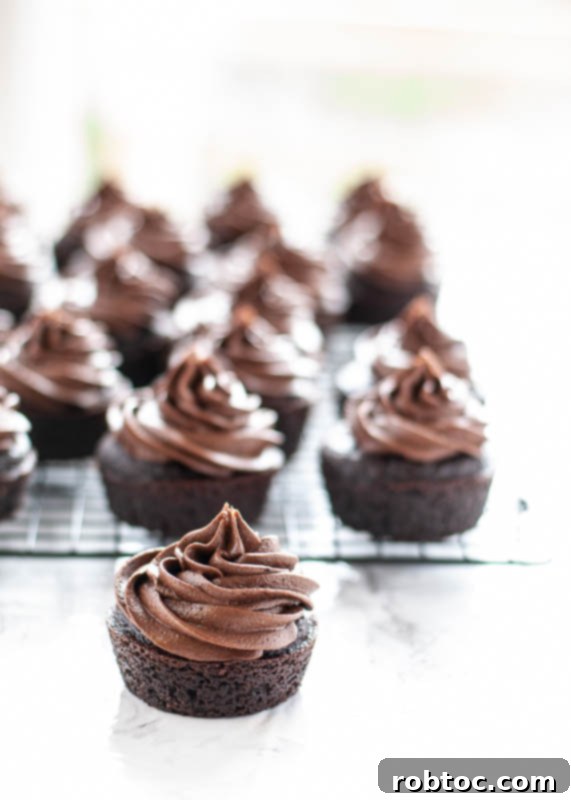
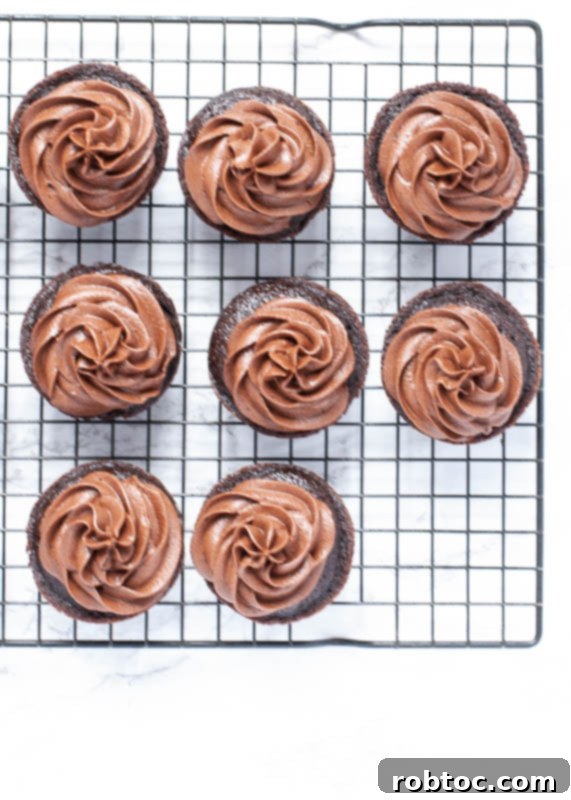
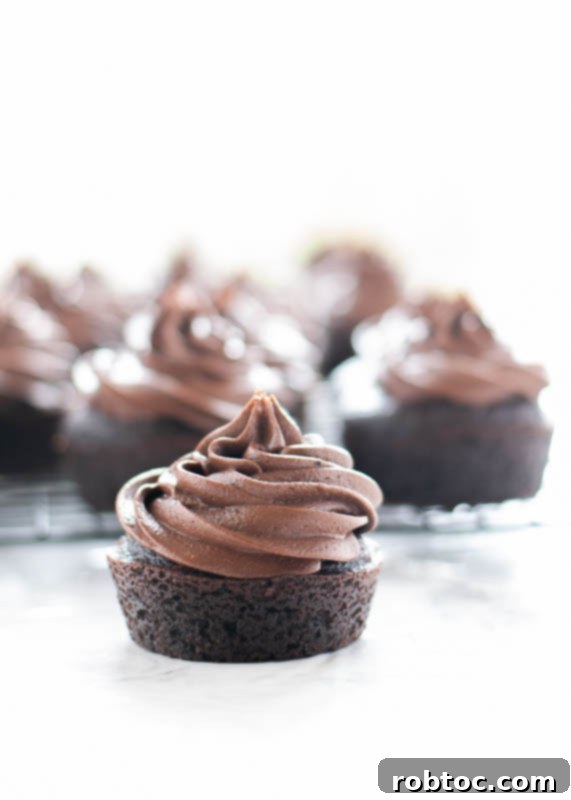
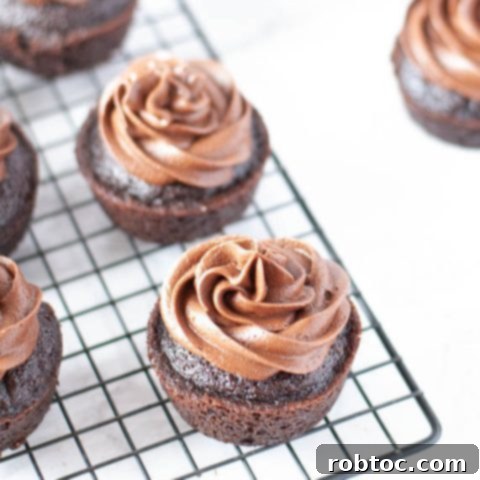
- Frosting Tip of Choice: For decorative piping, select your favorite tip. I used a Wilton #2 in the photos to achieve those beautiful swirls. Alternatively, an offset spatula is perfect for smoothly spreading frosting over cakes and cupcakes.
Celebrating with Perfect Allergy-Friendly Chocolate Frosting
The night before my son’s birthday, my husband and I decided on a whimsical plan: an early morning celebration! Around 11 p.m. last night, we finalized our decision to wake up, enjoy a nice breakfast, let our son stay home from school for a bit, and then have cake and candles first thing. Afterward, we’d take him to school a little late, and my husband would head to work. It was a bit of a scheduling dance and certainly non-traditional to start the day with cake, but it was incredibly important to us that we were all together to celebrate our little man’s 2nd birthday.
Needless to say, you don’t need to convince a two-year-old boy that eating chocolate cake early in the morning is a good idea! Bed-head and all, he was absolutely delighted to be serenaded with “Happy Birthday” at 8 a.m., as you can see in the joyous photos. Those moments are truly priceless.
A quick note on my allergy-friendly baking philosophy: while my youngest child primarily has allergies to peanuts and tree nuts, I always strive to cook and bake to the “lowest common denominator.” This means creating recipes that accommodate my older son’s allergies as well, which include wheat, milk, and eggs. My aim is to ensure that every single family member can safely and joyfully partake in every treat, especially during holidays and special occasions, allowing us to create those cherished, lasting memories together. Therefore, this dairy-free chocolate frosting recipe is meticulously crafted to be free of the top eight common allergens: wheat, dairy, eggs, soy, fish, shellfish, peanuts, and tree nuts. This makes it a truly inclusive recipe for many households managing multiple food sensitivities.
Happy birthday to my sweet baby, and happy celebrating to anyone else who uses this fantastic vegan chocolate frosting recipe! May this year bring you much joy and delicious moments!
Explore More Dairy-Free Buttercream Frosting Recipes
If you love this chocolate frosting, you’ll be thrilled to discover our other equally delicious and allergy-friendly buttercream recipes. Expand your baking repertoire with these fantastic options:
- The Best Dairy-Free Vanilla Frosting: A classic for any cake or cupcake.
- Dairy-Free Lemon Frosting: Bright, zesty, and perfect for spring and summer desserts.
- Dairy-Free Eggnog Frosting: A festive treat ideal for holiday baking.
The Secret to Creamy Texture: Why Shortening Shines in This Vegan Frosting
Let’s talk a little bit about the composition of this frosting, specifically the use of shortening. I know that for some, the mention of shortening might conjure up images of overly sweet, dense store-bought frostings, and you might think “gross.” I used to feel the same way! However, in this recipe, the shortening is perfectly balanced with coconut oil, resulting in a frosting that’s “just right.” It’s not too rich, not too sweet, and has an incredibly satisfying mouthfeel. Shortening truly is a magical ingredient when it comes to achieving that supremely creamy texture and the ideal structure for piping and spreading. It provides a stability that dairy butter might offer, but without any of the allergens.
I genuinely look forward to the frosting-laden edges of any cake frosted with this recipe. In fact, I often save them for last, so my final bites are a glorious reward of that thick, outer layer of dairy-free chocolate goodness. I hope you discover the same delightful experience!
Frequently Asked Questions About Our Vegan Chocolate Frosting
- Why do I need to keep this frosting covered?
- Due to the coconut oil content, this frosting can firm up and become quite hard if exposed to air or kept in a cool environment. Conversely, it could melt if kept somewhere very warm. To maintain its soft, creamy, and spreadable consistency, always keep the frosting covered tightly with plastic wrap or stored in an airtight container. When applied to a cake or cupcakes, ensure the entire dessert is well-covered with plastic wrap or placed in a cake saver to prevent it from hardening too much.
- I don’t want chocolate frosting, do you have an allergy-friendly vanilla frosting?
- Absolutely! If you’re not a devoted choc-o-holic like me, you can certainly find an equally delicious alternative. Head over to my recipe for The Best Dairy-free Vanilla Frosting (GF, Vegan, Top-8-free) for a classic, versatile option.
- Where do I find the cupcake recipe shown in the picture?
- The delicious cupcakes featured in the photos are my absolute favorite birthday cake recipe! You can find it here: allergy-friendly chocolate cupcakes. This versatile recipe can be adapted to make a 13×9 cake, a double-layer cake, or even a stunning triple-layer cake. Just remember to double the recipe if you’re planning for additional layers to ensure you have enough batter.
- Can I use regular shortening?
- You certainly can! If you don’t have a soy allergy or aren’t strictly vegan, feel free to use any type of shortening you prefer. For those needing an allergy-friendly, soy-free shortening option, Spectrum shortening is an excellent choice.
- Why do you combine the oils with the cocoa first?
- This is a little trick for maximum smoothness! I’ve found that if cocoa powder is added at a later stage, it tends to be much harder to fully incorporate, often resulting in a slightly grainy or uneven texture. By creaming the oils (shortening and coconut oil) with the cocoa powder right at the beginning, and diligently scraping the bottom and sides of the bowl multiple times, you achieve a beautifully rich, smooth, and intensely chocolaty base that is simply irresistible.
- Why don’t you just use all coconut oil, or all shortening? Why do you use a combo?
- The combination of shortening and coconut oil is key to the perfect texture and stability of this vegan buttercream. Using all shortening can sometimes result in a frosting that feels a bit too greasy or heavy on the palate. Conversely, relying solely on coconut oil makes the frosting very temperamental to temperature fluctuations, as coconut oil has a relatively low melting point and can easily become too soft or even melt. The blend of both ingredients provides the best of both worlds: a wonderfully creamy texture and a stable structure that holds up beautifully for piping and spreading.
- Can’t I just sub in vegan butter for regular butter?
- While you *can* technically substitute vegan butter, I generally don’t recommend it for this particular recipe, and here’s why: vegan butter sticks can sometimes be difficult to find, are often more expensive, and some brands can leave a slight aftertaste. My preference is to use pantry staples and simple ingredients for both budget-friendliness and ease of access. The combination of shortening and coconut oil offers a milder taste profile (just be sure to use *refined* coconut oil to avoid a coconut flavor, unless you enjoy it!). If you do decide to use vegan butter, be sure to omit both the coconut oil and shortening, and use a full 6 tablespoons of vegan butter or dairy-free margarine in their place.
- Does this recipe use chocolate chips?
- No, this recipe relies solely on unsweetened cocoa powder for its rich chocolate flavor. I find that cocoa powder delivers an equally deep and satisfying chocolate taste, and it’s generally much more affordable than specialty dairy-free chocolate chips. Plus, using cocoa powder eliminates the need to melt and temper chocolate, simplifying the process and making this frosting even quicker to prepare.
- What dairy-free milk do you use?
- All buttercream frostings require a liquid component to achieve the right consistency; without it, the oil and powdered sugar mixture would be far too thick to spread or pipe. In this recipe, we use rice milk. I personally find that rice milk has the mildest aftertaste compared to many other plant-based milk alternatives, allowing the chocolate flavor to truly shine. While nut milks (like almond milk) can sometimes impart too much of their own flavor, if you enjoy almond milk, feel free to use it. Soy milk is another popular option, though I find it can also leave a slight aftertaste. In a pinch, it can certainly work. For an extra creamy frosting, coconut milk or coconut cream could also be excellent choices. Oat milk would likely perform well too.
- Is this frosting paleo?
- For my paleo readers, I apologize, but technically this frosting is not considered paleo-friendly because powdered sugar is a refined sugar. However, rest assured that it is genuinely dairy-free, vegan, and incredibly allergy-friendly.
- What if I have a coconut allergy?
- No problem at all! If you need to avoid coconut oil, simply use all shortening. Instead of the specified 3 tablespoons of coconut oil and 3 tablespoons of shortening, just use a total of 6 tablespoons of your preferred dairy-free, soy-free shortening. This adjustment will still yield a fantastic, creamy frosting.
- How do you store this frosting?
- As mentioned earlier, this frosting can be sensitive to extreme temperatures. For optimal freshness and consistency, store it in an airtight container (or keep the bowl tightly wrapped with plastic wrap) at room temperature. One wonderful benefit of this frosting being free of dairy and butter is that you don’t have to worry about it spoiling as quickly as traditional buttercreams, offering greater flexibility in storage.
- What do I do if I have leftover frosting?
- Well, if you’re anything like me, the first answer is always: grab a spoon and dig in! However, if eating straight frosting isn’t quite your thing, I have a fantastic nostalgic suggestion. Break a graham cracker in half, spread a generous layer of this chocolate frosting on one side, and then place the other half of the graham cracker on top to create a delicious sandwich. I grew up eating these chocolate frosting graham cracker sandwiches, and they remain a beloved treat that my entire family enjoys to this day. If you need gluten-free graham crackers, I highly recommend Schar brand for their excellent quality.
- What else is this frosting good on?
- Beyond cakes and cupcakes, this versatile frosting is absolutely divine on many other desserts. I wholeheartedly recommend using it in my Allergy-Friendly Mississippi Mud Brownies – it truly takes that already popular recipe to an even more decadent level!
Decadent Dairy-Free Chocolate Frosting (Vegan, GF, Top 8 Free)
Frosts 12 cupcakes
10 minutes
10 minutes
This chocolaty, but not too rich, dairy-free “buttercream” is the kind of frosting that makes me look forward to eating the edges of the cake! Allergy-friendly, this frosting is free of: gluten, dairy, egg, soy, peanuts & tree nuts. It’s vegan and top-8-free too. Soft, and pipeable, this is great for piping or just eating with a spoon!
Ingredients
- 3 Tablespoons dairy-free, soy-free vegetable shortening
- 3 Tablespoons coconut oil
- 2 and 2/3 cups powdered sugar
- 1/2 cup unsweetened cocoa powder
- 1/3 cup vanilla rice milk
- 1/2 teaspoon vanilla
- pinch of salt
Instructions
- In the bowl of a stand mixer, combine the oil and shortening with the paddle attachment. Once combined, add the cocoa. Incorporate completely. You’ll find the cocoa really adhere’s to the bottom of the bowl, so use a spatula and make sure everything is scraped and incorporated before moving on. Then, add the vanilla and salt. Mix. Then, alternate the rice milk and powdered sugar until you’ve used them all. Feel free to add more powdered sugar if you need it stiff, or a bit more rice milk if you want it thinner. I find this frosts 12 cupcakes great, but if you want to frost a double layer cake, I’d make one and a half batches. Keeps well in the fridge, covered.
Notes
*Our allergies, while severe and that get re-tested yearly, are such that we can go strictly by what’s on the label. I do not call companies to see what things are derived from, or call manufacturers to see about potential cross contact. If your allergies require you to do so, please do your own homework. I cannot assure you of any ingredient’s safety, only you can do that. I simply share what works for our family
**If you are going to feed this to someone with food allergies, and you yourself do not have food allergies, I HIGHLY recommend having them check every single brand and ingredient you are using, to ensure they’re OK with each part of the recipe. And, to make sure you’ve talked to them about how to avoid cross contamination in your kitchen.
This incredible recipe has been lovingly adapted from: “The Allergen-Free Baker’s Handbook”by Cybele Pascal, a true inspiration in allergy-friendly baking.
DON’T FORGET TO PIN IT, SO YOU DON’T LOSE IT! Also, be sure to explore my other ALLERGY-FRIENDLY PINTEREST BOARDS for a wealth of delicious and safe recipes and ideas. Pinning this recipe means you’ll always have access to this fantastic dairy-free chocolate frosting whenever the craving strikes!
Craving more allergy-friendly chocolate treats? Dive into some of my other cherished recipes that are just as delightful and safe for those with allergies:
Chocolate Sheet Cake (Gluten, dairy, egg, soy, peanut & tree nut free; top-8-free; vegan)
Gluten-Free and Vegan Double Chocolate Baked Donuts (Gluten, dairy, egg, soy, peanut & tree nut free; top-8-free)
Slow Cooker Chocolate Lava Cake (Gluten, dairy, egg, soy, peanut & tree nut free; top-8-free)