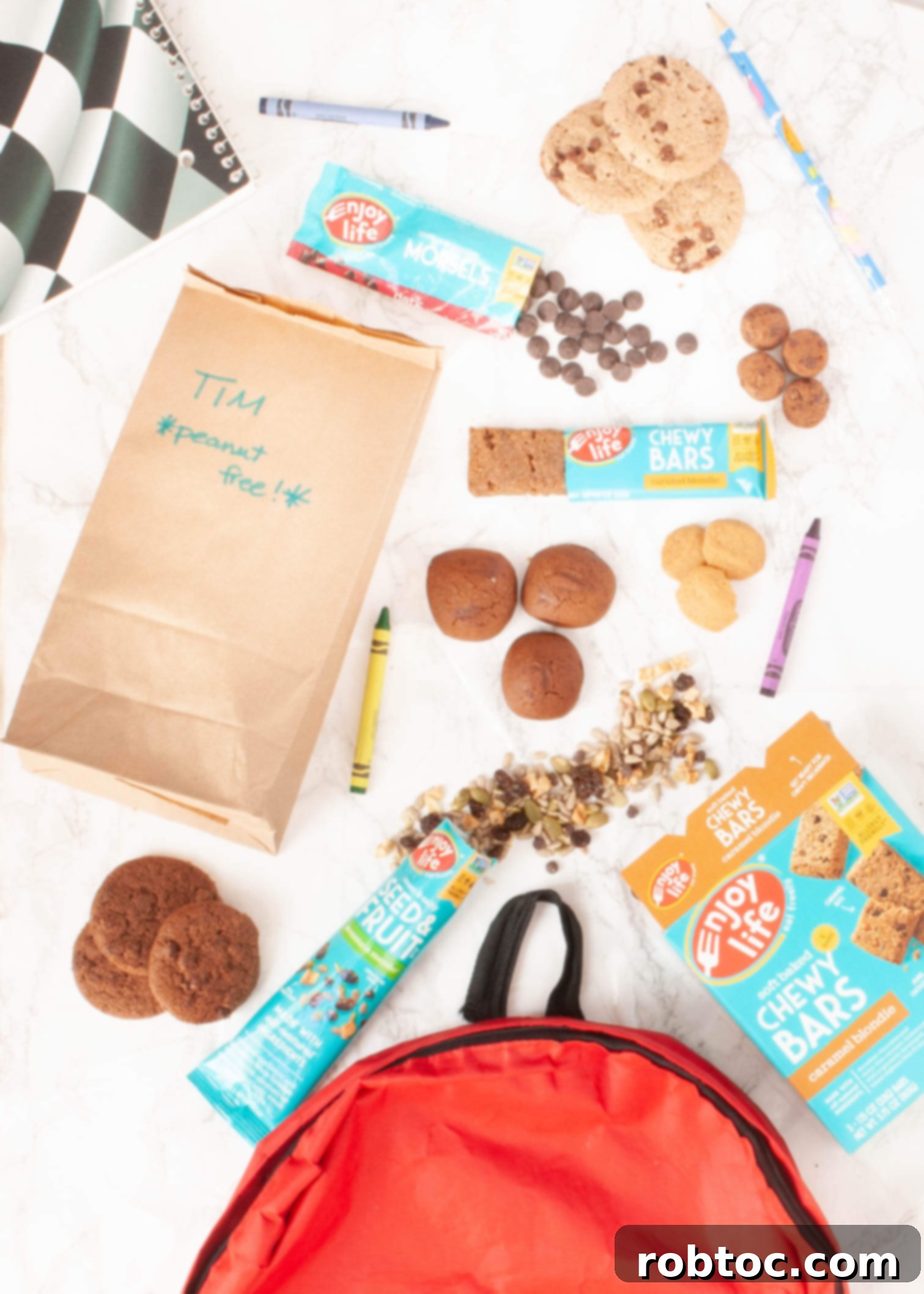
Effortless & Safe: Your Ultimate Guide to Allergy-Friendly School Lunches & Communication with Enjoy Life Treats
Packing lunches for a child with food allergies often feels like navigating a minefield, especially when it comes to the “treat” portion. It’s a constant juggle between ensuring safety, providing variety, and making sure your child doesn’t feel left out. While homemade treats are wonderful, the reality of busy mornings doesn’t always allow for baking from scratch. Every parent wants their child to enjoy a special snack, just like their friends, without compromising their health. This comprehensive guide is designed to make that easier for you!
We’ll explore some of our favorite store-bought, allergy-friendly options that offer both convenience and peace of mind. But it’s not just about what goes *in* the lunchbox; effective communication with your child’s school is equally vital. That’s why, in addition to delicious treat ideas, I’ve included five (plus a bonus!) of my top tips for successfully navigating school communication regarding food allergies. By the time you finish reading, you’ll be well-equipped with both safe treats and a robust communication strategy for school — a true food allergy parent WIN!
This post is sponsored by Enjoy Life. All opinions are mine.
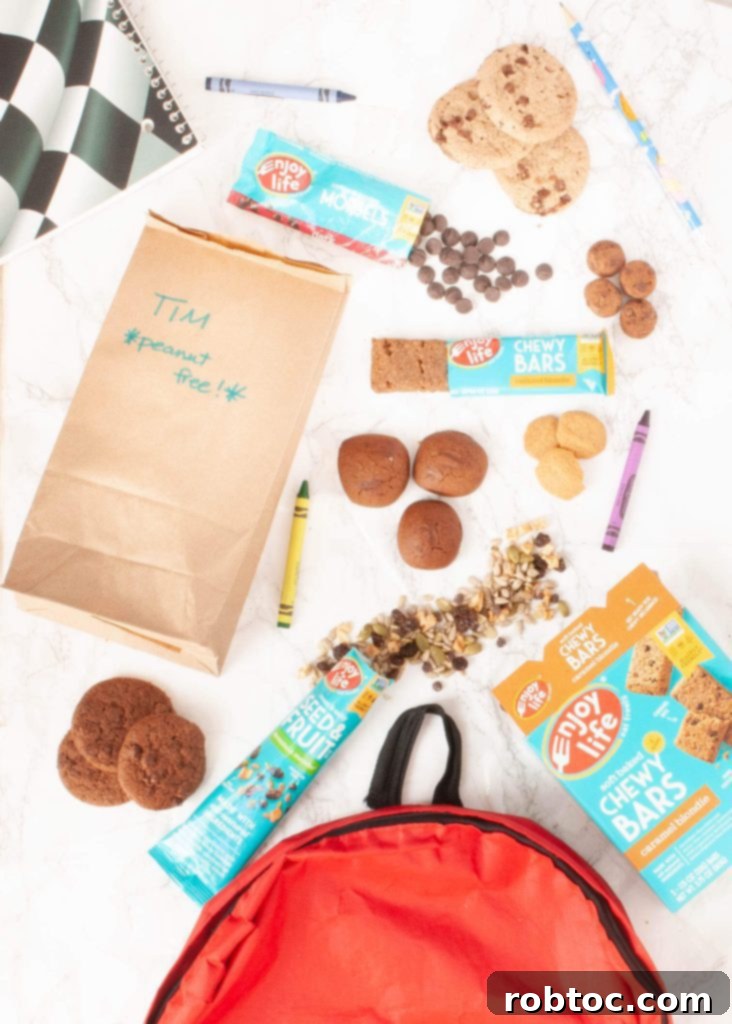
Thinking back to my own childhood, the highlight of my school lunch was undoubtedly the treat my mom packed. That little surprise always brought a smile to my face. Fast forward to today, and the landscape for children with food allergies is vastly different. Finding safe versions of those beloved childhood snacks is incredibly challenging, especially when dealing with multiple severe allergies. For us, treats need to be completely free of gluten, dairy, eggs, peanuts, and tree nuts, making the search for a safe, readily available option feel almost impossible at times.
Discovering Enjoy Life: A Game-Changer for Allergy Families
This is why I am eternally grateful for companies like Enjoy Life. Their dedication to safety and inclusivity for the food allergy community is truly commendable. They operate a dedicated facility and meticulously ensure their products are free from the top 14 allergens, in addition to being GMO-free. This commitment provides an unparalleled level of trust and reassurance for parents like me.
My journey with Enjoy Life began long before I started my blog. I was a desperate mom, wandering the aisles of a health food store, Sprouts, on a mission to find *anything* safe and appealing to give my son as a treat. It was a moment of pure relief when I spotted their chocolate bar gleaming at the cash register aisle, a true beacon of hope. From that day on, they’ve had my unwavering loyalty.
Since then, Enjoy Life has expanded their product line significantly, offering a phenomenal variety of options (bless their hearts!). I understand it can feel overwhelming to navigate a new brand’s offerings, especially with so many choices. Having tried nearly everything they offer, I’m thrilled to simplify it for you with our family’s top recommendations for school lunches and everyday snacking:
Our Top Enjoy Life Allergy-Friendly Treat Recommendations:
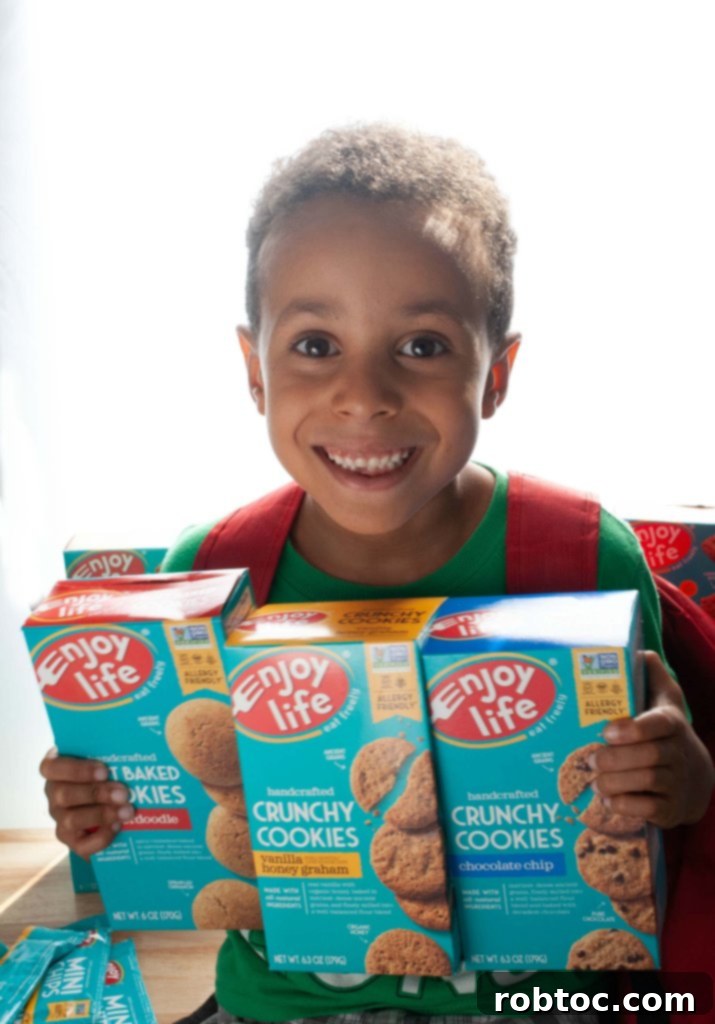
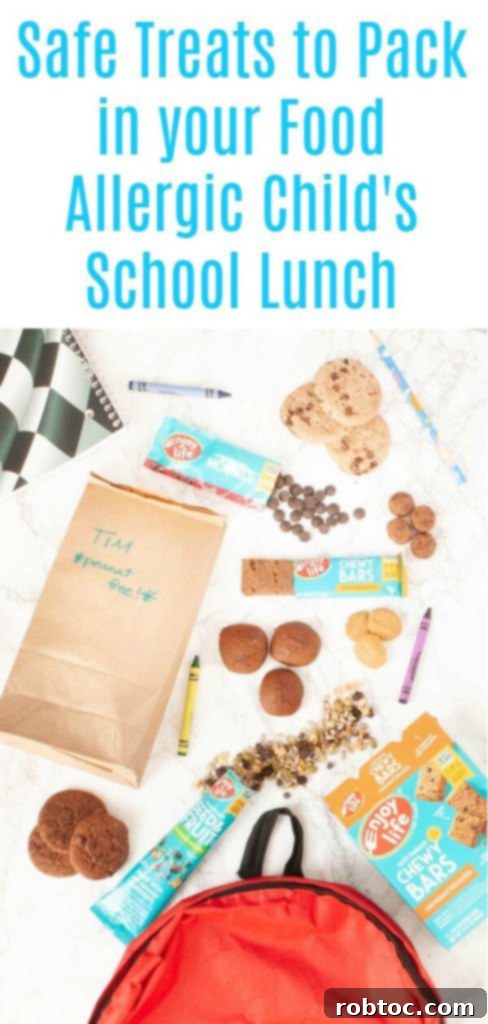
- **Soft Baked Cookies:** These are a household staple. The Chocolate Chip, Double Chocolate Brownie, and Snickerdoodle flavors are incredibly moist and satisfying. They truly feel like a homemade treat without any of the baking effort.
- **Crunchy Cookies:** If you prefer a crispy texture, these are fantastic. The Crunchy Chocolate Chip, Double Chocolate Chip, and allergy-friendly strawberry pie recipe.
With this incredible array of choices, you’ll have a fantastic rotation of safe and delicious treats to pack in your child’s lunchbox, ensuring they never get bored and always have something special to look forward to!
One of the biggest advantages for me as an allergy parent is the time these products save. I don’t have to worry about making something from scratch every single day, which saves precious time and eliminates extra dishes. Yet, my child is just as happy, if not more so, with these flavorful store-bought options. It’s a total win for allergy moms, especially when mornings are a chaotic rush, and we’re literally running out the door. #IAmNotAMorningPerson!
While these are our absolute favorites, I highly encourage you to explore Enjoy Life’s entire collection. They also offer protein bites and granola bars, which might be perfect for your family. My son isn’t as keen on those, with the notable exception of their amazing Caramel Blondie Chewy Bars (go figure!). Personally, I adore their Lentil Chips, but due to my son’s specific allergies, he can’t have lentils. This list truly reflects what we pack in our lunches, but please don’t let our additional allergies limit your exploration of their fantastic range!
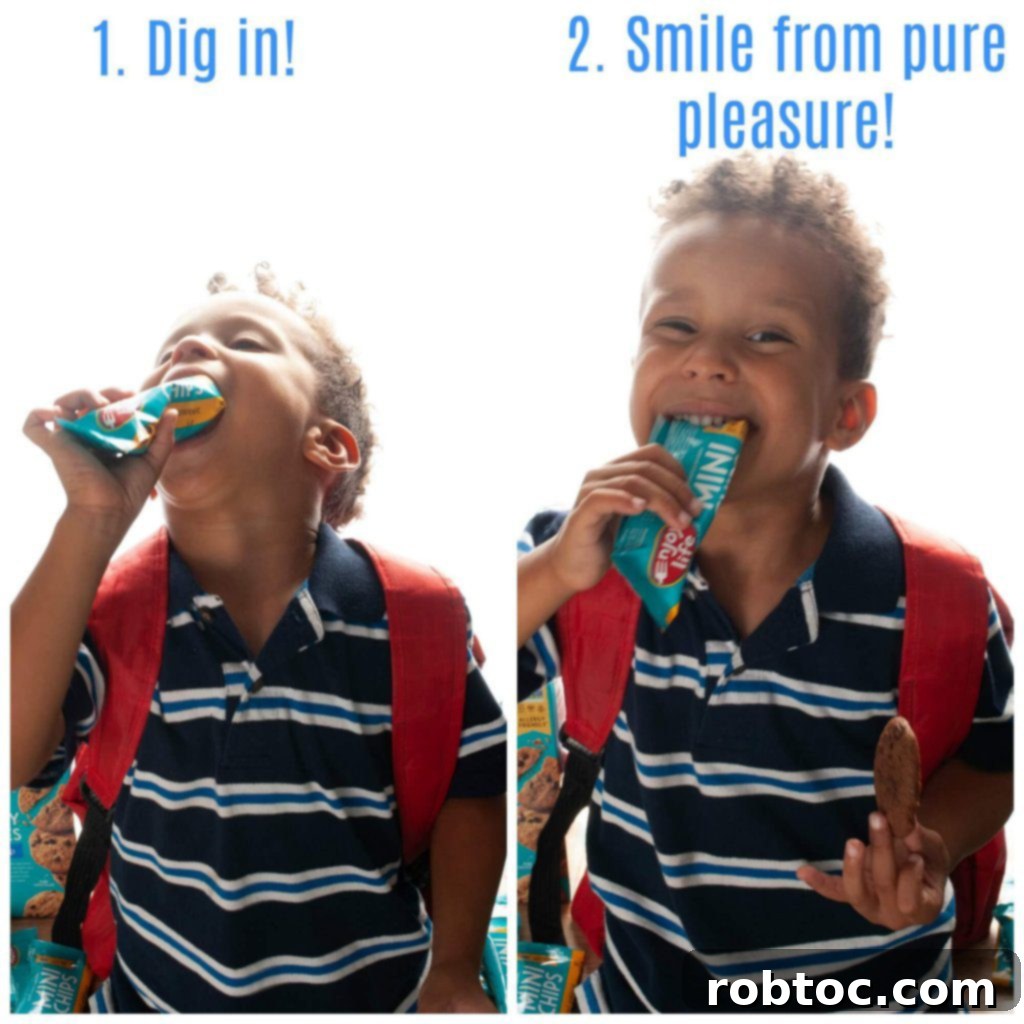
Given that my son will be taking homemade lunches throughout his entire school career, it’s incredibly important to me that he feels excited about it. I want to reward him for eating well and for navigating the unique challenges of his food allergies. I know that these Enjoy Life treats are a fantastic way to do just that. When he opens his lunch bag, I want him to feel just as proud and delighted as any other child enjoying “normal foods.” I’m pretty sure that when he spots one of these safe snacks in his bag, he’ll make an excited face just like this:

Beyond the Lunchbox: Mastering School Communication for Food Allergies
Now that you have a fantastic arsenal of safe and exciting treats for your allergy child’s school lunch, let’s move on to the equally important, and sometimes daunting, task: working effectively with your child’s school to ensure their safety. Below, you’ll find my top 5 (plus a bonus!) essential tips for successful food allergy management in a school setting!
6 Essential Tips for Successfully Partnering With Your Allergic Child’s School
- Establish a 504 Plan (or similar legal document)! This is not just a suggestion; it’s a critical legal document that outlines specific accommodations necessary to ensure your child’s safety and full participation in the school environment. If you’re unfamiliar with 504 plans, I have an entire post dedicated to it, which also includes a template of the accommodations we request. This resource can be invaluable in helping you draft your own plan. For me, a well-executed 504 plan provides the greatest sense of comfort and security when I send my child to school each day, knowing their needs are legally recognized and addressed across all school settings—from the classroom to the cafeteria and beyond.
- Cultivate a Strong Relationship with Your Child’s Teacher. The word “create” is key here, as building this relationship requires consistent time and genuine attention. I’ve found that approaching teachers with a polite, friendly, and collaborative attitude instantly sets a positive tone. Responding to emails promptly, actively asking how I can support them, volunteering when possible, and genuinely getting to know them helps the teacher feel more comfortable and fosters a partnership. Teachers can sometimes be wary of parents who only present demands. While I am firm and clear about my child’s needs and safety requirements, I always make an effort to communicate my willingness to help and support them. I provide them with clear lists of safe snacks and safe treats so they aren’t left scrambling or guessing what is appropriate for my child. I proactively offer to assist at all class parties to ensure safe options are available. I even donate bleach wipes that they can use to thoroughly clean tables for my son. When a teacher sees that you truly value their efforts and are a supportive partner, it paves the way for a much smoother and safer school year for everyone involved.
- Educate the Class by Reading an Allergy-Awareness Book! During the first week of school, I make it a point to go into my child’s classroom and read a book about food allergies. This simple act provides a safe and engaging platform to discuss what food allergies are, why certain rules are in place (like “no sharing food” and mandatory handwashing upon arrival and after lunch), and how everyone can contribute to a safe environment. Children are naturally curious and often eager to help. When they understand their role as “protectors” for my son, it fosters empathy and collective responsibility. Furthermore, this proactive step helps if my son ever feels embarrassed about his food allergies or finds it difficult to explain his condition; I’ve already laid the groundwork for him.
- Maintain a CURRENT Emergency Anaphylaxis Plan. This is a non-negotiable. Ensure you have an up-to-date emergency anaphylaxis care plan signed by your allergist. Make certain the school administration has a copy, the school nurse has a copy, and, crucially, your child’s teacher fully understands it and knows exactly what steps to take in case of a reaction. This document is designed to be clear and concise, providing a step-by-step guide on what to do during an allergic emergency. Skipping or neglecting this step is simply not an option. FARE (Food Allergy Research & Education) offers an excellent free PDF template that you can download and customize with your allergist.
- NEVER Allow Your Child to Go to School Without Their EpiPen. The EpiPen (or other auto-injector) is your child’s lifeline. In many areas, including Utah, where school nurse-to-student ratios can be very low (e.g., a nurse only on site once a week), relying solely on the school nurse’s office for medication storage might not be adequate. We’ve opted for my son to self-carry his EpiPen, a provision clearly marked on both his 504 plan and anaphylaxis care plan. I enforce a strict rule that he never leaves for school without it, along with his asthma inhaler. It’s also imperative to confirm that his EpiPen is *required* to accompany him on any field trips or off-campus excursions. You simply never know when an emergency might arise, and you absolutely cannot risk the medication not being immediately accessible. We designate a specific, secure pocket in his backpack solely for his EpiPen, with clear instructions that he should only access it to retrieve his medication in an emergency, ensuring it remains in its proper place and is always accounted for.
- BONUS TIP: Role-Play with Your Food Allergic Child! You convinced me to add a bonus! Regularly practicing scenarios with your child is incredibly empowering. Go over how to advocate for themselves, how to clearly communicate their condition to adults, how to safely navigate lunchtime (e.g., not sharing food, identifying safe items), and how to recognize the early warning signs of anaphylaxis. But don’t stop there—it’s equally important to role-play emotional situations. Children with food allergies might encounter unkind comments or feel embarrassed. Teach them how to respond confidently, how to not take such comments personally, and how to articulate their feelings. Remember, one conversation is never enough. This takes many repetitions and ongoing discussions for the lessons to truly sink in. Even with excellent school communication, your child needs to be an active participant in their own safety. Learning to advocate for themselves and communicate effectively with adults are invaluable life skills they will carry far beyond their school years.
School time can feel formidable for any parent, but especially for those managing food allergies. Between advocating for your child, working closely with the school, meticulously packing lunches, and then adding in the usual worries about grades, homework, and social dynamics, it can feel like a monumental task. But please know this—you absolutely *can* do this! I always remind myself: millions of kids with food allergies successfully go to school every day, and so can ours!
If I’ve missed any tips that you’ve found particularly helpful in your journey, please share them in the comments below to help other parents in our community. The food allergy mom community is a powerful and supportive one, and I have learned so much from others’ experiences and wisdom.
Sending big hugs to you and your amazing food-allergic child. Here’s to wishing them an inclusive, safe, and wonderful school year!
DON’T FORGET TO PIN THIS, SO YOU DON’T LOSE IT. ALSO, BE SURE TO CHECK OUT MY OTHER ALLERGY-FRIENDLY PINTEREST BOARDS FOR MORE INVALUABLE RESOURCES!
Additional Allergy-Friendly Resources:
Here are some other incredibly helpful lists and articles I’ve created that you might find useful in your ongoing allergy management journey:
Safe Candy Lists (Top-8-Free) That I Provide to My Son’s Teachers
Sending Allergy-Friendly Treats to School for Birthday Parties
Safe School Lunch Ideas for Kids With Food Allergies