The Ultimate Guide to Gluten-Free Oat Milk: Brands, Certifications, and Safe Choices for Your Diet
As an increasing number of individuals navigate diets free from gluten and dairy, finding suitable staple products can be a challenge. Oat milk has risen in popularity as a creamy, plant-based alternative to traditional dairy milk. However, for those strictly avoiding gluten, a crucial question arises: is oat milk truly gluten-free? This comprehensive guide delves into what to look for, explores the ingredients and claims of major brands, and helps you make an informed decision about integrating oat milk into your gluten-free lifestyle.
Why Choose Oat Milk? The Rise of a Dairy-Free Favorite
Oat milk has rapidly become a preferred plant-based milk alternative for many reasons. Its naturally creamy texture makes it an excellent choice for coffee, smoothies, and cooking, closely mimicking the consistency of dairy milk. Beyond its versatility, oat milk is often touted for its environmental benefits, requiring less water and land compared to dairy production. For those with dairy allergies or intolerances, it provides a delicious and widely available option. Furthermore, it often serves as a fantastic alternative for individuals with nut allergies, offering a safe, tree nut-free option in a market saturated with almond and cashew milk products.
The Gluten-Free Dilemma: Are Oats Naturally Gluten-Free?
The question of whether oats are safe for a gluten-free diet is a complex one, often leading to divided opinions among those with Celiac disease or gluten sensitivities. Technically, pure, uncontaminated oats are indeed gluten-free. Gluten is a protein found in wheat, barley, and rye. Oats, botanically speaking, do not contain gluten.
The controversy stems from the journey oats typically take from farm to carton. A significant concern is cross-contamination (also known as cross-contact) during various stages of production:
- Farming: Oats are often grown in rotation with wheat or barley, and sometimes these gluten-containing grains can volunteer in oat fields.
- Harvesting: Shared harvesting equipment (combines) that have previously processed wheat, barley, or rye can carry residual gluten.
- Transportation: Oats might be transported in vehicles or containers that were not thoroughly cleaned after carrying gluten-containing grains.
- Processing and Manufacturing: Many conventional oat processing facilities also handle wheat, barley, or rye. Even small amounts of airborne gluten particles or shared machinery can lead to contamination.
For individuals with Celiac disease, even trace amounts of gluten (as little as 20 parts per million, or ppm) can trigger an immune response, leading to intestinal damage and a range of symptoms. Those with non-celiac gluten sensitivity also report adverse reactions to contaminated oats. This stringent requirement for purity is why many who follow a strict gluten-free diet will only consume products made with certified gluten-free oats, which are processed under strict controls to prevent cross-contamination.
An informal poll among gluten-free readers revealed a split, with 10 out of 40 respondents expressing discomfort with drinking oat milk. This highlights the genuine concern within the gluten-free community regarding oat safety, underscoring the importance of careful label scrutiny and understanding certification standards.
Understanding Gluten-Free Labels and Certifications
Navigating the world of “gluten-free” labels can be confusing. Here’s what you need to know to make the safest choice:
- FDA “Gluten-Free” Standard: In the U.S., a product can be labeled “gluten-free” if it contains less than 20 parts per million (ppm) of gluten. This standard applies to food products, including oat milk. However, it’s a self-declaration by the manufacturer, meaning there isn’t always independent verification.
- Third-Party Certifications: For individuals with Celiac disease or severe gluten sensitivity, third-party certification is often the gold standard. Organizations like the Gluten-Free Certification Organization (GFCO), NSF International, and the Celiac Support Association (CSA) independently verify products meet strict gluten-free standards, often requiring levels below 10 ppm and regular audits of manufacturing facilities. When you see a certification seal, it provides an extra layer of assurance that the product has undergone rigorous testing and adherence to strict protocols.
- “Purity Protocol” vs. “Mechanically Sorted” Oats:
- Purity Protocol Oats: These oats are specifically grown, harvested, and processed in dedicated gluten-free environments to minimize cross-contamination from the very beginning. This method offers the highest level of assurance for gluten-free purity.
- Mechanically Sorted Oats: Some manufacturers use conventional oats and then sort them mechanically or optically to remove gluten-containing grains. While this can reduce gluten content, it may not eliminate it entirely to the same degree as purity protocol methods, and the risk of contamination can be higher.
When selecting oat milk, look beyond a simple “gluten-free” claim. Prioritize brands that explicitly state they use certified gluten-free oats or bear a reputable third-party certification seal.
Decoding Oat Milk Brands: A Comprehensive Review
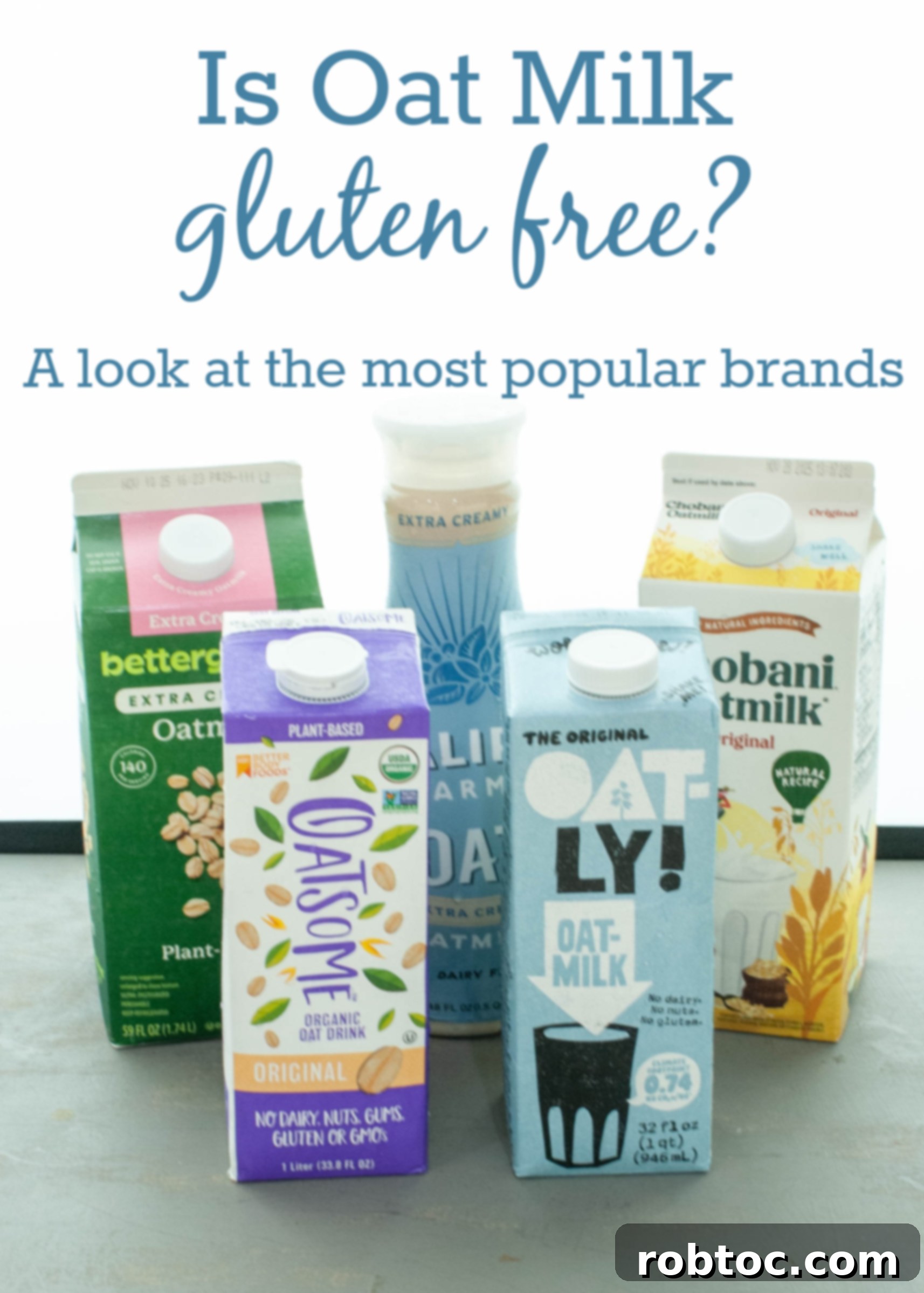
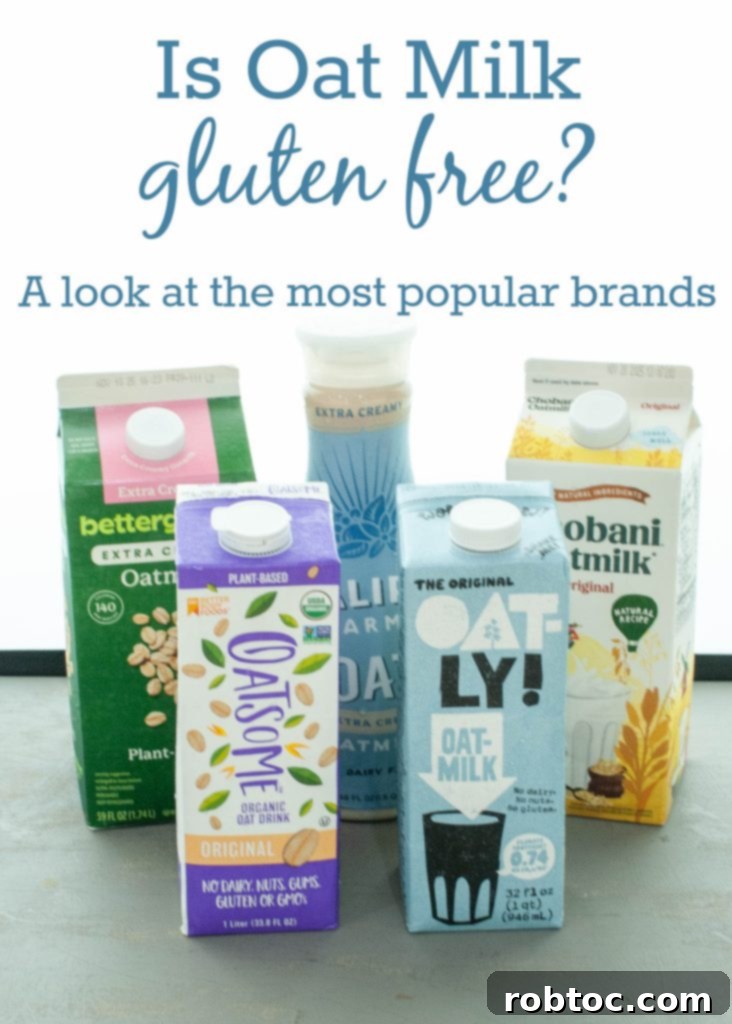
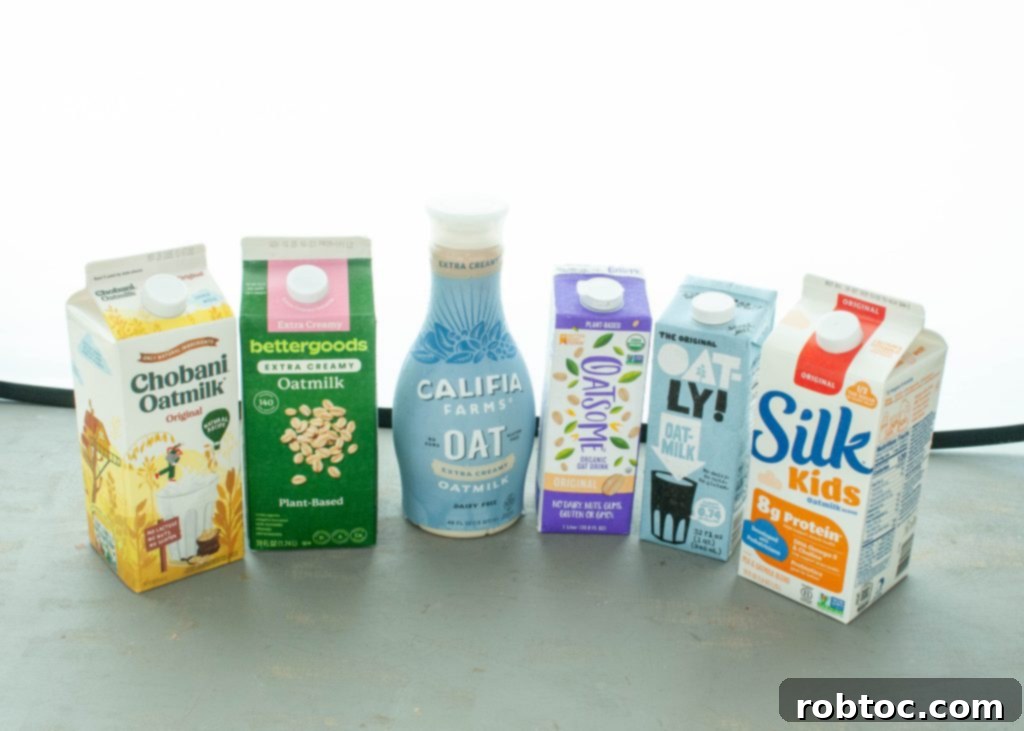
To help you make an informed decision, we’ve broken down several popular oat milk brands, detailing their gluten-free claims and ingredients. Always remember to check the product in hand, as formulations and claims can change over time.
Chobani Oatmilk Original
Front-of-Package Claims: “No lactose, no nuts, no gluten.”
Ingredients: “Oat blend (water, whole grain oats), contains 2% or less of: rapeseed oil, sea salt, vitamin D1 (yeast extract), calcium carbonate, gellan gum.”
Our Analysis: Chobani clearly states “no gluten” on its packaging, making it appealing for general gluten avoidance. However, it lacks a third-party gluten-free certification, which is a crucial distinction for individuals with Celiac disease or severe gluten sensitivity. The ingredients list also refers to “oat blend” rather than explicitly “gluten-free oats.” While the brand declares it gluten-free, those following a strict dietary regimen should weigh this against the absence of independent verification. Personal discretion is advised.
Bettergoods Extra Creamy Oatmilk
Front-of-Package Claims: No marketing call-outs on this package that mention gluten.
Ingredients: “Oatmilk (water, oats), vegetable oil (high oleic canola and/or sunflower oil), calcium carbonate, dipotassium phosphate, salt, gellan gum, Vitamin B12, Zinc, Vitamin B2 (riboflavin), Vitamin A Palmitate, Vitamin D2.”
Our Analysis: The absence of any “gluten-free” claim on the packaging for Bettergoods Extra Creamy Oatmilk makes it a questionable choice for anyone on a gluten-free diet, particularly those with Celiac disease. Without explicit claims or certification, it’s impossible to verify its safety regarding cross-contamination. Moreover, the lack of contact information on the packaging to directly inquire about their gluten-free practices further complicates verification. For strict gluten avoidance, it would be prudent to opt for a brand with clear gluten-free declarations or certifications.
Oatly Oat Milk (Original)
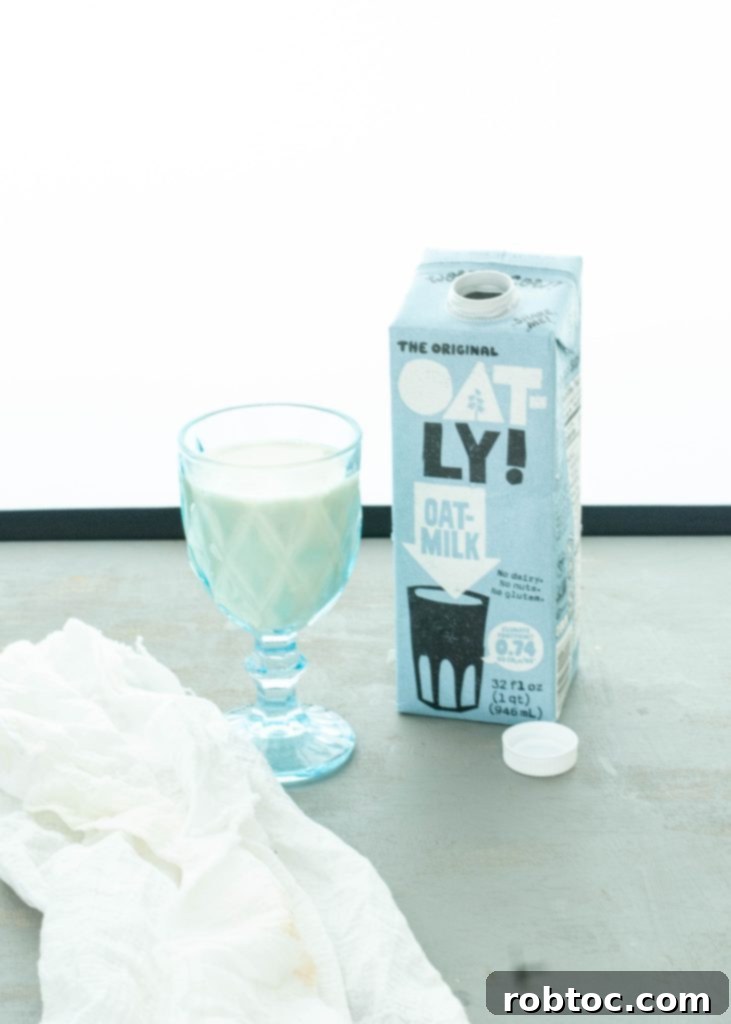
Front-of-Package Claims: “No dairy, no nuts, no gluten.”
Side-of-Package Claims: “Certified Gluten Free by the CFCO.org” as well as “Glyphosate Residue Free.”
Ingredients: “Oat base (water, oats). Contains 2% or less of: low erucic acid rapeseed oil, dipotassium phosphate, calcium carbonate, tricalcium phosphate, sea salt, dicalcium phosphate, riboflavin, vitamin A acetate, vitamin D2, vitamin B12.”
Our Analysis: Oatly stands out as a strong contender for those requiring a strictly gluten-free oat milk. The prominent “Certified Gluten Free by CFCO.org” seal provides third-party verification, indicating adherence to rigorous gluten-free standards. This certification, coupled with the “no gluten” claim, offers a high level of assurance for individuals with Celiac disease or significant gluten sensitivities. The additional “Glyphosate Residue Free” claim may also appeal to consumers concerned about agricultural chemical residues. Oatly’s commitment to verifiable gluten-free status makes it one of the most reliable options on the market.
Silk Kids Oatmilk Blend
Side-of-Package Claims: Self-identifies as gluten-free.
Ingredients: “Pea and Oatmilk Blend (water, pea protein, oat concentrate), Sunflower Oil, Cane Sugar, Contains 1% or less of the following: DHA Algal Oil, Inulin, Vitamin and Mineral Blend (Dipotassium Phosphate, Calcium Phosphate, Magnesium Sulfate, Calcium Carbonate, Choline Chloride, Potassium, Iodide, Vitamin A Palmitate, Vitamin D2, Vitamin B12, Riboflavin [B2]), Sea Salt, Natural Flavor, Gellan Gum, Sodium, Ascorbate, and Vitamin E (To preserve Freshness).”
Our Analysis: Silk Kids Oatmilk Blend declares itself gluten-free on the packaging, which is a positive sign for consumers seeking this attribute. However, similar to Chobani, it does not appear to carry a third-party gluten-free certification. The ingredients list specifies “oat concentrate” rather than explicitly “gluten-free oat concentrate,” which could be a point of concern for the most sensitive individuals. While the self-declaration meets the FDA standard, those with Celiac disease should exercise caution and consider their comfort level with non-certified products. The blend with pea protein also adds a different nutritional profile.
Califia Farms Extra Creamy Oatmilk
Front and Back Claims: Self-identifies as gluten-free.
Ingredients: “Oatmilk (water, oats), Sunflower Oil, Dipotassium Phosphate, Calcium Carbonate, Tricalcium Phosphate, Sea Salt, Vitamin A Palmitate, Vitamin D2.”
Our Analysis: Califia Farms Extra Creamy Oatmilk clearly states “gluten-free” on both the front and back of its packaging, which is helpful for consumer identification. Yet, this declaration is not backed by a visible third-party certification. The ingredients list generically states “oats” rather than “gluten-free oats,” which, for some with Celiac disease, raises questions about the sourcing and processing protocols. While many may find this sufficient for general gluten avoidance, those with strict dietary needs might prefer a product with independent verification to ensure the highest level of safety. Personal judgment based on individual sensitivity is recommended.
Oatsome Organic Oat Drink
Front-of-Package Claims: “No dairy, nuts, gums, gluten or GMO’s.”
Ingredients: “Oat Milk (Water, Whole Grain Gluten-Free Organic Oats), Organic Sunflower Oil, Sea Salt, Calcium Carbonate, Riboflavin, Vitamin D, Vitamin B12.”
Our Analysis: Oatsome Organic Oat Drink makes a strong “no gluten” claim on its packaging and importantly, specifies “Whole Grain Gluten-Free Organic Oats” directly within its ingredient list. This explicit mention of “Gluten-Free Oats” is a significant advantage, suggesting intentional sourcing and processing to avoid contamination. While the packaging as reviewed doesn’t feature a third-party certification seal, the clear ingredient declaration provides a higher level of confidence than brands that only state “oats.” The organic and non-GMO claims also appeal to health-conscious consumers. For those seeking transparency in ingredients, Oatsome offers a compelling option, though strict Celiacs might still prefer third-party certification.
Kirkland Signature Organic Non-Dairy Oat Beverage
Packaging Claims: Information gathered from website and customer service due to lack of direct product access.
Ingredients: Not listed on Costco’s product web page.
Additional Information: Costco customer service reported: “Organic oats are naturally free of gluten. The Kirkland Signature Organic Oat beverage is gluten free but is not 3rd party certified gluten free. The manufacturing site producing the organic oat beverage does not have gluten in the facility. There is no potential for cross contact at the beverage manufacturing site.”
Our Analysis: The lack of visible “gluten-free” labeling on the product’s online photos or listed ingredients on Costco’s website presents a challenge for consumers seeking this information directly. While Costco’s customer service asserts the product is gluten-free and manufactured in a gluten-free facility, the absence of this critical detail on the packaging or official product page requires consumers to proactively seek out this information. The reassurance of a dedicated gluten-free facility is valuable, but without third-party certification or clear on-label statements, individuals with strict gluten-free needs might find it difficult to fully trust. Improved transparency on the product packaging or web listing would significantly enhance consumer confidence.
Malk Organic Oat Milk
Packaging Claims: No specific “gluten-free” claim on the product’s visible label or text, other than in the ingredients.
Ingredients: Filtered Water, Organic Gluten Free Oats, Himalayan Pink Salt.
Our Analysis: Malk’s ingredient list explicitly features “Organic Gluten Free Oats,” which is a strong indicator of its gluten-free status. This transparency in naming the specific type of oats used is highly beneficial for gluten-free consumers. While a prominent front-of-package “gluten-free” claim or third-party certification would offer even greater assurance, the clear declaration of “Gluten Free Oats” in the ingredients suggests a deliberate effort to source and use uncontaminated oats. For those who scrutinize ingredient lists closely, Malk presents a promising option, though the lack of external certification might still be a consideration for the most sensitive individuals.
Beyond Gluten: Other Crucial Factors for Choosing Oat Milk
While gluten-free status is paramount for many, several other factors contribute to the overall appeal and suitability of an oat milk product for your diet and preferences:
- Types of Oils: Oat milk often contains added oils like rapeseed (canola) oil, sunflower oil, or high oleic canola oil to enhance creaminess. Consumers may have preferences or health concerns regarding certain types of fats.
- Sugar Content: Be mindful of added sugars. Some brands offer unsweetened versions, while others include cane sugar or other sweeteners. Check the nutritional panel for the “Added Sugars” line.
- Organic and Non-GMO Status: For those prioritizing clean eating and sustainable agriculture, organic and non-GMO certifications are important. These labels indicate that the oats and other ingredients were grown without synthetic pesticides, fertilizers, or genetically modified organisms.
- Additives and Gums: Ingredients like gellan gum, dipotassium phosphate, and calcium carbonate are commonly used as stabilizers, thickeners, or for fortification. While generally recognized as safe, some individuals prefer products with fewer additives.
- Availability and Cost: The practicality of choosing an oat milk also depends on its availability in local stores and whether its price point aligns with your budget for daily consumption. Brands like Malk, for instance, might be harder to find.
- Nut-Free Advantage: A significant benefit of oat milk for many is that it is naturally nut-free, offering a safe option for individuals with tree nut or peanut allergies, which are common allergens in other plant-based milks like almond or cashew milk.
- Carbohydrate Content: While generally lower in carbs than dairy milk, oat milk does contain natural sugars from the oats. This can be a consideration for those monitoring their carbohydrate intake, such as individuals on ketogenic or low-carb diets.
- Fortification: Many oat milk brands are fortified with essential vitamins and minerals, including Vitamin D, Vitamin B12, Vitamin A, and Calcium. This is especially important for individuals on plant-based diets who may miss out on these nutrients typically found in dairy milk.
- Taste and Texture: Ultimately, personal preference plays a huge role. Some prefer a thicker, creamier texture, while others like a lighter consistency. The taste profile can also vary significantly between brands.
Nutritional Considerations and Professional Advice
While oat milk can be a fantastic dairy-free and potentially gluten-free alternative, it’s essential to consider its nutritional role in your overall diet. If you are replacing cow’s milk with oat milk, especially for children or individuals with specific dietary needs, consult a registered dietitian or nutritionist. They can help assess if your chosen oat milk provides adequate protein, calcium, Vitamin D, and other vital nutrients to meet your individual health requirements.
Making an Informed Decision for Your Health
Choosing the right gluten-free oat milk involves careful consideration of brand claims, certifications, ingredient lists, and your personal dietary needs. For the strictest gluten-free diets, prioritize brands with third-party certifications like Oatly. For general gluten avoidance, brands that explicitly state “gluten-free” on their packaging or use “gluten-free oats” in their ingredients list may suffice. Always perform your own due diligence, check labels diligently, and trust your body’s response.
These decisions can feel significant, but armed with comprehensive information, you are better equipped to make a choice that aligns with your health goals and dietary preferences. We wish you the best in finding the perfect oat milk for your lifestyle!
Other helpful posts: Explore more gluten-free guides to enhance your diet. We have resources on what taco seasonings are gluten-free, what tortilla chips are gluten-free, what candy is gluten-free, and which cereals are gluten-free to help you with other food choices!