Living with EoE: Our Family’s Story and the Promise of Dupixent for Eosinophilic Esophagitis Management
Please note: The following article was sponsored by Sanofi and Regeneron. While I received compensation for this post, all opinions expressed are genuinely my own. This content is for informational purposes only and is not intended to provide medical advice. Always consult with a qualified healthcare professional for any health concerns or before making any medical decisions.
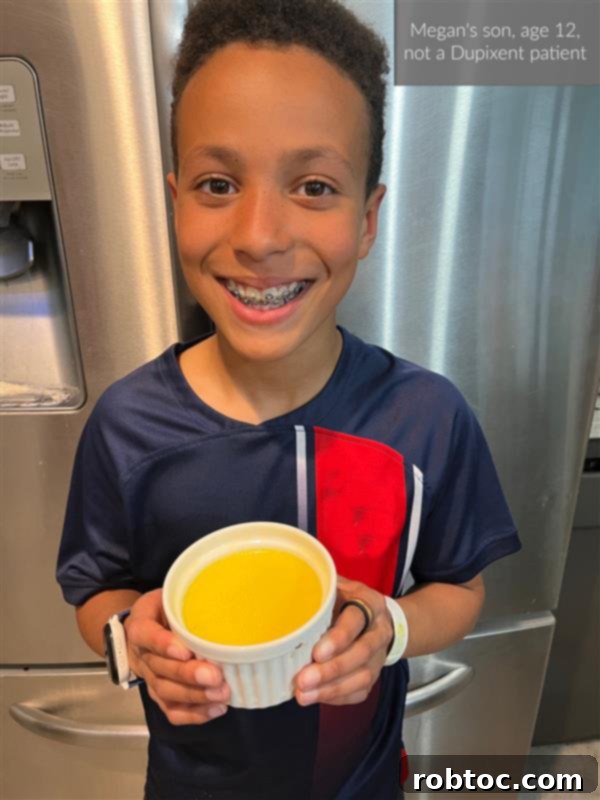
For those of you who are new to my space, allow me to introduce myself. My name is Megan, and I am the proud mother of a son who received a diagnosis of Eosinophilic Esophagitis, or EoE for short, when he was just one year old. Our family has been navigating life with this relatively unknown and often challenging chronic disease for over a decade now. It feels almost surreal to write that; the early days of his diagnosis, filled with uncertainty and raw emotion, still feel so vivid, as if it were only a year or two ago, not more than ten.
Our journey began when my son was a baby, and we noticed he was having significant trouble eating. Initially, we suspected he might simply benefit from feeding therapy, so we pursued that avenue. However, despite our efforts, we couldn’t understand why he would gag and vomit so frequently and intensely. The situation became increasingly concerning when his growth began to slow dramatically. He consistently lingered in the single digits on the growth curve, remaining unusually tiny for his age. We wrestled with various possibilities – was it merely picky eating, undisclosed food allergies, or something more profound? The uncertainty eventually transitioned into genuine worry.
The difficulty was compounded by the fact that he didn’t exhibit obvious signs of discomfort. He was a remarkably good sleeper, which, surprisingly, led doctors to dismiss my persistent gut feeling that something was amiss. I often felt they perceived me as an overzealous, first-time mother. They would assure me that spitting up was a normal part of infancy, but I knew, deep down, that the sheer volume and frequency of his vomiting were far from typical.
Finally, our persistence paid off. We managed to get an appointment with a pediatric board-certified allergist who, fortuitously, also specialized in EoE. After reviewing my son’s symptoms and history, he shared his strong suspicion that EoE was indeed the culprit. To confirm the diagnosis, he recommended we see a pediatric gastroenterologist (GI). We promptly followed this advice, and the GI specialist performed an endoscopy. Sure enough, the biopsy results confirmed our fears: my son had Eosinophilic Esophagitis.
The diagnosis marked the beginning of a rigorous and often emotionally draining period of elimination diets. We started with a highly restricted diet, where his intake was limited to just ten “safe” foods. I distinctly remember the drive home from the allergist’s office that day, tears streaming down my face. My mind was flooded with overwhelming questions: What would he possibly eat? How would we ever manage such a strict regimen? Would this disease impact every other area of his young life? At that moment, the task ahead seemed utterly insurmountable.
Thankfully, through numerous endoscopies and countless doctor’s appointments over the years, we gradually identified his specific triggers and learned which foods he could tolerate without exacerbating his condition. Today, we are in a much better place. However, the long-term questions still surface occasionally. I sometimes wonder how he will manage this chronic condition independently as he grows older, when he no longer has a mother constantly monitoring his diet and preparing specialized meals for him.
Recently, I had a truly insightful opportunity to connect with Matt, an individual who also lives with EoE, much like my son. Matt is now in his 30s, and it was incredibly helpful to gain perspective on the habits and strategies he has developed over the years to keep his EoE symptoms under control. I’m genuinely excited to share a glimpse into his inspiring story with all of you!
Matt strikes me as an incredibly energetic individual who actively participates in triathlons and maintains a vibrant, active lifestyle. This was particularly heartwarming for me to hear, as my son is also deeply involved in many sports, including baseball, basketball, soccer, and skiing. It was truly encouraging to see that Matt navigates life with EoE without allowing it to impede his passion for the activities he cherishes.
Unlike my son, Matt received his EoE diagnosis much later in life. He recounted spending many years plagued by persistent difficulty swallowing, unsure of the underlying cause.
He shared a poignant story from his time at summer camp, when he was around my son’s current age. He vividly remembers experiencing his first significant flare-up. He was attempting to eat a peanut butter sandwich and found himself struggling immensely to get it down. My heart truly went out to him as he described the experience in detail! As a mother, I could only imagine the fear and frustration he must have felt in that moment, being away from the comforting presence of his parents.
Matt went on to explain that, over time, he instinctively learned to avoid dryer foods, gravitating instead towards softer options like applesauce. He also developed personal coping mechanisms, such as meticulously chewing his food and drinking copious amounts of water, all in an effort to facilitate swallowing.
One pivotal day, when he was 18, a piece of steak became lodged in his esophagus, and his usual methods of dislodging it proved ineffective. Thankfully, his mother was present this time to rush him to the emergency room. Following an endoscopy and a biopsy, he finally received his official diagnosis: Eosinophilic Esophagitis. It was fascinating to observe both the striking differences and the profound similarities in our respective journeys!
In addition to strictly avoiding trigger foods, Matt initially managed his symptoms with various medications—a path my son had also explored previously. Matt emphasized the significant inconvenience these daily medications posed to his active lifestyle, particularly when he was traveling.
In 2022, I had started hearing exciting news across various chat groups and online medical publications about the groundbreaking approval of a new medication for EoE called Dupixent (dupilumab). The community was absolutely thrilled about this development.
As it turns out, Matt is now being treated with Dupixent, and his experience with the medication has been consistently positive thus far. Dupixent (dupilumab) is a prescription medicine specifically approved to treat adults and children 1 year of age and older with EoE, provided they weigh at least 33 pounds (15 kg). It is crucial not to use Dupixent if you are allergic to dupilumab or any of the other ingredients in the medication. The most common side effects observed in patients with eosinophilic esophagitis include injection site reactions, upper respiratory tract infections, cold sores in the mouth or on the lips, and joint pain (arthralgia). Please refer to the additional Important Safety Information provided throughout this article and the Full Prescribing Information below for complete details.

While my son is not currently treated with Dupixent for his EoE, the approval of this medication holds immense significance for the broader EoE community. It represents the only treatment option approved for appropriate children as young as 1 year old, offering a much-needed therapeutic advance. When Sanofi and Regeneron approached me about collaborating on this initiative, I was wholeheartedly on board. This was particularly resonant because Dupixent was a medicine my family was already familiar with. Although my son doesn’t take it, my husband uses Dupixent to manage his uncontrolled severe eczema. For context, Dupixent is also a prescription medicine indicated for adults and children 6 months of age and older with moderate-to-severe eczema (atopic dermatitis or AD) that isn’t adequately controlled with topical prescription therapies, or for those who cannot use such therapies. It can be used either with or without topical corticosteroids. Again, do not use Dupixent if you are allergic to dupilumab or any of its ingredients. The most common side effects noted in patients with eczema include injection site reactions, eye and eyelid inflammation (including redness, swelling, and itching, sometimes accompanied by blurred vision), dry eye, cold sores in the mouth or on the lips, and a high count of a certain type of white blood cell (eosinophilia). For a comprehensive understanding, please review the additional Important Safety Information provided throughout and the Full Prescribing Information below.
It was genuinely rewarding and inspiring to converse with Matt and witness firsthand that it is entirely possible to effectively manage EoE symptoms and prevent the condition from dictating one’s life. This is precisely my greatest hope and aspiration for my son. I am incredibly grateful for the opportunity to have heard about Matt’s personal journey and the strategies he employs to thrive with EoE.
If you or a loved one are considering whether Dupixent might be a suitable treatment option for EoE, I strongly encourage you to talk to your doctor. You can also learn more detailed information about Dupixent as a treatment option for Eosinophilic Esophagitis by visiting their official website at https://www.dupixent.com/eoe.
IMPORTANT SAFETY INFORMATION & INDICATIONS
Do not use DUPIXENT® if you are allergic to dupilumab or to any of the ingredients in DUPIXENT.
Before using DUPIXENT, it is essential to tell your healthcare provider about all your medical conditions, including if you:
- have eye problems.
- have a parasitic (helminth) infection.
- are scheduled to receive any vaccinations. You should not receive a “live vaccine” right before and during treatment with DUPIXENT.
- are pregnant or plan to become pregnant. It is not definitively known whether DUPIXENT will harm your unborn baby.
- A pregnancy registry exists for women who take DUPIXENT during pregnancy. This registry collects vital information about the health outcomes for both you and your baby. To enroll or obtain more information, please call 1-877-311-8972 or visit https://mothertobaby.org/ongoing-study/dupixent/.
- are breastfeeding or plan to breastfeed. It is not known whether DUPIXENT passes into your breast milk.
Always tell your healthcare provider about all the medicines you are currently taking, which includes prescription and over-the-counter medicines, vitamins, and any herbal supplements.
It is especially important to tell your healthcare provider if you are taking oral, topical, or inhaled corticosteroid medicines; have asthma and use an asthma medicine; or have atopic dermatitis, chronic rhinosinusitis with nasal polyps, eosinophilic esophagitis, prurigo nodularis, or chronic obstructive pulmonary disease and also have asthma. Do not make any changes to or stop your other medicines, including corticosteroid medicine or other asthma medicine, without first consulting your healthcare provider. Doing so may cause other symptoms that were previously controlled by those medicines to return or worsen.
DUPIXENT can cause serious side effects, which include:
- Allergic reactions. DUPIXENT has the potential to cause allergic reactions that can sometimes be severe. If you experience any of the following signs or symptoms, stop using DUPIXENT immediately and tell your healthcare provider or seek emergency medical help right away: breathing problems or wheezing, swelling of the face, lips, mouth, tongue or throat, fainting, dizziness, feeling lightheaded, a fast pulse, fever, hives, joint pain, a general ill feeling, itching, skin rash, swollen lymph nodes, nausea or vomiting, or cramps in your stomach-area.
- Eye problems. Report any new or worsening eye problems to your healthcare provider, including eye pain or changes in vision, such as blurred vision. Your healthcare provider may recommend an ophthalmologist for an eye examination if deemed necessary.
- Inflammation of your blood vessels. In rare instances, this condition can occur in individuals with asthma who are receiving DUPIXENT. This may be more likely to happen in people who are also taking an oral steroid medicine whose dose is being stopped or lowered. It is not yet known whether this condition is directly caused by DUPIXENT. Inform your healthcare provider right away if you develop: a rash, chest pain, worsening shortness of breath, a feeling of pins and needles or numbness in your arms or legs, or a persistent fever.
- Joint aches and pain. Some individuals using DUPIXENT have reported difficulty walking or moving due to their joint symptoms, and in certain cases, hospitalization has been required. Inform your healthcare provider about any new or worsening joint symptoms. Your healthcare provider may decide to stop DUPIXENT if you develop significant joint symptoms.
The most common side effects include:
- For Eczema: injection site reactions, inflammation of the eye and eyelid (including redness, swelling, and itching, sometimes with blurred vision), dry eye, cold sores in your mouth or on your lips, and a high count of a certain white blood cell (eosinophilia).
- For Asthma: injection site reactions, high count of a certain white blood cell (eosinophilia), pain in the throat (oropharyngeal pain), and parasitic (helminth) infections.
- For Chronic Rhinosinusitis with Nasal Polyps: injection site reactions, inflammation of the eye and eyelid (including redness, swelling, and itching, sometimes with blurred vision), high count of a certain white blood cell (eosinophilia), gastritis, joint pain (arthralgia), trouble sleeping (insomnia), and toothache.
- For Eosinophilic Esophagitis: injection site reactions, upper respiratory tract infections, cold sores in your mouth or on your lips, and joint pain (arthralgia).
- For Prurigo Nodularis: inflammation of the eye and eyelid (including redness, swelling, and itching, sometimes with blurred vision), herpes virus infections, common cold symptoms (nasopharyngitis), dizziness, muscle pain, and diarrhea.
- For Chronic Obstructive Pulmonary Disease: injection site reactions, common cold symptoms (nasopharyngitis), high count of a certain white blood cell (eosinophilia), viral infection, back pain, inflammation inside the nose (rhinitis), diarrhea, gastritis, joint pain (arthralgia), toothache, headache, and urinary tract infection.
Report any side effect that bothers you or that does not go away to your healthcare provider. This list does not encompass all potential side effects of DUPIXENT. For medical advice regarding side effects, please contact your doctor. You are encouraged to report negative side effects of prescription drugs to the FDA. To do so, visit www.fda.gov/medwatch, or call 1-800-FDA-1088.
Always use DUPIXENT precisely as prescribed by your healthcare provider. It is administered as an injection given under the skin (a subcutaneous injection). Your healthcare provider will determine if you or your caregiver is able to safely inject DUPIXENT. Do not attempt to prepare and inject DUPIXENT until you or your caregiver have received comprehensive training from your healthcare provider. For children 12 years of age and older, it is recommended that DUPIXENT be administered by or under the direct supervision of an adult. For children aged 6 months to less than 12 years of age, DUPIXENT should be administered by a trained caregiver.
Please see the accompanying full Prescribing Information, which includes Patient Information.
INDICATIONS
DUPIXENT is a prescription medicine utilized for the following treatments:
- to treat adults and children 6 months of age and older with moderate-to-severe eczema (atopic dermatitis or AD) that is not well controlled with prescription therapies used on the skin (topical), or who cannot use topical therapies. DUPIXENT can be used with or without topical corticosteroids. The safety and effectiveness of DUPIXENT in children with atopic dermatitis under 6 months of age have not been established.
- as an add-on maintenance treatment for moderate-to-severe eosinophilic or oral steroid dependent asthma in adults and children 6 years of age and older whose asthma remains uncontrolled with their current asthma medicines. DUPIXENT helps to prevent severe asthma attacks (exacerbations) and can lead to improvements in breathing function. Additionally, DUPIXENT may help reduce the required dose of oral corticosteroids while still preventing severe asthma attacks and enhancing breathing. The safety and effectiveness of DUPIXENT in children with asthma under 6 years of age have not been established.
- as an add-on medicine for the maintenance treatment of chronic rhinosinusitis with nasal polyps (CRSwNP) in adults and children 12 years of age and older whose disease is not adequately controlled. The safety and effectiveness of DUPIXENT in children with chronic rhinosinusitis with nasal polyps under 12 years of age have not been established.
- to treat adults and children 1 year of age and older with eosinophilic esophagitis (EoE), provided they weigh at least 33 pounds (15 kg). The safety and effectiveness of DUPIXENT in children with eosinophilic esophagitis under 1 year of age, or who weigh less than 33 pounds (15 kg), have not been established.
- to treat adults with prurigo nodularis (PN). The safety and effectiveness of DUPIXENT in children with prurigo nodularis under 18 years of age have not been established.
- as an add-on maintenance treatment for adults with inadequately controlled chronic obstructive pulmonary disease (COPD) who exhibit a high number of blood eosinophils (a specific type of white blood cell that may contribute to COPD pathology). DUPIXENT is used to reduce the frequency of flare-ups (the worsening of COPD symptoms for several days) and can improve overall breathing. The safety and effectiveness of DUPIXENT in children with chronic obstructive pulmonary disease under 18 years of age have not been established.
It is important to note that DUPIXENT is not intended for the relief of sudden breathing problems and should not be used as a replacement for an inhaled rescue medicine.
US.DUP.24.06.0085