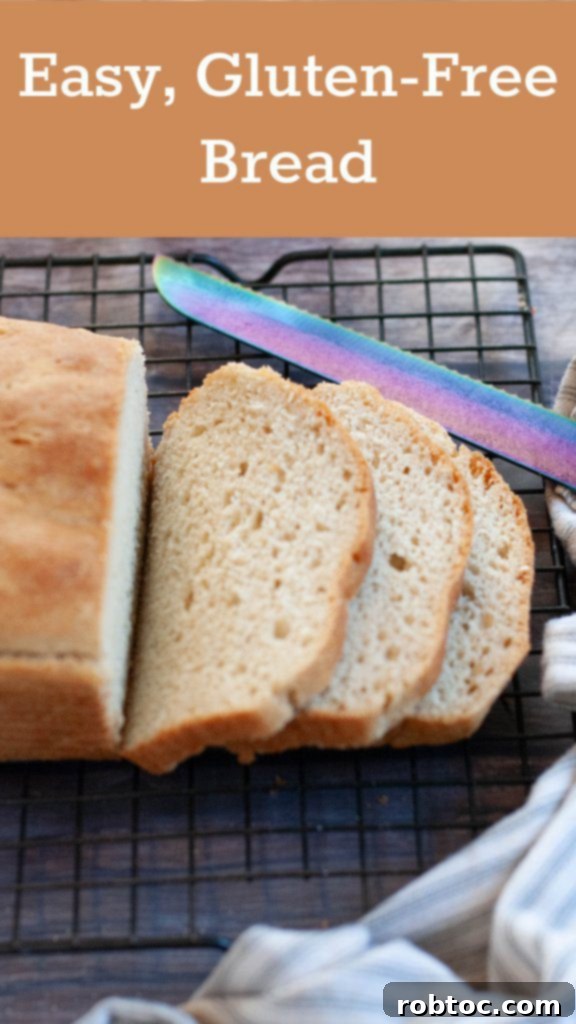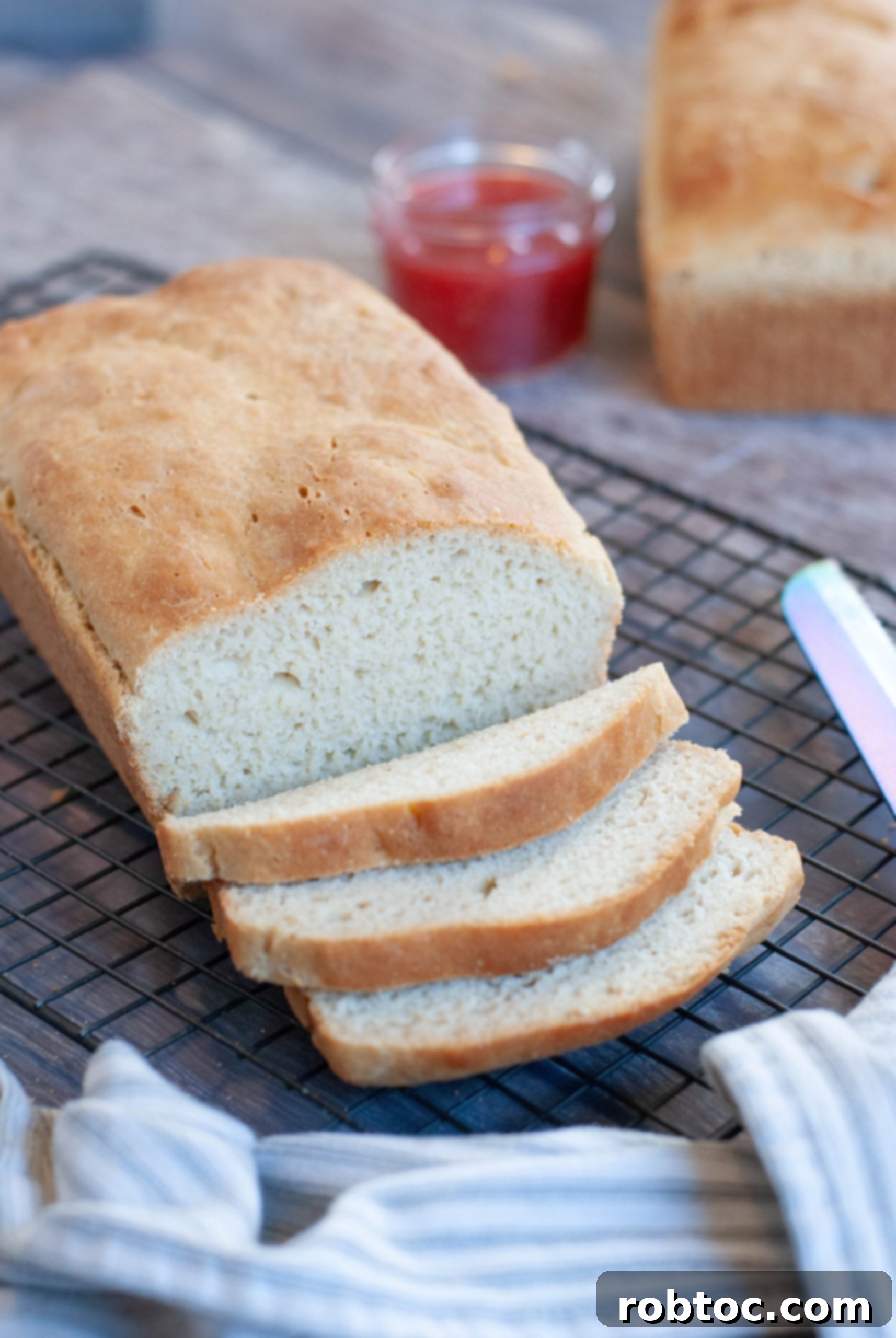
Easy Homemade Gluten-Free Bread Recipe: Soft, Fluffy & Dairy-Free Perfection
For anyone living a gluten-free lifestyle, the quest for truly delicious, soft, and pliable bread can feel like an endless journey. Many recipes demand obscure ingredients, complex flour blends, and a level of baking expertise that often discourages the home cook. But what if we told you there’s a game-changing gluten-free bread recipe that’s not only incredibly simple to follow but also delivers consistently amazing results? Say goodbye to crumbly, dense loaves and hello to the soft, wonderful gluten-free bread you’ve been dreaming of.
This exceptional recipe is designed for ease and accessibility, using readily available ingredients to produce a loaf perfect for everything from slicing and toasting to crafting hearty sandwiches. It’s also an ideal companion for your favorite soups, offering that satisfying dunking experience you might have thought was off-limits. Get ready, carb lovers – you can finally enjoy real bread again! And as an added bonus, this recipe is naturally dairy-free, making it suitable for even more dietary needs. We’ve meticulously crafted these instructions to ensure your success, even if you’re new to gluten-free baking.
This post contains affiliate links.
Choosing the Best Gluten-Free Flour Blend for Your Bread
One of the biggest hurdles in gluten-free baking is often the flour itself. Many recipes call for a custom blend of multiple individual flours and starches – rice flour, tapioca starch, potato starch, sorghum flour, and more. While these custom blends can yield great results, they require purchasing, storing, and precisely measuring several different ingredients. Let’s be honest: who truly has the time, pantry space, or patience for that in their everyday baking routine? We believe in keeping things simple, efficient, and enjoyable.
That’s why this recipe focuses on using a high-quality, pre-made, all-purpose gluten-free flour blend. These blends are specifically formulated with the right balance of flours and starches to mimic the structure and texture of wheat flour, removing the guesswork for you. Our top recommendation for achieving the best possible results with this easy gluten-free bread is King Arthur Baking Company’s Gluten-Free All-Purpose Flour. It’s known for its consistent quality and excellent performance in a wide variety of baked goods, including this bread.
Budget-Friendly Gluten-Free Flour Alternative
We understand that specialty flours can sometimes be a significant expense, and we want this incredible gluten-free bread to be accessible to everyone. That’s why we’ve gone the extra mile to test this recipe with a more budget-friendly option: Walmart’s Great Value Gluten-Free All Purpose Flour. The fantastic news is that you can achieve equally delicious results with a few minor adjustments, ensuring that exceptional gluten-free bread is within everyone’s reach, regardless of budget.
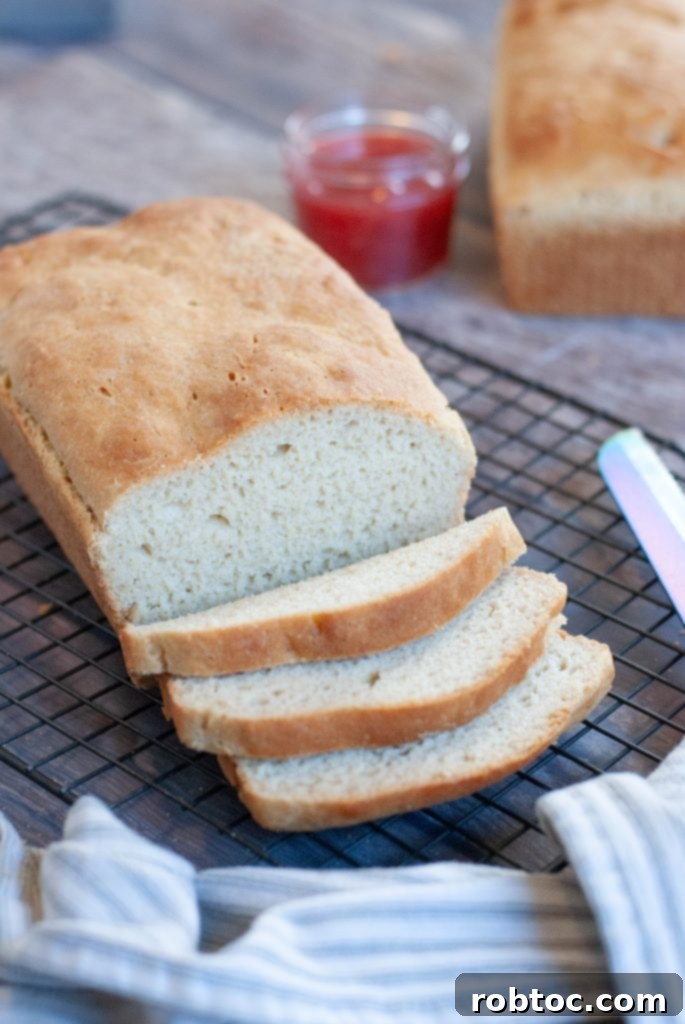
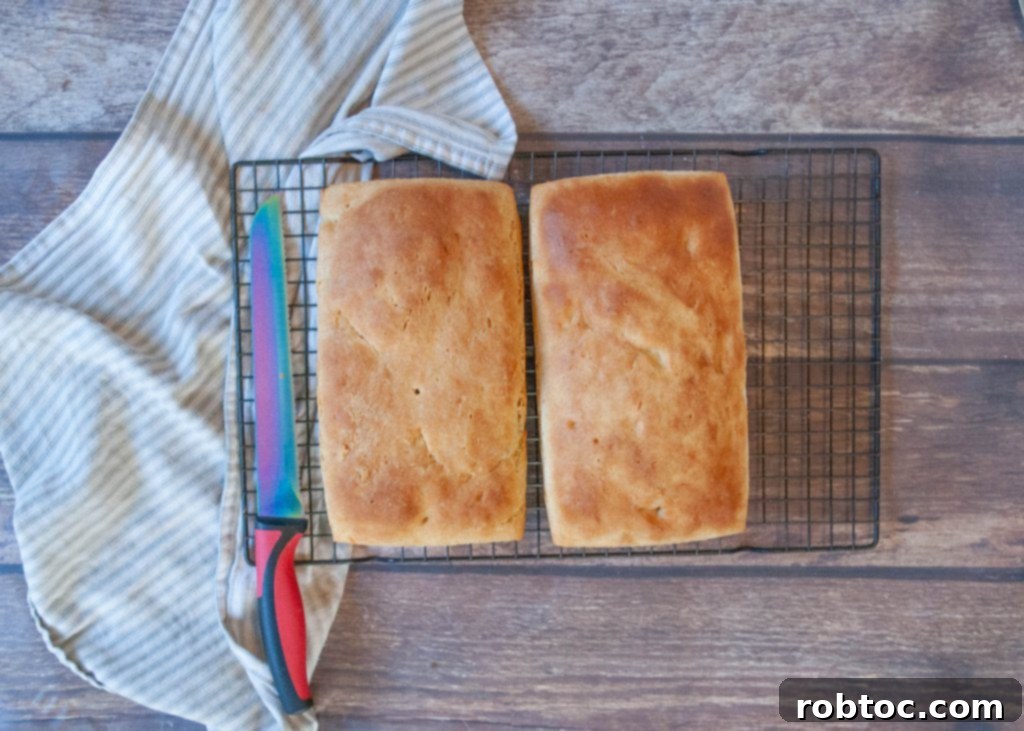
If you opt to use Great Value’s Gluten-Free All Purpose Flour, keep the flour measurement at 3 cups, but increase the amount of oil from 1/4 cup to 1/3 cup. Additionally, you’ll need to increase the baking powder from 1 teaspoon to 1 Tablespoon. With these simple tweaks, you’ll be able to create two amazing versions of gluten-free bread that are virtually indistinguishable in taste and texture. In fact, the photograph above, showcasing two beautiful loaves side-by-side, features one made with King Arthur flour and the other with Great Value. Can you tell the difference? Neither can we!
Important Flour Considerations: Why Blends Matter
It’s crucial to understand that not all gluten-free flours are created equal, and you absolutely cannot substitute a single gluten-free flour (like just rice flour or just almond flour) for an all-purpose gluten-free flour blend in this recipe. Gluten-free baking is a delicate science, and the balance of different starches and flours in an all-purpose blend is essential for replicating the structure, elasticity, and crumb that gluten provides in traditional bread. Single flours lack this complex composition and will not yield the desired soft, pliable texture.
Furthermore, while we’ve tested with King Arthur and Great Value, other brands of gluten-free all-purpose flour blends can vary slightly in their composition. The types and ratios of flours (like brown rice, white rice, tapioca, potato, sorghum, etc.) and binders (like xanthan gum, which is often included in these blends) can differ. If you choose to experiment with other brands, be aware that you may need to make minor adjustments to liquid or binder amounts to achieve optimal results. We highly recommend sticking to our tested recommendations for your first few attempts to ensure success.
The Magic of Psyllium Husk in Gluten-Free Bread
We promised no crazy ingredients, and for the most part, our list is quite standard: eggs, oil, water, and yeast. However, there’s one ingredient that might be new to some, but it plays an absolutely vital role in the success of this gluten-free bread: psyllium husk powder. While some bakers might omit it, we strongly recommend including it. It’s the unsung hero that helps transform a potentially crumbly loaf into soft, bendable, and truly satisfying bread.
So, what exactly is psyllium husk and why is it so important for gluten-free baking? Psyllium husk is a form of fiber derived from the seeds of the *Plantago ovata* plant. When it comes into contact with liquid, it forms a gel-like substance. In gluten-free bread, this gelling property acts as a powerful binder and provides much-needed elasticity. Think of it as a natural gluten replacer. Gluten is the protein network in wheat flour that gives bread its stretch, chew, and ability to hold shape. Without gluten, bread dough can be very brittle and prone to falling apart.
Psyllium husk powder steps in to create a similar network, offering structure, binding ingredients together, and contributing to the bread’s pliability and chewiness. It’s what helps this gluten-free bread bend without breaking, much like its traditional counterparts. This is especially crucial for achieving that soft crumb and crust that makes for excellent sandwiches and toasts. While other binders like xanthan gum or guar gum are often used in gluten-free baking, psyllium husk provides a superior, more natural texture for yeasted breads, often resulting in a less “gummy” feel.
You can typically find psyllium husk powder in the health food aisle of most grocery stores, in bulk food sections (like Winco), or conveniently online via platforms like Amazon. Ensure you are using *psyllium husk powder*, not whole psyllium husks, as the powder is more concentrated and will be specified in the recipe measurements.
Expert Tips for Baking Perfect Easy Gluten-Free Bread
This recipe is designed to be straightforward, even for novice bakers. If you can accurately measure and pour, you’re already halfway there! However, a few key insights can elevate your baking experience and ensure a perfectly risen, wonderfully textured loaf every single time. Paying attention to these small details can make all the difference in achieving gluten-free bread perfection.
- Check Your Yeast’s Vitality: Yeast is a living organism, and its freshness is paramount for a good rise. Always check the expiration date on your rapid-rise instant yeast. If it’s expired or has been open for a long time, it may not be active, leading to a dense, flat loaf. When in doubt, perform a quick proofing test: dissolve a teaspoon of yeast with a pinch of sugar in warm water (around 105-115°F). If it doesn’t become foamy within 5-10 minutes, it’s best to discard it and use a fresh packet.
- Ensure Baking Powder Freshness: Like yeast, baking powder also has a shelf life. Old or expired baking powder can lose its leavening power, negatively affecting your bread’s rise and overall texture. Check the expiration date and ensure it’s stored in a cool, dry place.
- Room Temperature Eggs Are Key: Eggs that are at room temperature incorporate more easily and evenly into the batter. They also contribute to a better emulsion with other ingredients and can aid in a more consistent rise. If you forget to take them out in advance, simply place the eggs (still in their shells) in a bowl of warm water for 5-10 minutes while you gather your other ingredients.
- Stick to Recommended Flour Blends: As discussed earlier, swapping gluten-free flour brands can significantly alter results. If you must use a different brand, be prepared for potential adjustments to liquid or binder content, and understand that the outcome may vary. For consistent success, use King Arthur or Great Value with the specified modifications.
- Use the Correct Bread Pan Size: The size of your bread pan directly impacts the loaf’s rise, shape, and baking time. This recipe is optimized for a 9x5x2 ¾ inch loaf pan. Using a smaller pan can cause the dough to bubble over the sides during rising or baking, creating a messy situation and an uneven loaf.
- Always Preheat Your Oven: Baking gluten-free bread in a properly preheated oven is critical. The initial burst of heat helps set the crust and encourages a final “oven spring” – the last rise the dough gets as it bakes. Placing dough into a cold oven can lead to a dense texture and poor rise.
- Embrace the Sticky Dough: Gluten-free bread dough is typically much stickier and more batter-like than traditional wheat dough. Don’t be alarmed! This is completely normal. Greasing your hands or spatula will make handling much easier.
- Accurate Water Temperature for Yeast: Too-hot water will kill the yeast, preventing any rise. Too-cold water will keep the yeast dormant, also preventing a rise. An instant-read thermometer is invaluable for ensuring your water is perfectly between 105-115°F (40-46°C).
With these tips in mind, you are fully equipped to embark on your journey to making amazing homemade gluten-free bread!
Essential Tools for Effortless Gluten-Free Bread Making
While this recipe is designed for simplicity, having the right tools can significantly enhance your experience and ensure consistently excellent results. These three recommended kitchen staples will streamline the bread-making process and become invaluable assets in your gluten-free baking adventures:
- Stand Mixer with Dough Hook: A stand mixer is truly a game-changer for gluten-free bread. Unlike traditional doughs that require extensive kneading by hand, gluten-free doughs are often sticky and more like a thick batter. A stand mixer, especially with a dough hook attachment, handles this consistency effortlessly, ensuring thorough mixing without the mess or effort. While electric hand beaters can work in a pinch, a stand mixer provides superior aeration and consistent mixing, which is vital for gluten-free structure. If you’re committed to gluten-free baking, this is an investment that will pay dividends in convenience and quality. Consider adding it to your wish list or keeping an eye out for sales – once you taste this bread, you’ll be making it frequently!
- Instant-Read Digital Thermometer: This is arguably one of the most versatile and important tools in any kitchen, especially for bread making. For this recipe, it’s absolutely crucial for two reasons:
- Activating Yeast: The water temperature must be precisely 105-115°F (40-46°C) to properly activate the rapid-rise instant yeast without killing it. A thermometer takes the guesswork out of this critical step.
- Checking Doneness: The only sure way to know if your bread is fully baked through is to check its internal temperature. For gluten-free bread, aim for 205-210°F (96-99°C) in the center of the loaf. This prevents an underbaked, gummy interior.
Beyond bread, this tool is invaluable for cooking meats, making candy, and countless other culinary tasks. It’s a small investment that offers immense value.
- Standard 9×5 Inch Bread Pan: The size and material of your bread pan truly matter for this recipe. We specifically recommend a 9x5x2 ¾ inch pan. This dimension provides enough space for the dough to rise properly without overflowing, ensuring a beautifully shaped loaf. We’ve found that smaller pans can lead to the dough bubbling over during proofing or baking, creating an uneven and potentially less appealing bread. High-quality pans, like those from USA Pan, offer excellent heat distribution for even baking.
Simple Ingredients for Your Gluten-Free Bread
You’ll be delighted to know that this incredible gluten-free bread recipe requires just nine straightforward ingredients. Chances are, you already have most of them in your pantry, making this a truly accessible baking project. Each ingredient plays a vital role in creating the perfect texture, flavor, and rise of your homemade loaf:
- King Arthur Gluten-Free Baking Mix: Our top recommendation for its consistent performance and superior taste.
- Rapid Rise Instant Yeast: Essential for leavening, giving the bread its airy structure and soft crumb. “Rapid rise” or “instant” yeast is preferred as it doesn’t require pre-proofing.
- Psyllium Husk Powder: The key binder that provides elasticity and prevents crumbling, acting as a natural gluten substitute. (See the dedicated section above for more details!)
- Baking Powder: Provides additional lift and a tender crumb, working in conjunction with the yeast.
- Salt: Enhances flavor, regulates yeast activity, and strengthens the dough structure.
- Warm Water (110 degrees F / 43 degrees C): The ideal temperature for activating the instant yeast.
- Eggs (room temperature): Add structure, moisture, richness, and aid in binding.
- Honey: Feeds the yeast, contributing to the rise, and adds a subtle sweetness and golden hue to the crust.
- Canola Oil or other neutral tasting oil: Provides moisture, tenderness, and a soft texture.
How to Make Delicious Homemade Gluten-Free Bread: Step-by-Step
Making this gluten-free bread is simpler than you might think! Follow these detailed instructions to achieve a perfectly soft and flavorful loaf:
- Begin by preparing your eggs. In a small bowl filled with warm water, gently place your eggs (still in their shells) for 5-10 minutes. This brings them to room temperature quickly, which helps them incorporate more smoothly into the batter and contributes to a better rise. Use this time to gather your stand mixer and measure out all your remaining ingredients.
- Attach the dough hook to your stand mixer. Carefully pour all your pre-measured ingredients into the mixer bowl: the gluten-free flour blend, fast-rising instant yeast, psyllium husk powder, baking powder, salt, room temperature eggs, canola oil, and honey. Finally, add the warm water, ensuring its temperature is precisely between 105-115°F (40-46°C) using an instant-read digital thermometer. Water that’s too hot will kill the yeast, while water that’s too cold won’t activate it properly.
- Start mixing the dough on a slow speed for approximately 1 minute. This allows the dry and wet ingredients to begin combining, preventing flour from flying out of the bowl and ensuring a gradual incorporation.
- After the initial minute, increase the mixer speed to high and continue to mix for 2.5 minutes. During this stage, the dough will start to come together into a thick, sticky batter.
- Pause the mixer. Using a spatula generously coated with non-stick cooking spray (this prevents sticking to the very sticky dough!), scrape down the sides and bottom of the mixing bowl. This ensures all ingredients are thoroughly combined and no dry pockets of flour remain.
- Return the mixer to high speed and beat for another 2.5 minutes. This final mixing period helps develop the psyllium husk’s binding properties, contributing to the bread’s structure and texture.
- Prepare your bread pan. Liberally spray a 9×5 inch bread loaf pan with non-stick cooking spray. Again, spray your spatula with non-stick spray. Pour the sticky, batter-like dough into the greased pan. To shape the dough evenly, wet your hands with a little water or lightly grease them with oil. Gently press the dough into the pan, ensuring it’s spread flat and smooth across the top. This helps create an even rise and a uniform loaf.
- Prepare the cling wrap for proofing. Measure out a piece of cling wrap large enough to cover your bread pan with a slight overhang. Spray one side of the cling wrap with non-stick spray. Place the sprayed side down directly onto the dough, tightly covering the pan. This prevents the dough from sticking to the wrap as it rises and keeps moisture in.
- Create a warm, moist environment for proofing. Place 1 cup of water in a microwave-safe mug. Microwave the water on high for 2-3 minutes, until it’s very hot and steaming.
- Quickly open the microwave door and carefully place your bread pan (covered with the sprayed cling wrap) inside, next to the hot mug of water. Close the microwave door immediately. The hot, moist air trapped within this small, enclosed environment will provide the perfect conditions for your gluten-free dough to proof and rise effectively. This controlled warmth and humidity are crucial for activating the yeast.
- Set a timer for 45 minutes for the dough to rise. The exact proofing time can vary depending on the ambient humidity and temperature in your kitchen. You’ll know the dough is sufficiently risen when it has reached just about the top edge of your bread pan. It should look noticeably puffed up and light.
- Once the dough is nearing the end of its proofing time (around 35 minutes into the 45-minute cycle), preheat your oven to 350 degrees F (175 degrees C). When the oven is fully preheated and the dough has finished rising, carefully remove the cling wrap from the bread pan. Place the uncovered bread pan onto the middle rack inside your hot oven.
- Bake the bread for approximately 45 minutes. The most accurate way to check for doneness is by using your digital instant-read thermometer. Insert it into the center of the loaf; the bread is fully baked when it reads between 205-210 degrees F (96-99 degrees C). The crust should also appear golden brown.
- Once baked, carefully remove the bread from the oven. Allow it to cool in the pan for exactly five minutes. During this brief cooling period, take a stick of butter and brush it generously over the top crust of the hot bread. This adds a lovely shine, a touch of richness, and helps keep the crust soft.
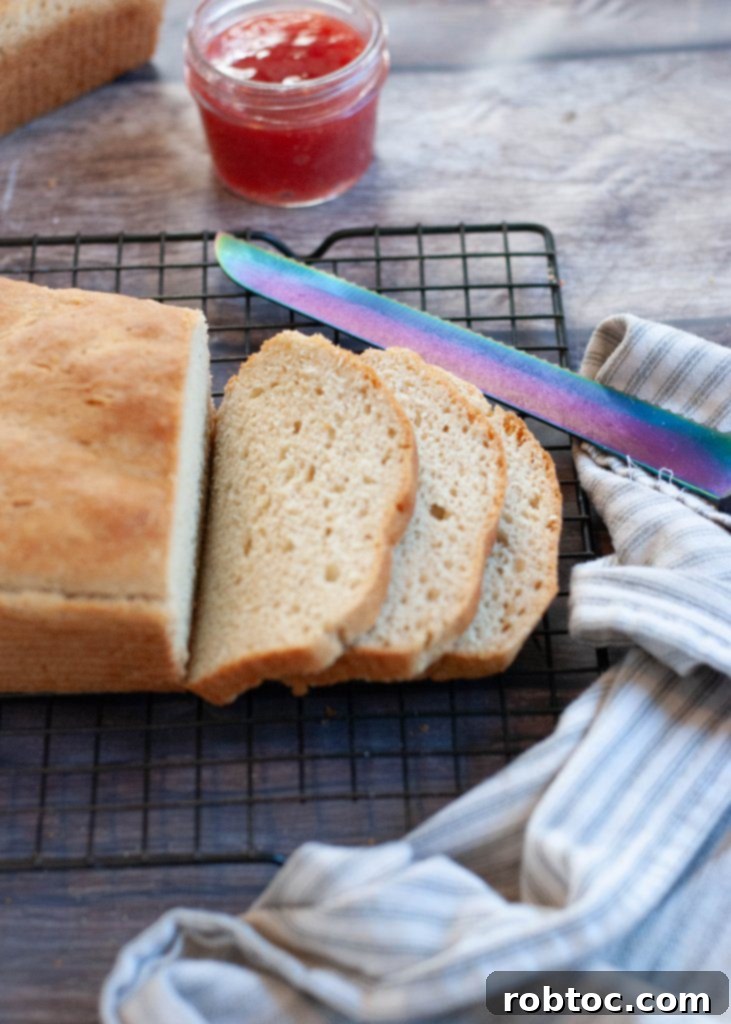
- After five minutes, gently turn the loaf out onto a wire cooling rack. Remove it completely from the pan to allow air circulation on all sides. Let the bread cool completely on the rack before slicing. Slicing hot bread can lead to a gummy texture, especially with gluten-free varieties. Patience is key for the best results!
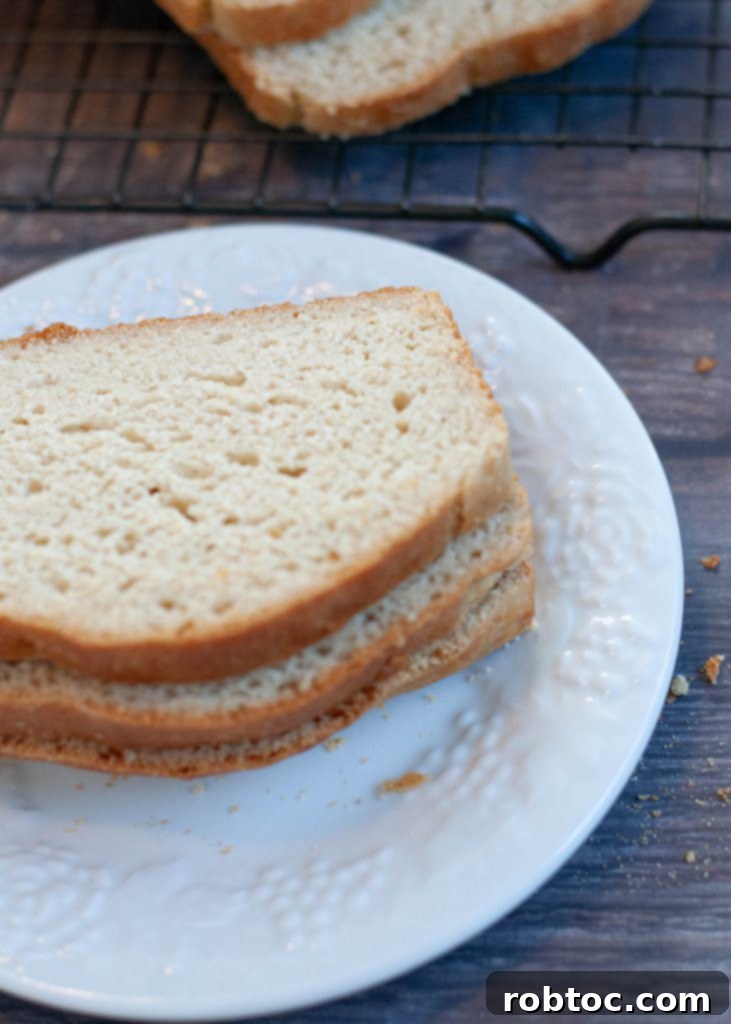
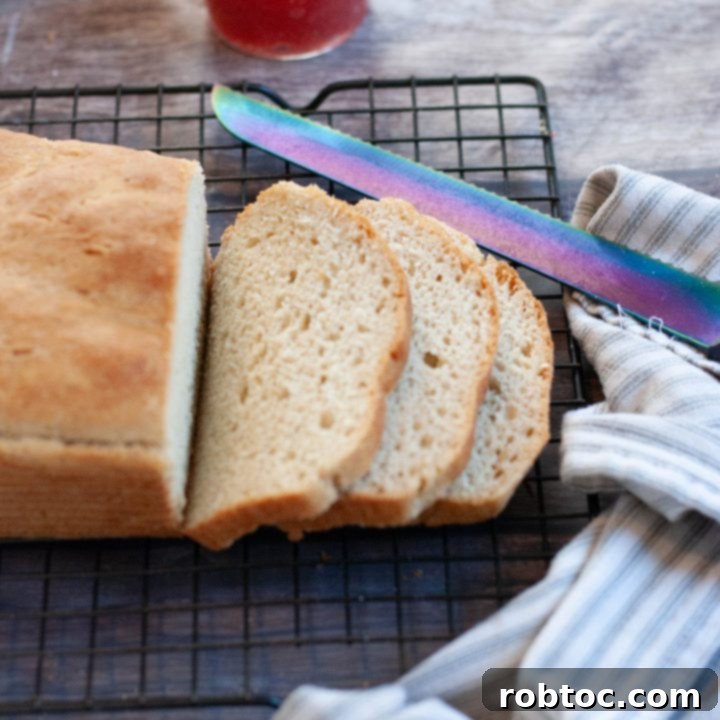
- Once cooled, slice into desired thickness and enjoy your perfectly baked, soft, and delicious homemade gluten-free bread!
Creative Serving Suggestions for Your Homemade Gluten-Free Bread
As a devoted carb-lover, it’s not my place to dictate how many slices of this wonderful homemade gluten-free bread you should enjoy! For personalized dietary advice, always consult a certified nutritionist or dietitian. However, I can certainly offer abundant inspiration for savoring every delicious bite. This bread is so incredibly tasty and versatile, you might find it hard to stop at just one slice!
Here are some fantastic ways to enjoy your fresh gluten-free loaf:
- Classic Sandwiches: Its soft yet sturdy texture makes it ideal for your favorite sandwich fillings, from deli meats and cheeses to fresh veggies and spreads.
- Toast Perfection: Slice it thick, toast it to a golden crisp, and top with butter, jam, avocado, or a fried egg for a comforting breakfast or snack.
- Soup Companion: This bread is an absolute dream for dunking into warm, savory soups. Pair it with one of my yummy gluten-free soup recipes for the ultimate comfort meal.
- Grilled Cheese or Paninis: Its ability to crisp up beautifully makes it perfect for gooey grilled cheese sandwiches or pressed paninis.
- Homemade Croutons: Cube stale slices, toss with olive oil and seasonings, then bake until crunchy for delicious salad toppers.
- French Toast: Transform leftover slices into a delightful breakfast treat by dipping them in an egg batter and pan-frying until golden.
- Garlic Bread: Slather with garlic butter, toast, and enjoy alongside pasta or Italian dishes.
The possibilities are endless! This bread truly opens up a world of culinary enjoyment that many on a gluten-free diet might have thought was long gone. Embrace the joy of delicious, homemade bread once again!
Mastering the Art of Proofing Gluten-Free Bread
Proofing, or allowing the dough to rise, is a fundamental step in yeast-leavened bread making, and gluten-free bread is no exception. This crucial process activates the yeast, which feeds on the sugars (like honey in our recipe) and produces carbon dioxide gas. This gas gets trapped within the dough, causing it to expand and almost double in size. Proper proofing is essential for achieving a light, airy texture and a good crumb in your final loaf.
The key to successful proofing lies in providing a warm, moist environment. This warmth encourages yeast activity, while moisture prevents the dough from drying out and forming a crust too early, which could hinder its rise. While many traditional bread recipes suggest simply leaving dough in a warm spot on the counter, gluten-free dough often benefits from a more controlled environment due to its different structural properties.
Our tried-and-true method for perfect gluten-free proofing utilizes your microwave – not for cooking, but as an ideal proofing chamber! Here’s why it works so well:
- Controlled Environment: Your microwave is a small, enclosed space, making it perfect for trapping heat and steam. Unlike a larger, potentially drafty oven or kitchen, it provides a consistent, warm, and humid atmosphere that’s ideal for yeast activity.
- Consistent Warmth: By heating a cup of water, we generate reliable warmth without the risk of overheating the dough directly. This gentle, radiant heat encourages the yeast to work its magic effectively.
- Added Humidity: The steam from the hot water saturates the air, preventing the surface of your dough from drying out. A dry crust can restrict the dough’s expansion, leading to a less impressive rise.
Step-by-Step Microwave Proofing:
- Place 1 cup of water in a microwave-safe mug.
- Microwave on high for 2-3 minutes until the water is steaming hot.
- Quickly open the microwave door and place your prepared bread pan (with the dough, covered with greased cling wrap) inside, right next to the hot mug of water.
- Immediately close the microwave door to trap the heat and steam.
Allow the dough to proof for approximately 45 minutes. Remember that proofing time can vary slightly based on the humidity and temperature in your kitchen. You’ll know your dough is perfectly proofed when it has risen to just about the top edge of the bread pan. It should look significantly puffed up and feel light to the touch. It’s often helpful to set your timer for 35 minutes, giving you a chance to preheat your oven to 350°F (175°C). Then, set a final 10-minute timer for the remaining proofing. This way, when your dough is perfectly risen, your oven is already hot and ready for baking!
Crucial Reminder: Before transferring your bread to the preheated oven, always remove the plastic wrap! Failure to do so will result in melted plastic and a ruined loaf.
Storing Your Homemade Gluten-Free Bread for Lasting Freshness
One common characteristic of gluten-free bread is that it tends to stale more quickly than its traditional wheat-based counterparts. This is primarily due to the absence of gluten, which forms an elastic network that helps retain moisture and structure. However, with the right storage techniques, you can enjoy your delicious homemade gluten-free bread for longer!
Short-Term Storage (Room Temperature):
For the freshest experience, this bread is best enjoyed on the day it’s baked. If you have any leftovers, it will maintain its quality at room temperature for approximately 24-36 hours when stored in an airtight container or a sealed plastic bag (like a Ziplock bag). Keeping it sealed prevents air exposure, which is the primary culprit behind staling. Avoid leaving it uncovered on the counter, as it will dry out very quickly.
Long-Term Storage (Freezing):
If, by some miracle, you find yourself with bread remaining after the first day or two, freezing is the absolute best way to preserve its freshness and texture for longer periods. Here’s how to do it effectively:
- Slice Before Freezing: Once the bread has completely cooled, slice the entire loaf into your desired thickness. This allows you to easily grab just one or two slices as needed, without having to thaw the entire loaf.
- Prevent Sticking: Place a small piece of parchment paper or wax paper between each slice of bread. This crucial step prevents the slices from freezing together, making it easy to separate them later.
- Airtight Packaging: Stack the parchment-separated slices and place them in a freezer-safe airtight container or a heavy-duty freezer bag. Squeeze out as much air as possible before sealing. Proper packaging protects the bread from freezer burn.
- Freeze: Store in the freezer for up to 2-3 months.
Reheating Frozen Gluten-Free Bread:
When you’re ready to enjoy a slice (or two!), simply remove the desired amount from the freezer. There’s no need to thaw them completely first. We recommend these methods for reheating:
- Toaster: This is our favorite method. Toast the frozen slices lightly until they are thawed, warm, and just starting to crisp at the edges. This brings back a wonderfully fresh-baked texture.
- Oven/Toaster Oven: Place slices on a baking sheet and heat at 350°F (175°C) for a few minutes until warmed through.
- Microwave (Use with Caution): While convenient, microwaving can sometimes make gluten-free bread chewy or rubbery. If using, microwave for very short bursts (10-15 seconds) until just thawed, then finish in a toaster or oven for better texture.
By following these storage tips, you can ensure that you always have a supply of delicious, soft gluten-free bread ready to enjoy whenever the craving strikes!
Watch the Step-by-Step Recipe Video
To ensure you have the highest chance of success and confidence in making this incredible bread, we’ve created a comprehensive step-by-step video. This visual guide demonstrates just how uncomplicated the process is, providing clear demonstrations for each stage of the recipe. Watching the video will clarify any questions you might have and, hopefully, inspire you to bake your own loaf very soon!
The video should automatically load on this page. If it doesn’t appear, you can find it embedded at the bottom of the recipe card. And, if all else fails, you can always view it directly on our YouTube Channel.
Explore More Delicious Gluten-Free Bread Recipes
Our passion for delicious, accessible gluten-free baking extends beyond this amazing loaf! If you’ve enjoyed making this bread and are looking for more ways to satisfy your cravings for baked goods, we have several other highly-rated bread recipes that are absolute must-tries. Expand your gluten-free baking repertoire with these fantastic options:
- Gluten-Free Vegan Orange Rolls: Indulge in soft, sweet, and zesty rolls perfect for breakfast or dessert. These are a delightful treat that proves gluten-free and vegan can be utterly delicious.
- Gluten-Free Vegan Breadsticks: Perfect for pairing with Italian meals, these savory breadsticks are fluffy on the inside and perfectly crisp on the outside.
Additionally, if your dietary needs extend to being completely vegan (meaning egg-free and honey-free in addition to gluten-free), we’ve got you covered! Be sure to check out our dedicated recipe for homemade gluten-free vegan bread. We are committed to providing delicious solutions for a variety of dietary restrictions.
Navigating Egg-Free Substitutions in Gluten-Free Bread
We understand firsthand the challenges of baking for multiple allergies. If you need to make this a gluten-free *and* egg-free bread, please know you’re not alone. My own son managed an egg allergy for over a decade, and I know how tricky it can be to bake delicious gluten-free items without eggs. Eggs play several critical roles in traditional and gluten-free baking, contributing significantly to texture, acting as a binder, and assisting with the overall rise and structure of the loaf.
When eggs are included, they provide moisture, richness, and help emulsify fats and liquids, leading to a tender and cohesive crumb. Their protein structure also contributes to the bread’s overall strength and ability to hold its shape during baking. Therefore, substituting eggs can present a notable challenge in achieving the same exact results. However, if eggs are a no-go for your diet, there are viable alternatives.
A highly recommended alternative for eggs in this specific gluten-free bread recipe is aquafaba. Aquafaba is the liquid from canned chickpeas or other legumes, and it has remarkable emulsifying, binding, and leavening properties that mimic eggs surprisingly well. When whipped, it can create a foam similar to egg whites, offering lightness and structure. For this bread, you would generally substitute a certain amount of aquafaba for each egg, though the exact ratio can vary based on the specific recipe and desired outcome.
While other egg substitutes like flax eggs (ground flaxseed mixed with water) or chia eggs (chia seeds mixed with water) work well in many gluten-free baked goods like muffins or cookies, aquafaba tends to perform better in yeasted bread recipes where the egg’s role in structure and binding is more pronounced. It helps maintain a soft texture without making the bread too dense or crumbly.
Therefore, if you are able to use eggs, we highly recommend sticking to the original recipe for optimal texture and rise. But if eggs are off-limits, aquafaba is a suitable and effective substitute to consider for achieving a delicious egg-free gluten-free bread. Be aware that any substitution may result in a slightly different final texture, but with aquafaba, you can still achieve a wonderful loaf.
Easy Gluten Free Bread + VIDEO
14 slices
50 minutes
45 minutes
5 minutes
1 hour 40 minutes
Finally, a gluten-free bread that has simple instructions, no crazy ingredients and produces soft, wonderful bread. This gluten-free bread is great to eat by the slice, or for sandwiches. We love to eat it with soups as it makes the perfect side dish. Carb lovers unite: you can enjoy bread once again. This gluten-free bread is also naturally free of dairy too!
Ingredients
- 3 cups King Arthur Gluten Free Baking Mix
- 1 packet (2 and 1/4 tsp) *fast rising* instant yeast
- 1 Tablespoon psyllium husk powder
- 1 tsp baking powder
- 1 tsp salt
- 1 and 1/2 cups warm water (110 degrees F)
- 2 eggs, room temperature
- 1/4 cup canola oil or other neutral oil
- 1/4 cup honey
Instructions
In a bowl filled with warm water, place your eggs (shell on) for 5-10 minutes, to bring them up to room temperature while you get your stand mixer and measure out the rest of your ingredients.
In a stand mixer fitted with the dough hook, pour all of your ingredients: gluten-free flour, fast rising instant yeast, psyllium husk powder, baking powder, salt, eggs, canola oil and honey. (Use a digital instant read thermometer to make sure your water is the right temperature. If it’s too hot, it can kill the yeast!)
Mix the dough slowly until it starts to come together, around 1 minute.
Then turn the speed to high and mix for 2.5 minutes.
Stop, and use a spatula covered in non-stick spray to scrape the sides and the bottom and make sure everything is incorporating.
Turn the mixer to high again and beat for another 2.5 minutes.
Spray a 9×5 bread loaf pan with non-stick spray. Spray your spatula with non-stick spray and pour the sticky batter into the greased pan. Wet or grease your hands and press the dough into the pan evenly, until it’s flat and smooth.
Measure your cling wrap and and spray it with non stick spray. Place the non-stick spray side down on the pan and tightly cover it.
Take a mug and place 1 cup of water in it. Microwave on high 2-3 minutes.
Quickly open the microwave door and add your bread pan. You want to trap the hot, moist air from the hot water and to aid your bread rising in your microwave. This small environment will be the perfect place to proof your dough and let it rise.
Set a timer for 45 minutes. Proofing time will vary based on the humidity and temperature of your kitchen. You’ll know it’s done rising when it’s just about risen to the top of the pan.
Preheat your oven to 350 degrees. When oven is ready, take cling wrap off the bread and place it on the middle rack inside your oven.
Bake for 45 minutes, or until your digital thermometer reads between 205-210 degrees F, when placed in the middle of your loaf.
Take out of the oven and allow it to cool in the pan for five minutes. During that time, brush the top with a stick of butter.
Afterwards turn out onto a cooling rack and remove from the pan to finish cooling.
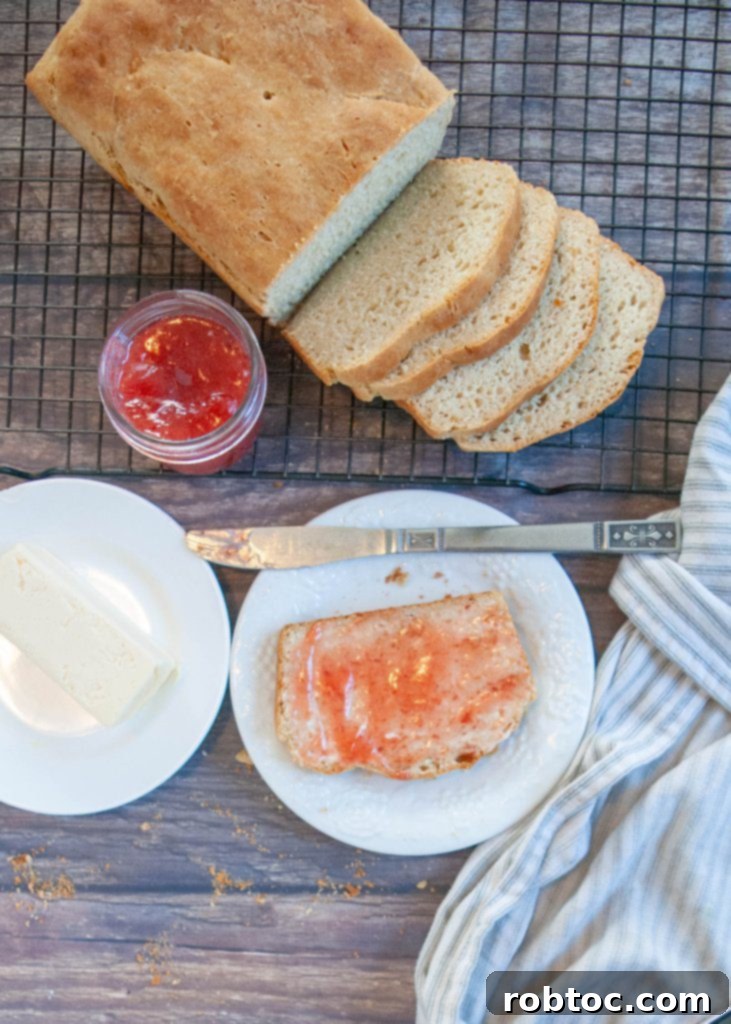
Cut into slices and enjoy.
Best enjoyed day of. Can keep in an airtight container for 24 hours room temperature. After that, in the fridge for the following day. After that, it is best sliced and kept frozen, with parchment paper between each slice. When needing one, take out a slice and toast to your liking to thaw.
Notes
If you’d like to know how to make this bread with a different flour blend, I did find a way to use Great Value’s All Purpose Gluten Free Flour mix. See the note above the recipe.
Be sure to read all of the FAQs and watch the video for best success.
*Our allergies, while severe and that get re-tested frequently, are such that we can go strictly by what’s on the label. I do not call companies to see what things are derived from, or call manufacturers to see about potential cross contact. If your allergies require you to do so, please do your own homework. And, products may have changed since the time of publication, so always re-read labels once you have them in hand. I cannot assure you of any ingredient’s safety, only you can do that. I simply share what works for our family
**If you are going to feed this to someone with food allergies, and you yourself do not have food allergies, I HIGHLY recommend having them check every single brand and ingredient you are using, to ensure they’re OK with each part of the recipe. And, to make sure you’ve talked to them about how to avoid cross contamination in your kitchen.
Nutrition Information:
Yield: 14
Serving Size: 1
Amount Per Serving:
Calories: 178Total Fat: 9gSaturated Fat: 2gTrans Fat: 0gUnsaturated Fat: 7gCholesterol: 27mgSodium: 542mgCarbohydrates: 22gFiber: 1gSugar: 8gProtein: 3g
DON’T FORGET TO PIN IT, SO YOU DON’T LOSE IT. WHILE YOU’RE IN PINTEREST, BE SURE TO CHECK OUT MY OTHER DIETARY SPECIFIC BOARDS.