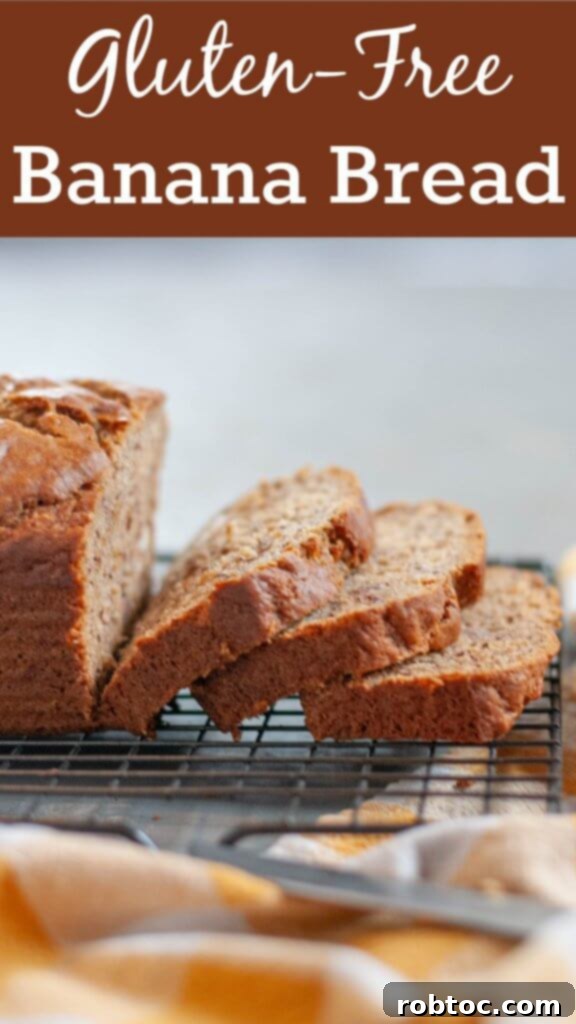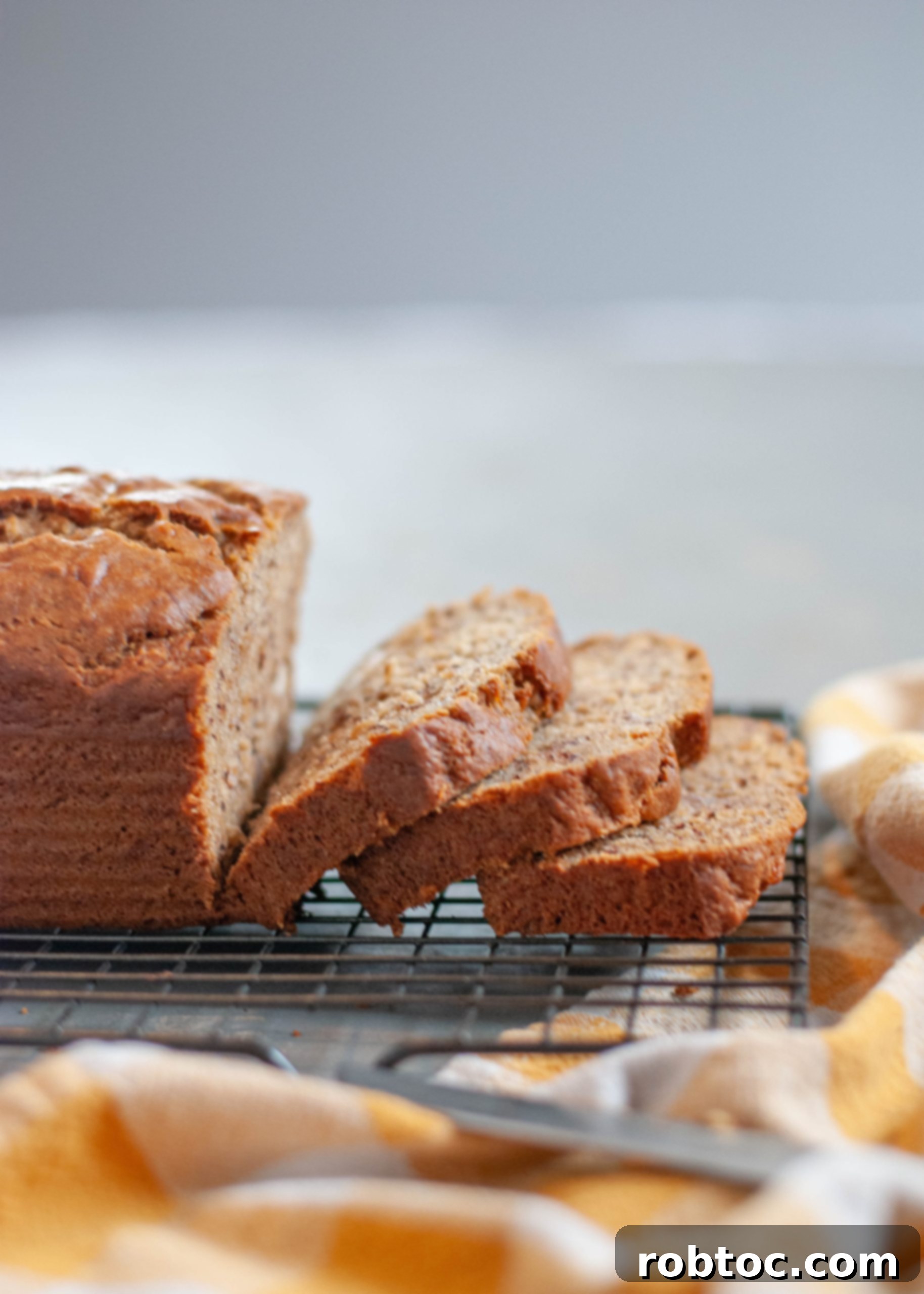
The Best Gluten-Free & Dairy-Free Banana Bread: Moist, Flavorful, and Allergy-Friendly
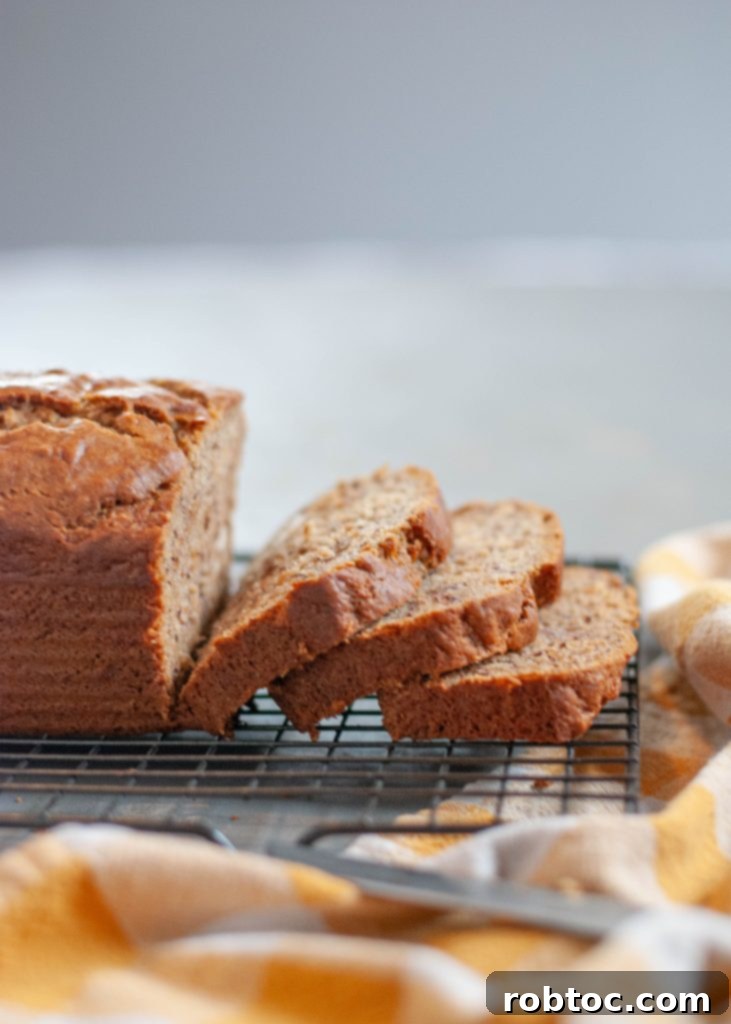
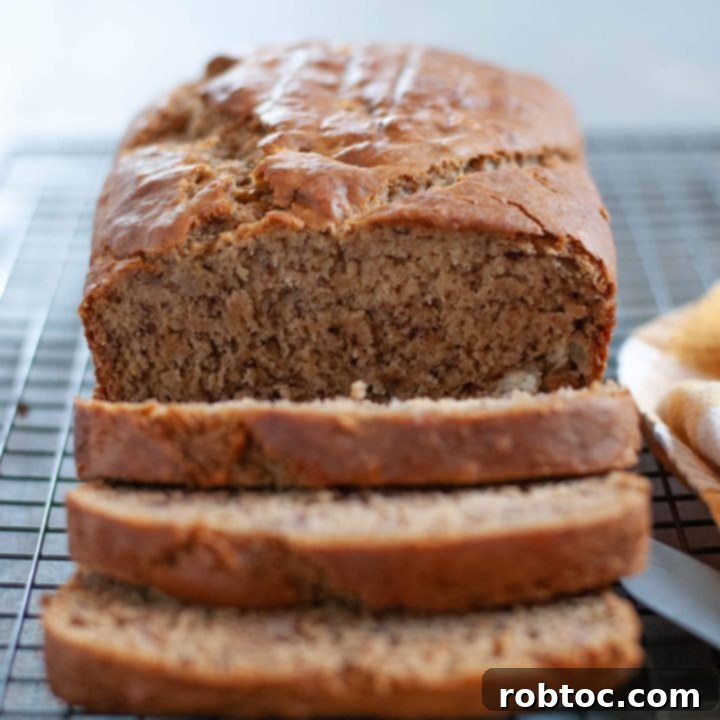
Indulge in this incredibly soft and moist gluten-free banana bread, infused with delightful notes of cinnamon and nutmeg. Perfectly tender and packed with flavor, it’s an excellent choice for a quick snack or a comforting breakfast. This easy recipe will have you eagerly anticipating your bananas to ripen faster! Beyond being gluten-free, this delicious banana bread is also naturally free of dairy, soy, fish, shellfish, peanuts, and tree nuts, making it a wonderful top 7 allergen-friendly treat for almost everyone to enjoy.
This post contains affiliate links.
Why You’ll Adore This Gluten-Free Banana Bread
Banana bread holds a special place in our hearts for a good reason. This sweet quick bread offers a uniquely tender crumb, bursting with natural fruity banana flavors complemented by warm, inviting spices like cinnamon and nutmeg. The springy, moist texture makes every bite a pure delight, establishing it as a truly satisfying breakfast item, a hearty snack, or even a late-night treat. Whether you’re serving it at a family brunch, packing it in lunchboxes, or enjoying a slice after school, this gluten-free and dairy-free banana bread is always a welcome addition. With a typical loaf yielding around 14 generous slices (depending on your cutting preference), it’s perfect for sharing with family and friends, ensuring there’s enough for everyone to savor.
What makes this particular gluten-free banana bread recipe stand out is its commitment to being allergy-friendly without compromising on taste or texture. Many conventional recipes rely on butter and wheat flour, making them unsuitable for those with dietary restrictions. Our recipe uses a careful selection of ingredients to achieve that classic banana bread comfort while being entirely gluten-free and dairy-free. This means more people can enjoy the simple pleasure of homemade banana bread, making it a fantastic staple in any kitchen.
Essential Ingredients for Your Perfect Loaf
Crafting the perfect gluten-free banana bread begins with selecting the right ingredients. Each component plays a vital role in achieving that desirable moist texture and rich flavor profile:
- Canola oil or other neutral oil: Essential for moisture and creating a tender crumb. Unlike butter, neutral oils won’t overshadow the delicate banana flavor, and they keep the recipe dairy-free.
- Brown sugar: Provides deep, caramel notes and contributes to the bread’s moistness and rich color.
- 4-5 ripe bananas with brown spots: The star of the show! Overripe bananas are crucial as they are sweeter, softer, and more flavorful, providing the natural sweetness and moisture needed for excellent banana bread.
- Eggs: Act as a binder, helping to hold the gluten-free batter together and providing structure and richness to the loaf.
- Vanilla extract: Enhances all the other flavors, adding a layer of aromatic warmth.
- Salt: Balances the sweetness and amplifies the overall taste of the bread.
- Nutmeg: A warm, aromatic spice that beautifully complements the banana and cinnamon.
- Cinnamon: Another classic warm spice that pairs perfectly with banana, adding depth and coziness.
- Baking soda: A leavening agent that reacts with the acidic bananas and brown sugar to help the bread rise.
- Baking powder: Works alongside baking soda to give the bread an airy, fluffy texture.
- All-purpose gluten-free flour blend: The foundation of this recipe. Using a high-quality, balanced blend is key for optimal texture in gluten-free baking. (For more details on flour choices, see our dedicated section below).
Step-by-Step Guide: How to Bake This Delicious Banana Bread
Achieving the perfect loaf of gluten-free banana bread is simpler than you might think. Follow these detailed instructions for exceptional results every time:
- Preheat your oven: Begin by preheating your oven to 350 degrees F (175 degrees C). Proper preheating ensures even baking from the moment your batter enters the oven.
- Prepare your pan: Generously grease a 9×5 inch bread pan with a non-stick cooking spray of your choice. This crucial step prevents sticking and ensures your beautiful loaf can be easily removed after baking. Set it aside.
- Mash the bananas: In a large mixing bowl, or using a stand mixer fitted with the whisk attachment, mash your ripe bananas thoroughly. You can achieve this by hand with a fork for a chunkier texture, or use electric beaters for a smoother consistency. I personally prefer my bananas very well mashed to ensure even distribution throughout the batter.
- Combine wet ingredients (part 1): Add the neutral oil and brown sugar to the mashed bananas. Mix until these ingredients are well combined and the mixture is smooth. The brown sugar will dissolve slightly, adding to the liquid component.
- Combine wet ingredients (part 2): Next, incorporate the eggs and vanilla extract. Mix again until everything is fully integrated, ensuring the eggs are thoroughly beaten into the mixture.
- Switch attachments (optional, for stand mixer users): If you’re using a stand mixer, at this point, I recommend switching from the whisk attachment to the paddle attachment. This prevents the dry ingredients from getting trapped and compacted within the balloon wires of the whisk, ensuring a more uniform mix. If you’re using electric beaters, simply continue on a low speed.
- Add spices and leavening: Introduce the salt, cinnamon, nutmeg, baking soda, and baking powder to the wet mixture. Mix thoroughly until these dry elements are evenly dispersed.
- Incorporate gluten-free flour: Gradually add the gluten-free flour blend to the bowl. Mix on low speed just until all the ingredients are combined. Be careful not to overmix, as this can lead to a tougher texture in gluten-free baked goods.
- Scrape the bowl: Use a spatula to scrape down the sides and bottom of the mixing bowl. This ensures that no pockets of unmixed ingredients are left behind, guaranteeing a perfectly uniform batter.
- Pour into pan: Pour the prepared batter into your greased 9×5 inch bread pan. Gently tap the pan on your counter a couple of times to help the batter settle evenly and release any trapped air bubbles.
- Initial bake: Place the bread pan on the center rack of your preheated oven and set a timer for 30 minutes.
- Cover and continue baking: When the first timer dings, carefully place a sheet of aluminum foil loosely over the top of the bread. This prevents the top from browning too quickly while the inside continues to cook. Set another timer for 30 minutes (bringing the total baking time to 60 minutes).
- Check for doneness: After the second timer, remove the aluminum foil. Insert a digital read thermometer into the very center of the bread, making sure not to touch the bottom of the pan. The bread is perfectly done when the internal temperature reads between 200-205 degrees F (93-96 degrees C). If it hasn’t reached this temperature, return it to the oven with the foil back on for a few more minutes. If you desire a darker crust, you can omit the foil for the last few minutes.
- Cool in pan: Once cooked through, turn off the oven and carefully remove the bread. Allow it to rest in the hot pan for a crucial five minutes. This allows the loaf to set slightly and makes it easier to remove.
- Transfer to cooling rack: After five minutes, gently turn the loaf out onto a wire cooling rack to finish cooling completely. This prevents moisture from accumulating at the bottom and making the bread soggy.
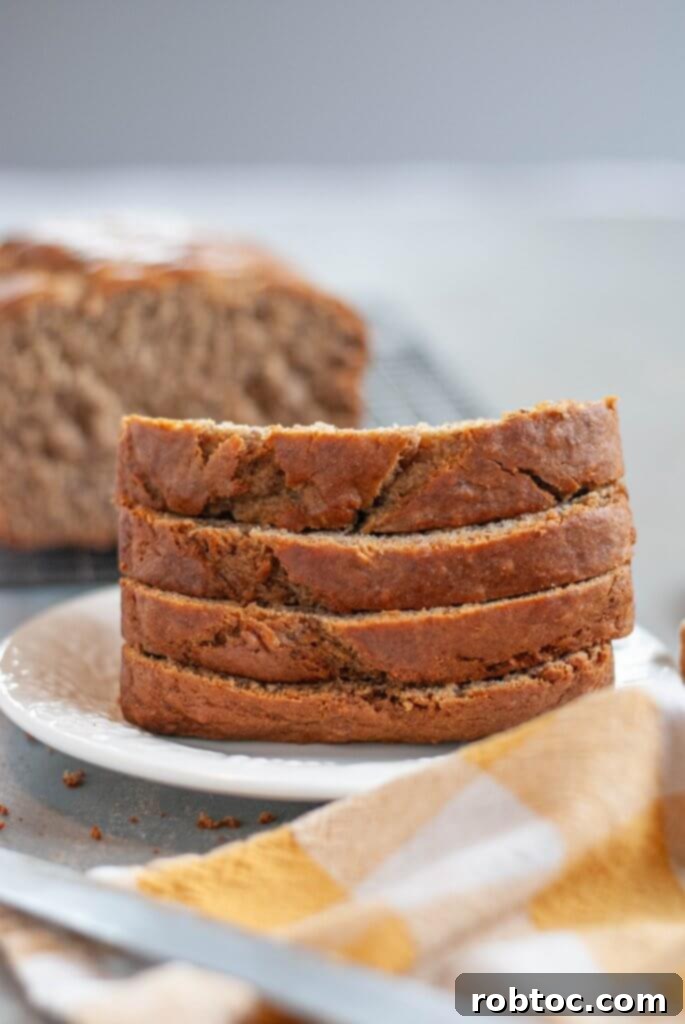
- Slice and enjoy: Once cooled, slice your delicious gluten-free banana bread and savor every bite. It’s truly exceptional on its own, but a light spread of butter (dairy or non-dairy) on top elevates it even further!
- Storage tips: This homemade bread maintains its freshness for 1-2 days when stored in an airtight container at room temperature. However, if you live in a particularly humid climate, an entirely airtight seal can sometimes make gluten-free bread a bit stodgy. If you notice this, allow the container to vent slightly. If you find you won’t finish the loaf within this timeframe, slicing and freezing individual portions is an excellent strategy. Simply pull out a slice when a craving strikes and thaw or toast it for a quick treat.
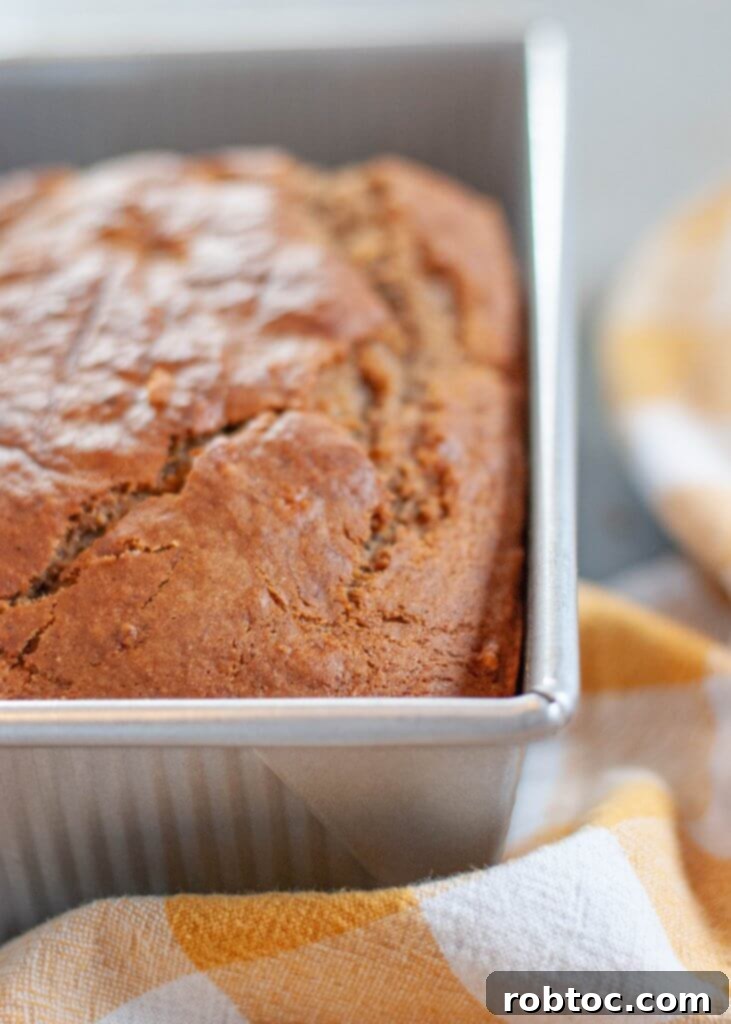
Is This Gluten-Free Banana Bread Dairy-Free? Absolutely!
Many traditional banana bread recipes incorporate butter as a primary fat source, which means they would not be suitable for those avoiding dairy. When developing and testing this recipe, I conducted multiple trials. In every instance where I used butter, I found that its distinct flavor tended to overwhelm the delicate and mild sweetness of the banana. It simply didn’t allow the star ingredient to shine as brightly as it should.
The moment I switched to using a neutral oil as the fat component, the results were significantly better. The oil provides the necessary moisture and tenderness without imparting any dominant flavor, allowing the natural banana and warm spices to truly come through. This is fantastic news for our dairy-free community! By opting for oil, this recipe naturally becomes both gluten-free AND dairy-free, making it accessible and enjoyable for a wider range of dietary needs without sacrificing any deliciousness.
Mastering Banana Quantity: Why a Scale is Your Best Friend
Determining the exact number of bananas can often be a tricky part of baking. Bananas vary significantly in size, from small to extra-large, and this variability directly impacts the amount of moisture they contribute to your batter. In gluten-free baking, managing moisture is paramount. Too much moisture can lead to a gooey, mushy, or overly dense texture, which is far from ideal.
To ensure consistent and perfect results every time, the most reliable method for measuring bananas is to use a digital kitchen scale. If you don’t already own one, I cannot recommend it enough – it will quickly become an indispensable tool for countless kitchen tasks. Beyond banana bread, a kitchen scale is excellent for precise portioning, dividing meat, accurately weighing flour (which is crucial in gluten-free baking), and making candies where exact weights are critical for success. They are typically inexpensive and represent a small investment that will dramatically improve your baking accuracy.
For this recipe, you will need precisely 16 ounces (or 1 pound) of PEELED bananas (skin off). I usually find that this amount corresponds to about 4 to 5 medium-sized ripe bananas. It’s always a good idea to purchase a few extra bananas than you think you might need, just to be on the safe side, ensuring you have enough to reach the target weight.
Adapting for Egg-Free Banana Bread
For those who require an egg-free banana bread option, you’re in luck! While this specific recipe calls for eggs, I have developed a fantastic alternative: egg-free banana bread muffins. These muffins are also delightfully gluten-free and dairy-free, offering a similar flavor profile in a convenient muffin form. To make that recipe, you will need to have some Ener-G Egg Replacer on hand, which is a reliable egg substitute for many baked goods.
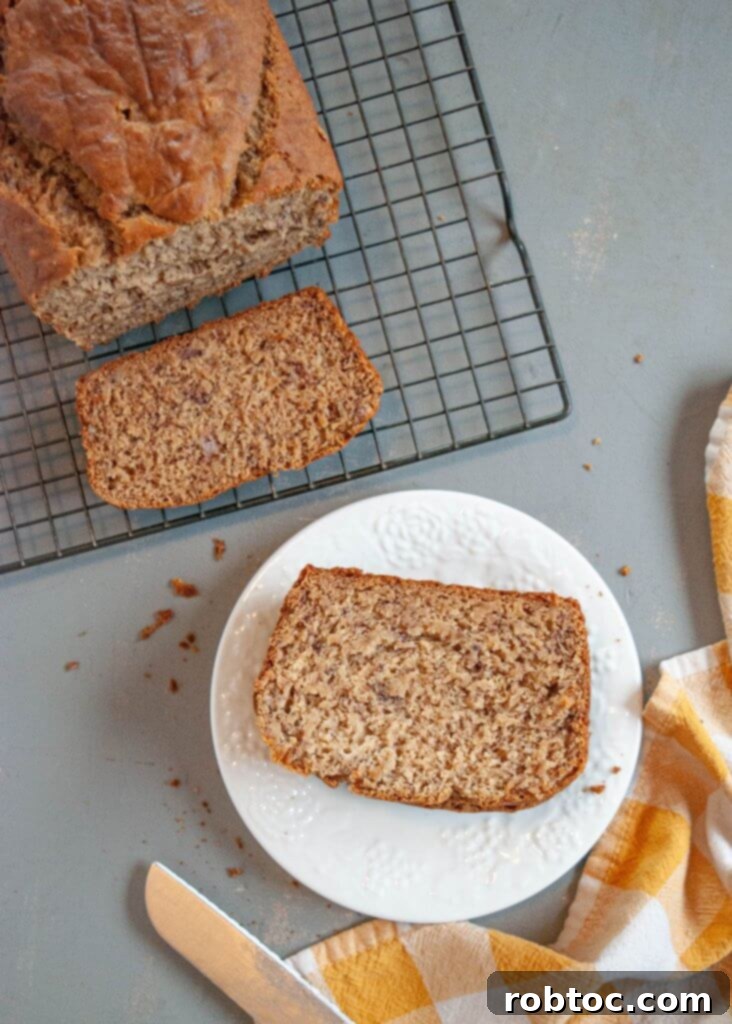
Expert Tips for Perfect Gluten-Free Banana Bread
Baking with gluten-free flours can sometimes present unique challenges, but with these expert tips, you’ll achieve a perfectly moist and tender loaf every single time:
- Weigh your peeled bananas: As discussed earlier, the consistency of your banana bread heavily relies on the correct amount of moisture. Using a kitchen scale to weigh 16 ounces (1 pound) of peeled bananas is the most accurate way to ensure the perfect texture, avoiding a gummy or dry loaf.
- Accurate flour measurement is key: When measuring gluten-free flour, it’s generally best to lightly spoon the flour into your measuring cup and then level it off with a straight edge. This “fluff and scoop” method prevents overpacking the flour. Even better, use your digital kitchen scale to measure the flour to precisely 120 grams (per cup), which is the most accurate method and eliminates guesswork.
- Check your leavening agents: Baking soda and baking powder lose their effectiveness over time. Always ensure yours are fresh; old leavening agents will result in a dense, flat loaf. To test baking soda, mix a teaspoon with a bit of vinegar; it should bubble vigorously. For baking powder, mix a teaspoon with hot water; it should also fizz.
- Mind the baking powder: This recipe calls for a generous tablespoon of baking powder. While this helps with a fantastic rise in gluten-free baking, sometimes a large quantity can leave a slight metallic aftertaste for sensitive palates. I haven’t noticed this with this recipe, but if you do, consider switching to an aluminum-free brand like Rumford.
- The foil method for even baking: Bake your banana bread uncovered for the first half of the baking time, and then cover it loosely with aluminum foil for the remainder. Moist sweet breads like banana bread can be notoriously difficult to cook through evenly, especially in the center, without over-browning the top. The foil traps steam, helping the center to cook thoroughly while preventing the crust from becoming too dark or dry.
- Don’t let it cool in the pan: After removing the bread from the oven, allow it to sit in the hot pan for only five minutes. Immediately after, turn it out onto a wire cooling rack. Leaving the bread in the hot pan for too long will trap excess moisture, leading to a gummy texture, especially with gluten-free flours.
- The ultimate doneness test: While the toothpick test (inserting a toothpick and checking for clean removal) is common for cakes, it can be unreliable for banana bread. Because of the mashed banana chunks, a toothpick might come out with moist banana pieces, making you think it’s not done when it actually is. The most accurate way to confirm doneness is to use an instant-read digital thermometer. Insert it into the very center of the loaf (avoiding the bottom of the pan) and look for an internal temperature of 200-205 degrees F (93-96 degrees C).
- Embrace spotty bananas: The best banana bread starts with very ripe bananas – those with plenty of brown spots and speckles on their skins. Under-ripe bananas are less sweet and have a starchier texture, which will negatively impact the flavor and moisture of your bread. This recipe is an excellent way to use up those “too-ripe” bananas that your kids might otherwise refuse to eat plain!
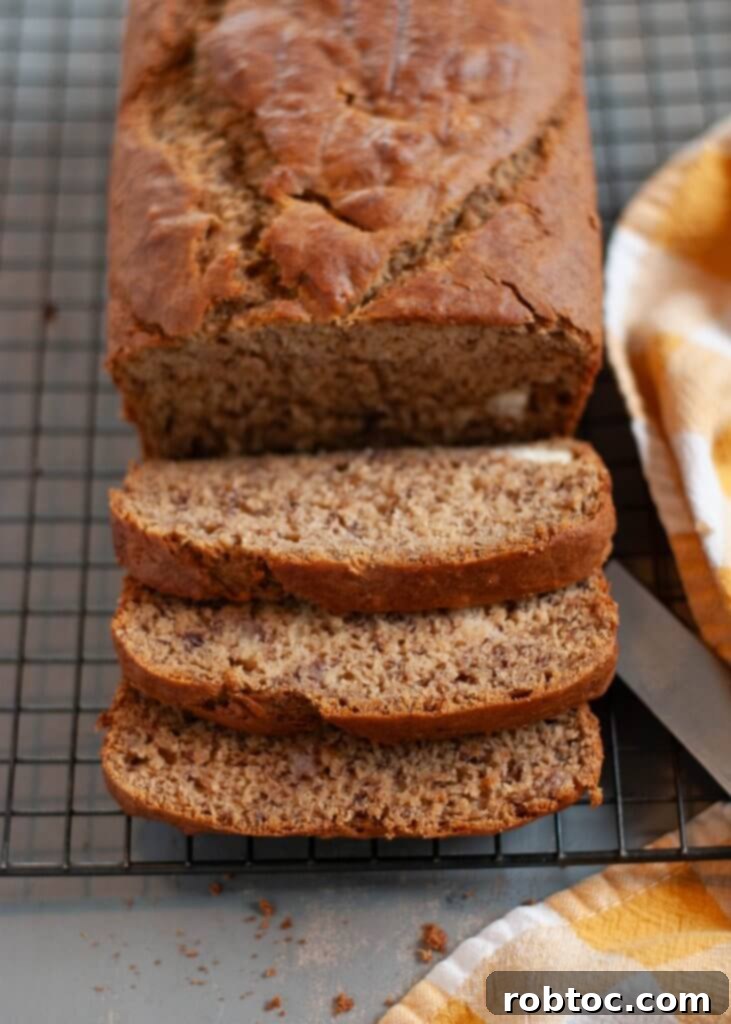
More Gluten-Free Bread Recipes to Explore
Once you’ve fallen in love with this gluten-free banana bread, don’t stop there! The world of allergy-friendly baking is vast and delicious. Here are some other fantastic gluten-free bread recipes worth trying:
- My go-to easy gluten-free bread, perfect for sandwiches and toast.
- Savory and delightful gluten-free vegan breadsticks, great with pasta or soup.
- Sweet and fluffy gluten-free orange rolls, a wonderful treat for breakfast or dessert.
- A plethora of gluten-free muffins (many of which are also dairy-free!), offering a variety of flavors and textures.
Remember that everything on Allergy Awesomeness is gluten-free, so be sure to check out my comprehensive recipe index to discover a wide array of options beyond just the bread category.
Choosing the Right Gluten-Free Flour Blend
Navigating the world of gluten-free living can sometimes feel overwhelming, particularly when it comes to grocery costs. Specialty gluten-free products often come with a higher price tag, frequently costing two to four times more than their conventional wheat counterparts. Because of this, I’m always eager to share more budget-friendly solutions whenever possible, especially for foundational ingredients like flour.
For this gluten-free banana bread recipe, I’ve been delighted to discover that Walmart’s Great Value All Purpose Gluten Free Flour performs exceptionally well. This is the blend I personally recommend and the one featured in the accompanying photographs. Upon reviewing its ingredient list, you’ll notice it shares a very similar composition to the more expensive King Arthur Gluten Free Baking Mix. Both blends typically contain a combination of rice flours (brown and white), starches (like tapioca or potato starch), and often a binder like xanthan gum. This balanced composition is crucial for gluten-free baking, as it mimics the structure and texture that gluten provides in traditional recipes.
While many “cup-for-cup” or “1:1” gluten-free flour blends exist, their exact ratios of flours and starches can vary. This variation can sometimes lead to different results in terms of moisture absorption and texture. For consistent success with this banana bread, sticking to a blend known to work well, like the Great Value or King Arthur options, is highly recommended. If you use a different brand, be aware that you might need to slightly adjust the liquid content to achieve the ideal batter consistency.
Essential Tools for Your Baking Success
Having the right tools at hand will make your gluten-free banana bread baking experience smooth and enjoyable, ensuring fantastic results:
- Measuring cups and spoons: For accurately measuring liquid and dry ingredients.
- Large mixing bowl: Essential for combining all your ingredients without making a mess.
- Electric beaters or stand mixer: With both whisk and paddle attachments, these tools make mashing bananas and mixing batter effortless and efficient.
- Spatula: Perfect for scraping down the sides of the bowl to ensure all ingredients are thoroughly incorporated.
- 9×5 inch bread pan: The ideal size for baking this loaf to perfection.
- Non-stick cooking spray: For greasing your bread pan, ensuring easy release of the baked loaf.
- Digital kitchen scale: Highly recommended for precise ingredient measurement, especially for bananas and flour, guaranteeing consistent results (see our tips section).
- Instant-read digital thermometer: The most reliable tool for checking the internal temperature of your bread, ensuring it’s cooked through without being overbaked (see our tips section).
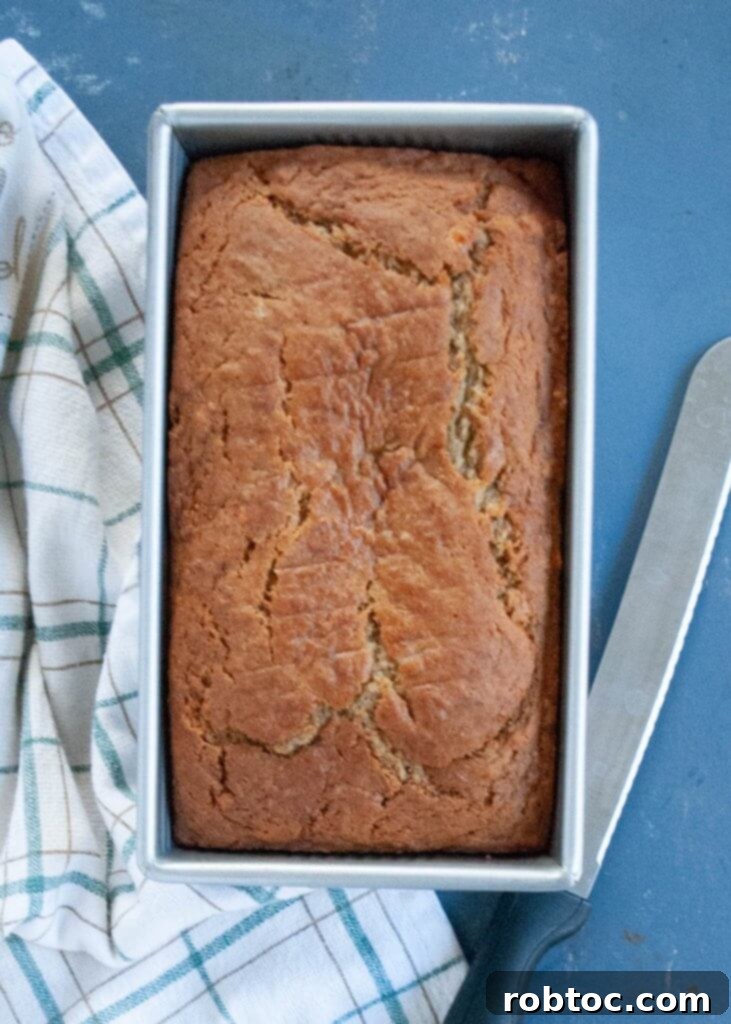
Optimal Storage for Gluten-Free Banana Bread
Proper storage is crucial for maintaining the freshness and delicious texture of your gluten-free banana bread. For the initial day or two, I recommend keeping your loaf at room temperature in an airtight container. However, there’s a nuanced approach required, especially with gluten-free baked goods and depending on your living environment.
If you live in a humid climate, or if you completely seal the container while the bread is still warm, you risk trapping too much moisture. This excessive moisture can cause the bread to become “stodgy” or gummy, an undesirable texture often linked to the rice flours and starches prevalent in gluten-free blends. To combat this, I often leave my airtight container open just a tiny crack. Alternatively, if I notice too much moisture has accumulated when I go back for another slice, I might even leave the container completely open to the air for a while to allow some of that moisture to evaporate. There isn’t one rigid rule; it truly depends on your local climate and your observation of the bread’s texture. Regularly checking on it (which provides a perfect excuse to sample another slice!) will help you gauge the best approach.
If you anticipate not finishing the entire loaf within 1-2 days, slicing it and freezing the individual portions is an excellent long-term storage solution. This way, you can easily pull out a slice or two whenever a craving strikes, thaw it on the counter, or even pop it in the toaster for a warm, fresh-tasting treat. Freezing preserves the quality much better than extended refrigeration for most quick breads.
Considering Halving the Recipe for Smaller Loaves
If you’ve ever struggled to get the center of your gluten-free bread to cook through perfectly, or if you simply prefer smaller portions, halving this recipe is a smart option. Gluten-free breads, particularly quick breads, often bake more efficiently and evenly when they are not too tall or thick. A smaller loaf allows the heat to penetrate the center more easily and thoroughly, reducing the risk of a raw or undercooked middle.
You can either half the recipe completely to bake one smaller loaf, or you can prepare the full recipe and divide the batter into two smaller bread pans to bake two modest loaves. If you opt for smaller loaves, they typically require less baking time, often being done around 30 minutes. However, always use an instant-read thermometer to check their internal temperature (200-205°F / 93-96°C) to ensure they are fully cooked.
Watch the Recipe: Step-by-Step Video Guide
For all you visual learners out there, I’ve got you covered! I’ve created a comprehensive video that walks you through the entire process of making this delicious gluten-free banana bread, from start to finish. The video should auto-populate and play within this page. If for some reason it doesn’t appear, you can find it embedded directly into the bottom of the recipe card below. And, if all else fails, you’re always welcome to view it directly on my YouTube channel for easy access.
Gluten Free Banana Bread with Video
14 slices/1 loaf
10 minutes
1 hour
5 minutes
5 minutes
This incredibly soft and moist gluten-free banana bread, infused with delightful notes of cinnamon and nutmeg, is a perfect treat. Tender and flavorful, it’s excellent for a snack or breakfast. This easy gluten-free banana bread recipe will make you wish your bananas would ripen faster! It’s also naturally free of dairy, soy, fish, shellfish, peanuts, and tree nuts, making it a wonderful top 7 allergen-friendly option.
Ingredients
- 16 ounces/1 pound of peeled ripe bananas (approx. 4-5 medium bananas; best to weigh)
- 6 Tablespoons canola oil (or your preferred neutral oil)
- 1 cup brown sugar
- 2 large eggs
- 1 tsp vanilla extract
- 1 tsp salt
- 1 tsp ground cinnamon
- 1/4 tsp ground nutmeg
- 1 tsp baking soda
- 1 tablespoon baking powder
- 2 cups all-purpose gluten-free flour blend
Instructions
- Preheat your oven to 350 degrees F (175 degrees C).
- Grease a 9×5 inch bread pan with a non-stick spray and set aside.
- In a large mixing bowl or a stand mixer with a whisk attachment, mash the bananas thoroughly. You can use a fork or electric beaters.
- Add the oil and brown sugar to the mashed bananas and mix until well combined.
- Stir in the eggs and vanilla extract until fully incorporated.
- If using a stand mixer, switch to the paddle attachment to prevent dry ingredients from sticking in the whisk. If using electric beaters, continue on low speed.
- Add the salt, cinnamon, nutmeg, baking soda, and baking powder. Mix until well blended.
- Gradually add the gluten-free flour blend and mix just until everything is combined, being careful not to overmix.
- Use a spatula to scrape down the sides and bottom of the bowl, ensuring all ingredients are fully incorporated.
- Pour the batter into the greased bread pan. Tap the pan on the counter a few times to level the batter.
- Place the pan on the center rack of your heated oven and bake for 30 minutes.
- After 30 minutes, loosely cover the top of the bread with aluminum foil and bake for an additional 30 minutes (total baking time 60 minutes).
- When the second timer goes off, remove the foil and insert a digital read thermometer into the center of the bread (without touching the bottom). The bread is done when it reaches an internal temperature of 200-205 degrees F (93-96 degrees C). If not, bake for a few more minutes with the foil back on (unless you want more browning).
- Once cooked, turn off the oven and remove the bread. Allow it to sit in the hot pan for five minutes.
- After five minutes, invert the loaf onto a wire cooling rack to cool completely.
- Slice and enjoy! It’s particularly delicious with a spread of butter or dairy-free butter.
- Store in an airtight container at room temperature for 1-2 days. In humid climates, you might want to vent the container slightly to prevent sogginess. For longer storage, slice and freeze individual portions, then thaw or toast as desired.
Notes
Be sure to read all of the FAQs and tips above the recipe card and watch the video for best success in making this gluten-free banana bread.
*Our allergies, while severe and frequently re-tested, allow us to strictly follow ingredient labels. I do not contact companies regarding ingredient derivatives or potential cross-contact. If your allergies require such diligence, please perform your own research. Product formulations can change, so always re-read labels when you have ingredients in hand. I cannot guarantee any ingredient’s safety; only you can determine what is safe for your specific needs. I merely share what works for our family.
**If you are preparing this for someone with food allergies, and you do not personally have allergies, I highly recommend having them verify every brand and ingredient you use to ensure their suitability. Also, discuss with them how to avoid cross-contamination in your kitchen to ensure their safety.
Nutrition Information:
Yield: 14
Serving Size: 1
Amount Per Serving:
Calories: 208Total Fat: 7gSaturated Fat: 1gTrans Fat: 0gUnsaturated Fat: 6gCholesterol: 27mgSodium: 375mgCarbohydrates: 34gFiber: 1gSugar: 17gProtein: 3g
DON’T FORGET TO PIN IT, SO YOU DON’T LOSE IT. BE SURE WHILE YOU’RE THERE TO CHECK OUT MY OTHER DIETARY SPECIFIC PINTEREST BOARDS.