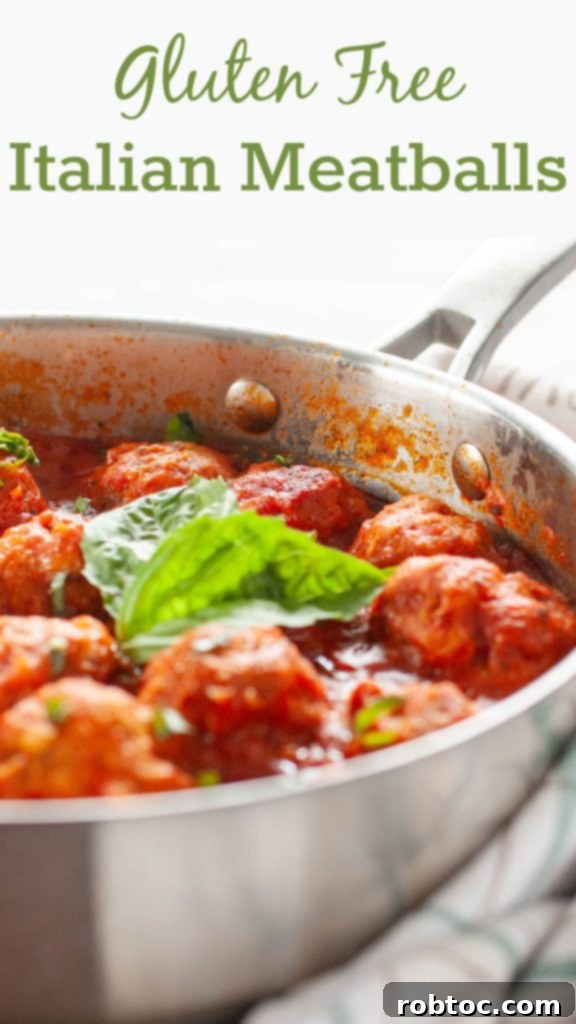
Easy & Authentic Gluten-Free Italian Meatballs: The Ultimate Slow-Simmered Recipe
Indulge in the rich, comforting flavors of classic Italian cuisine with these tender, soft gluten-free meatballs. Slowly simmered to perfection in a flavorful sauce, this recipe guarantees an authentic taste experience without any gluten ingredients. What’s more, this recipe is carefully crafted to be free from fish, peanuts, tree nuts, and sesame, making it a wonderful option for many dietary needs and allergies. Prepare to rediscover the joy of homemade meatballs that are bursting with traditional Italian goodness.
This post contains affiliate links.
What Makes These Gluten-Free Meatballs Stand Out?
This recipe revolutionizes how you make gluten-free meatballs. Unlike many traditional recipes that call for browning or baking meatballs before simmering, our method skips these extra steps entirely. This means less mess, fewer dishes, and a more streamlined cooking process, allowing you to enjoy your delicious Italian dinner sooner. The secret lies in a unique slow-simmering technique that yields exceptionally juicy and tender meatballs every time.
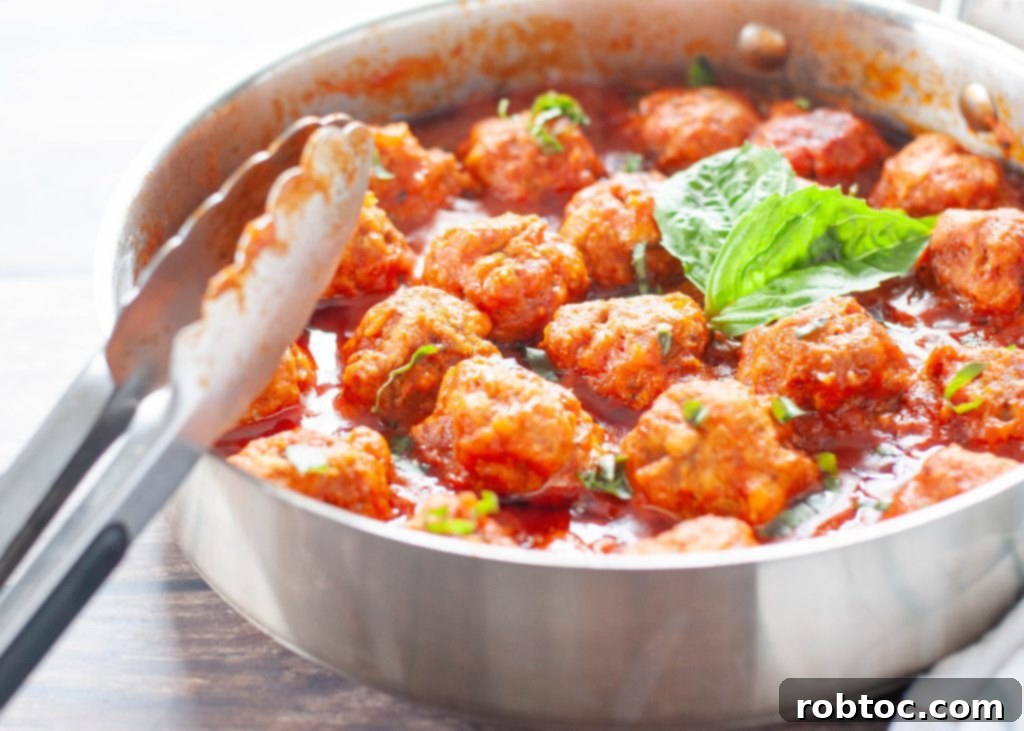
Often, browning meatballs in a pan or oven creates a tough exterior crust, which can detract from the overall enjoyment of the dish. I’ve found that prolonged simmering directly in the sauce is the superior approach. This gentle cooking method ensures the meatballs remain incredibly moist throughout, absorbing all the wonderful flavors of the marinara. There’s no need to worry about them falling apart; by allowing each side to simmer for a generous 25 minutes, the meatballs set beautifully, maintaining their perfect round shape and integrity.
Beyond the texture benefits, simmering the meatballs in the sauce also creates a symbiotic flavor exchange. The rich flavors of the meat infuse into the sauce, deepening its complexity, while the sauce, in turn, permeates the meatballs, making every bite incredibly savory. A simple flip halfway through is all it takes to ensure even cooking and flavor distribution. You can entirely skip the traditional “panade” step, as the extended simmering achieves the same tenderizing effect by allowing the breadcrumbs to fully absorb the liquids and swell within the meat mixture.
My recipe also elevates the flavor profile with a generous tablespoon of minced garlic, fresh Parmesan cheese, a robust blend of Italian seasoning herbs, and a touch of nutmeg. Furthermore, using a blend of both ground beef and ground pork provides a depth of flavor and ideal texture that a single meat type often misses. This combination results in authentic Italian meatballs that will impress even the most discerning palates. Mangia!
Choosing the Right Gluten-Free Breadcrumbs
One of the best aspects of this recipe is that you don’t need to hunt for expensive, specialty store-bought gluten-free breadcrumbs. Often, these are hard to find and can be quite pricey. Instead, this recipe encourages using a loaf of gluten-free bread you likely already have in your pantry or can easily find at any grocery store. Making your own breadcrumbs ensures freshness and cost-effectiveness.
I personally recommend Schar Artisan Baker White Bread for its excellent texture, but other popular and reliable gluten-free bread brands like Franz, Canyon Bakehouse, Little Northern Bakehouse, and Udi’s work perfectly. The key to consistency, regardless of the brand, is using the correct weight of breadcrumbs, not a specific number of slices. Gluten-free loaves can vary in slice size, so a digital food scale is essential for accuracy. You won’t need to pre-dry the bread; using fresh, soft bread directly from the package helps absorb liquids efficiently, contributing to the exceptionally tender texture of the meatballs.
Should you prefer not to use bread, I offer alternative gluten-free options. My Italian dairy-free gluten-free meatball recipe creatively uses gluten-free oats instead. For those who are true meatball enthusiasts and enjoy exploring diverse flavors, don’t miss my Teriyaki Meatballs and Asian Quinoa Meatballs, which offer exciting global twists on this classic comfort food.
Essential Equipment for Perfect Gluten-Free Meatballs
To successfully create these savory Italian meatballs, having the right kitchen tools makes the process smoother and ensures the best results. Here’s what you’ll need:
- Digital food scale: Absolutely crucial for accurately measuring gluten-free breadcrumbs by weight, ensuring consistent texture regardless of bread brand.
- Large mixing bowl and spoon: For combining all your meatball ingredients thoroughly.
- Cookie scoop: Not just for cookies! This tool is fantastic for portioning out uniform meatballs, guaranteeing they cook evenly and look professionally made.
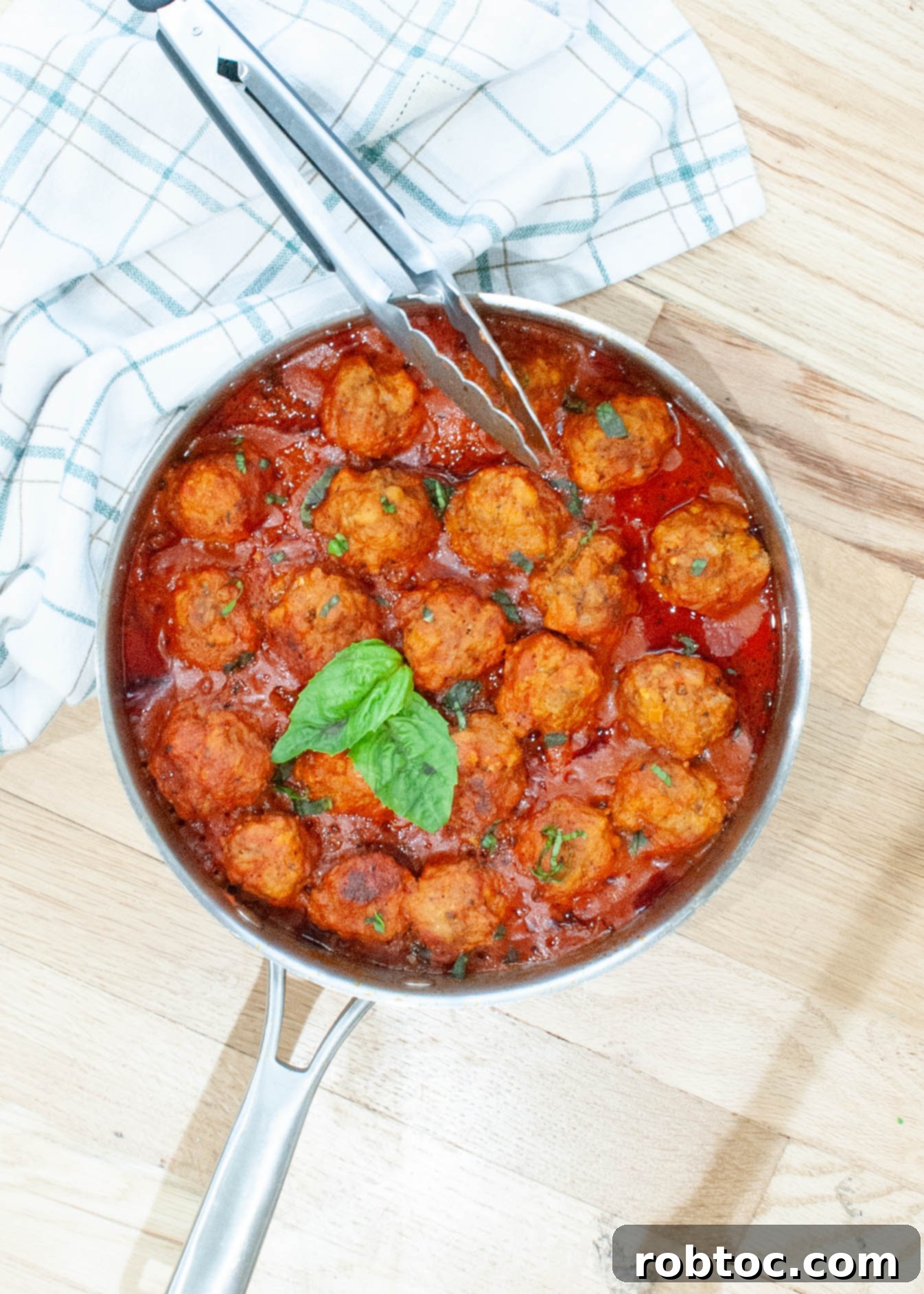
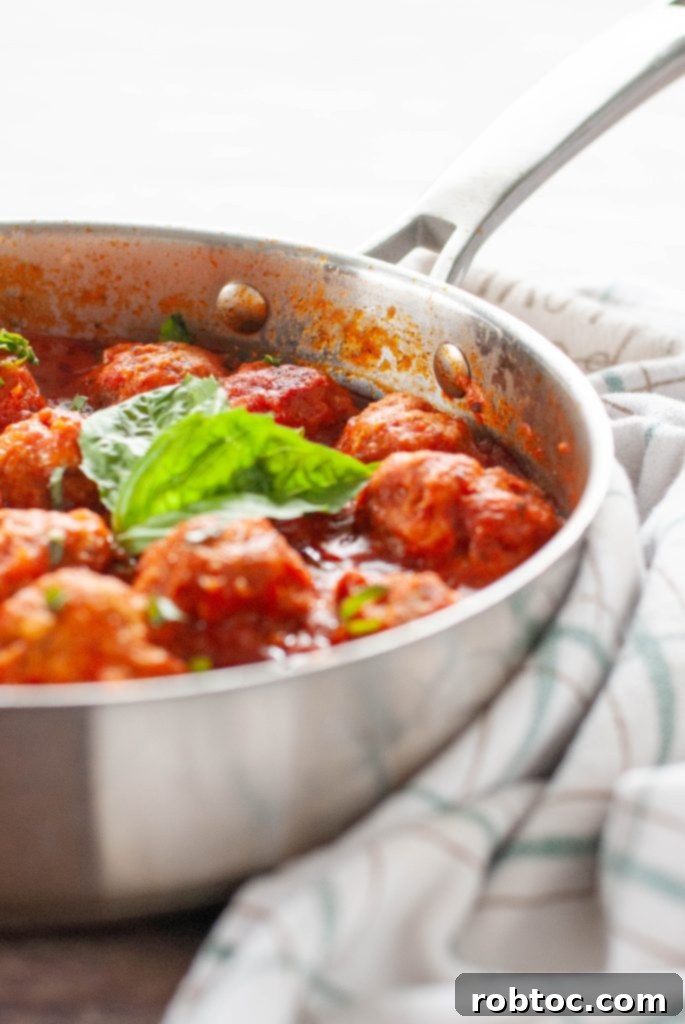
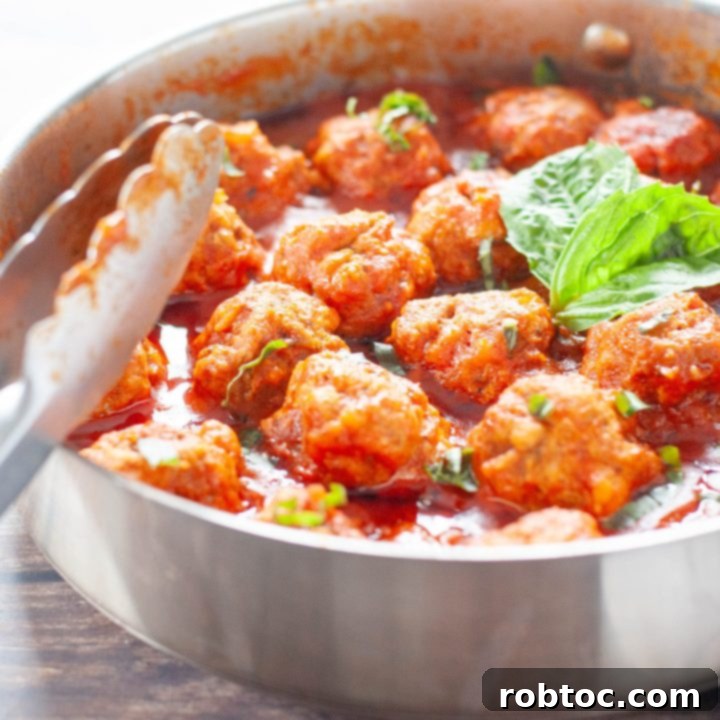
- Large skillet with a tight-fitting lid, or a Dutch oven: This is where the magic happens! A good lid is essential for simmering. I personally alternate between my Calphalon skillet (as seen in the video and pictures) and my trusty Lodge Dutch oven.
- Large pot: For boiling your chosen gluten-free pasta.
- Colander/strainer: To drain your cooked pasta.
- Cutting board and chef’s knife: For finely mincing your onion and preparing any fresh garnishes.
- Food processor: While optional, it’s highly recommended for quickly transforming bread slices into perfectly fine breadcrumbs. It can also assist with onion chopping.
- Tongs: For gently flipping the meatballs during simmering. While you can use a spoon, tongs offer better grip and control.
To Grate or Not to Grate the Onion?
Some meatball recipes suggest grating the onion to ensure it’s incredibly fine and “melts” into the meat mixture as it cooks, becoming imperceptible. This is certainly an effective technique, and if you find a box grater makes the process easier for you, then absolutely go for it! It saves your eyes from potential irritation and minimizes prep time.
However, with decent knife skills, you can achieve the same result by simply dicing your yellow onion very finely. I personally prefer this method as it avoids the extra cleanup of a grater, and the small pieces blend seamlessly into the meatballs during cooking, leaving no visible remnants—perfect for those who might be sensitive to onion texture but appreciate its flavor contribution. Onions are vital for adding both moisture and a subtle savory depth to the meatballs, so don’t be tempted to skip them.
For those who really dislike chopping onions by hand, or want to make the most of their tools, a third option is to use your food processor. After you’ve used it to make your breadcrumbs, you can quickly pulse the onion to a fine mince, saving time and tears!
The Art of Mixing Meatball Ingredients
When it comes to combining the meatball ingredients, there’s no substitute for your own two hands. After a good wash, using your hands allows you to truly feel the mixture, ensuring all ingredients are thoroughly and evenly incorporated. Gently squeeze and mash the mixture until everything comes together. The key here is to mix until just combined, being careful not to overmix. Overmixing can lead to tougher meatballs, as it can cause the proteins in the meat to become too dense. A light touch ensures a tender, juicy final product.
Is a Cookie Scoop Really Necessary for Forming Meatballs?
While you certainly don’t *have* to use a cookie scoop, I highly recommend it for several compelling reasons. A cookie scoop helps you portion the meat mixture consistently, ensuring that all your meatballs are the same size. This uniformity is crucial for even cooking, meaning every meatball will be perfectly done at the same time. Beyond practicality, uniformly shaped meatballs simply look more appealing on the plate, elevating the presentation of your meal. Plus, if you own one, you’ll find endless uses for it—I have many gluten-free cookie recipes where it comes in handy! My cookie scoop has been a cherished kitchen tool for years.
Homemade Sauce or Jarred Marinara?
If you’re fortunate enough to have a cherished family marinara recipe, perhaps one passed down from your grandmother, or a go-to homemade sauce, by all means, use it! Nothing beats the sentimental value and unique flavor of a personal recipe. However, for everyday convenience without sacrificing taste, a high-quality bottled spaghetti or marinara sauce is a fantastic time-saver. I find many store-bought options are incredibly delicious and significantly cut down on prep time.
For this recipe, I often reach for Prego Roasted Garlic & Herb sauce. Its robust flavor perfectly complements the meatballs, making for an effortless yet incredibly satisfying meal. Don’t hesitate to choose your favorite brand; the quality of your sauce will significantly impact the overall flavor of your dish.
Ensuring Your Meatballs Are Cooked to Perfection
The key to perfectly cooked meatballs in this recipe is a gentle, consistent simmer. I start by bringing my sauce to a low boil, then immediately reduce the heat to medium-low to maintain a slow, steady simmer. Cooking the meatballs covered over medium-low heat for a total of 50 minutes ensures they are cooked through and incredibly tender. To be absolutely certain of their doneness, especially if you’re new to this method, you can use a digital food thermometer. Meatballs should reach an internal temperature of at least 160 degrees Fahrenheit (71 degrees Celsius) for safe consumption. This peace of mind ensures a delicious and worry-free meal.
Why a Kitchen Scale and Food Processor Are Your Best Friends
I completely understand the desire to minimize kitchen tools and cleanup. However, for gluten-free cooking, a digital kitchen scale and a food processor are incredibly valuable, especially for this meatball recipe. Gluten-free bread slices can vary significantly in size, not only between different brands but even within the same loaf! The first slice might be smaller than a slice from the middle of the loaf. This variability means relying on “number of slices” will result in wildly inconsistent amounts of bread, which directly impacts the texture of your meatballs.
By measuring breadcrumbs by weight (150g in this recipe), you guarantee consistency every time, regardless of the bread you use. Digital kitchen scales are very affordable and a wise investment for precise baking and cooking. While you *could* try tearing or dicing your bread into very fine pieces by hand, a food processor accomplishes this task in mere seconds, creating uniform breadcrumbs that blend seamlessly into the meat mixture, contributing to that perfect tender texture. It’s a small investment for a significant improvement in consistency and efficiency.
Choosing the Best Parmesan Cheese
For these meatballs, I typically use a 5 oz tub of Kraft Grated Parmesan Cheese. This amount provides plenty for the meatball mixture itself, with a good portion left over for sprinkling generously on top of the finished dish—because who doesn’t love extra Parmesan? I prefer finely grated cheese because its almost powdery consistency melts and incorporates more easily into the meatball mixture compared to coarser shreds or slices. This ensures an even distribution of flavor throughout each meatball. Of course, feel free to use your preferred brand of grated Parmesan; the goal is to use a fine grind for optimal blending.
What Gluten-Free Noodles Pair Best with Meatballs?
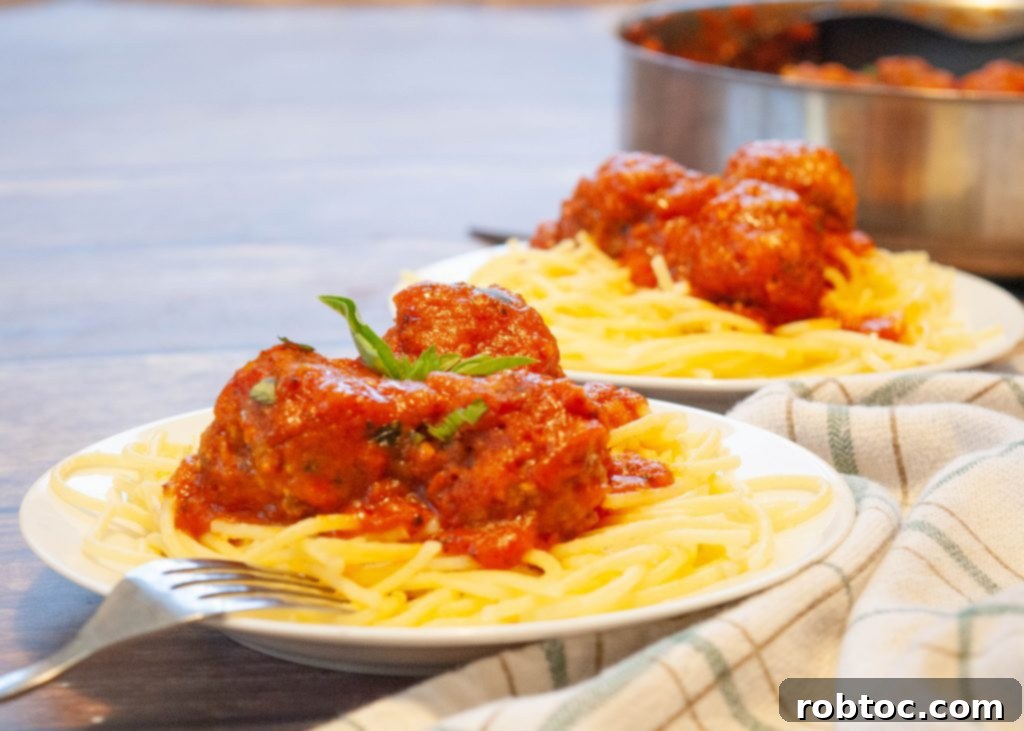
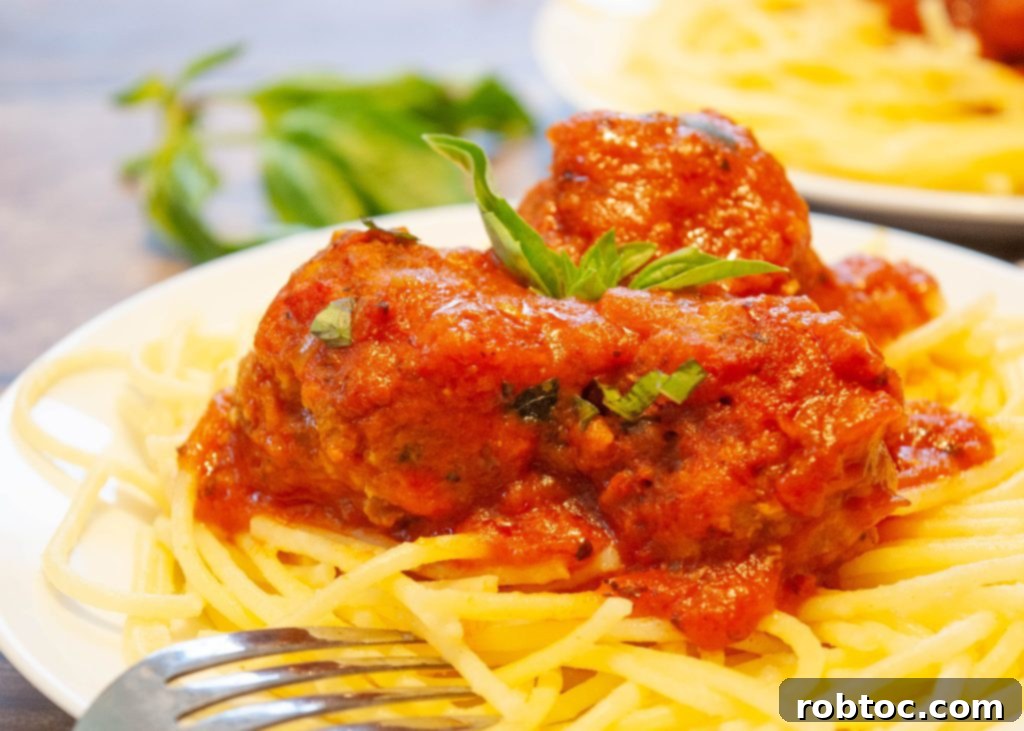
Meatballs and spaghetti are a timeless duo, much like Lady and the Tramp! While gluten-free spaghetti is often the easiest long pasta to find, nearly any pasta shape or size can be a wonderful companion. Consider angel hair for a lighter bite, or bucatini for a thicker, more substantial noodle that captures the sauce beautifully. Always cook gluten-free pasta according to package directions, as it can sometimes be more delicate than traditional pasta and prone to becoming mushy if overcooked.
For a lower-carb option, you can skip the pasta altogether and serve your meatballs over vegetable noodles, such as zucchini or spaghetti squash. Or, for a truly indulgent meal, transform them into a delicious meatball sub! Simply pile the meatballs and sauce onto your favorite gluten-free sandwich rolls. We particularly love Schar’s Ciabatta rolls or their sandwich rolls for this purpose.
When it comes to gluten-free pasta brands, I consistently have great results with Barilla or Jovial, both of which offer excellent texture and flavor.
Gather Your Ingredients: What You’ll Need
Crafting these delectable gluten-free Italian meatballs requires a thoughtful selection of fresh and flavorful ingredients:
- Ground beef: Opt for 80-90% fat for the best flavor and moisture.
- Ground pork: This adds a crucial depth of flavor and tender texture when blended with beef.
- Egg: Acts as a binder, helping the meatballs hold their shape.
- Grated parmesan cheese: For savory, umami notes.
- Jarred, minced garlic: A convenient way to add intense garlic flavor.
- Gluten-free bread: As discussed, homemade breadcrumbs are key (see above for brand options).
- Yellow onion: Finely minced, it adds moisture and savory flavor.
- Salt and Pepper: Essential seasonings to enhance all the other flavors.
- Dried Italian Seasoning: A blend of classic Italian herbs for authentic taste.
- Ground nutmeg: A small but important addition that brightens and deepens the overall flavor profile.
- Milk (1-2% is fine): Contributes to the tender, moist texture of the meatballs.
You’ll notice the recipe calls for half a pound of each protein (ground beef and ground pork). This quantity is perfectly sized for cooking in a standard large skillet or Dutch oven, as shown in the recipe photos. If you typically buy meat in one-pound containers, you have a couple of options: you can easily double the recipe and cook it all at once (using two skillets/Dutch ovens if necessary) to yield a larger batch for freezing. Alternatively, you can use half a pound of each meat and freeze the remaining raw meat for your next batch of meatballs. This approach offers flexibility and helps reduce food waste, allowing you to choose what works best for your family and schedule.
Storing Leftover Gluten-Free Meatballs
Any leftover gluten-free meatballs can be stored in an airtight container in your refrigerator for 2-3 days. For optimal texture and enjoyment, I highly recommend storing the cooked pasta and meatballs separately. Gluten-free pasta, depending on the brand, can be quite delicate and may turn mushy or break down if left soaking in sauce in the fridge or if reheated too aggressively. By keeping them separate, you preserve the ideal texture of both the pasta and the meatballs, ensuring delicious leftovers every time.
Freezing Gluten-Free Meatballs for Later
While my family of six rarely leaves me with extra meatballs to freeze, I can confidently share established techniques for freezing meatballs that will work perfectly with this recipe. Freezing is a fantastic way to prep meals ahead of time or save leftovers for a busy week.
Freezing Uncooked Meatballs:
- Prepare the meatball mixture as directed in the recipe.
- Using your cookie scoop, form the meatballs and roll them into uniform balls.
- Arrange the raw meatballs on a baking sheet lined with parchment paper or a silicone mat, ensuring they are spaced out and not touching.
- Place the entire baking sheet into the freezer for 2-4 hours, or until the meatballs are completely frozen solid. This “flash freezing” step prevents them from sticking together in one large mass.
- Once frozen, transfer the meatballs from the baking sheet to an airtight freezer-safe container or a heavy-duty freezer bag. Label with the date. They can be frozen for up to two months.
- When you’re ready to cook, thaw the frozen meatballs overnight in the refrigerator.
- The following day, add the thawed meatballs directly to your simmering sauce and cook as directed in the recipe, ensuring they reach an internal temperature of 160 degrees F (71 C) with an instant-read digital thermometer.
Freezing Cooked Meatballs:
- Cook the meatballs fully in the sauce according to the recipe instructions.
- Allow the meatballs and sauce to cool completely to room temperature. This is crucial to prevent ice crystal formation and preserve texture.
- Transfer the cooled meatballs and sauce into a flat, freezer-safe container or heavy-duty freezer bag. Freezing them flat helps them thaw more quickly. Label with the date. Freeze for up to two months.
- When reheating, there’s no need to thaw them beforehand. Simply transfer the frozen meatballs and sauce to a pot on the stove. Cook over medium heat, stirring occasionally, until the sauce is simmering and the gluten-free meatballs are thoroughly heated through.
What to Serve Alongside These Italian Meatballs
To complete your delightful Italian meal, consider pairing these savory meatballs with a few complementary dishes. I love serving them with a sprinkle of fresh basil on top, which adds a vibrant pop of color and a lovely aromatic freshness. Complementary green vegetables are always a good choice. Steamed or roasted broccoli or asparagus are personal favorites that balance the richness of the meatballs beautifully. If you’re looking for an exceptional asparagus side, my balsamic asparagus recipe is absolutely divine.
For an authentic Italian restaurant experience right at home, preparing homemade herbed gluten-free breadsticks will truly elevate your meal, making you feel like you’re dining at your favorite Italian eatery. To round out the meal, a simple green salad with a light vinaigrette, or even a glass of your favorite Italian red wine, would be perfect. For dessert, consider something light like fresh berries or a gluten-free panna cotta.
Explore More Gluten-Free & Allergy-Friendly Italian Recipes
Yes, absolutely! My entire website is dedicated to delicious gluten-free recipes, and I have a treasure trove of hearty Italian-inspired dinners that are perfect for those with various dietary needs. If you specifically need a dairy-free version of meatballs, I highly recommend checking out my Gluten Free Dairy Free Italian Meatballs. Beyond meatballs, dive into these other fantastic Italian-inspired meals:
- Tomato Basil Soup: A comforting and flavorful classic.
- Minestrone Soup: A wholesome, vegetable-packed favorite.
- Pizza Soup: All the flavors of pizza in a comforting bowl.
- Italian Pork Sliders: Perfect for a party or a quick weeknight meal.
- Chicken Cacciatore: A rustic and satisfying chicken dish.
- Grain Free Socca Pizza: A unique and delicious pizza alternative.
- Spinach and Sausage Pasta: A simple, flavorful, and quick weeknight dinner.
- Lemon Chicken Pasta: Bright, fresh, and irresistibly zesty.
- Allergy Friendly Ragu: A rich and hearty sauce for any pasta.
- Tuscan Chicken: Creamy and savory, ready in 30 minutes.
- Chicken Mushroom Marsala: An elegant dish made easy.
- Sausage and Peppers Pasta: A quick, flavorful, and satisfying meal.
- Red Pepper Pasta: A vibrant and delicious vegetarian option.
Watch the Recipe Video!
Yes, I’ve created a comprehensive video tutorial to guide you through every step of making these homemade gluten-free meatballs! Watching the simple process unfold visually can be incredibly helpful, especially if you’re new to gluten-free cooking or managing food allergies. My goal is to empower you to enjoy this classic Italian dinner with confidence, even if you have Celiac disease, gluten intolerance, or other food allergies. The video should auto-populate on this page. If you don’t see it, it is embedded at the bottom of the recipe card. And if all else fails, you can always view it directly on my YouTube Channel!
Gluten Free Meatballs
20 meatballs
10 minutes
50 minutes
50 minutes
Tender, soft meatballs slowly cooked in sauce make for a flavorful Italian dinner. Even without any gluten ingredients, these still taste authentic and full of flavor. These are also fish, peanut, tree nut and sesame free too.
Ingredients
- 1/2 pound ground beef, 80-90% fat
- 1/2 pound ground pork
- 1 egg
- 1/4 cup grated parmesan
- 1 TBSP jarred, minced garlic
- 150g gluten-free breadcrumbs (see above for options)
- 1/2 cup yellow onion, finely minced or grated
- 1 tsp salt
- 1/2 tsp pepper
- 1 and 1/2 Tbsp dried Italian seasoning
- 1/4 tsp ground nutmeg
- 3 TBSP milk
- Jar of your favorite sauce, I use Prego Roasted Garlic & Herb, 24 oz
- Cooked gluten-free noodles for serving over (if desired, or use for meatballs subs, or veggie noodles for lower carb)
Instructions
- Using your digital kitchen scale, measure out the 150g gluten-free bread pieces.
- Place the pieces in your food processor and pulse until they are small breadcrumbs.
- In a large mixing bowl, combine the beef, pork, egg, paremsan cheese, garlic, breadcrumbs, onion, salt, pepper, Italian seasoning, nutmeg and milk.
- Mix with clean hands until everything is combined.
- In a large skillet (that has a lid) or Dutch oven pour your jarred sauce and turn the heat to medium.
- Using a cookie scoop, form your meatballs and place them in the sauce.
- Once the sauce starts to bubble, adjust the heat to medium low and place the lid.
- Set a timer for 25 minutes.
- When the timer dings, take some tongs and flip the meatballs.
- Set an additional timer for 25 minutes.
- During the last bit of the 25 minutes, prepare your gluten-free noodles according to package directions, drain and set aside. Or, get your hoagie rolls ready, or whatever else you’ll be serving the meatballs with.
- After 50 minutes total of cooking, your meatballs will be done.
- Serve over the warm noodles, and sprinkle additional parmesan cheese on top, and garnish with fresh basil if desired.
- Meatballs will keep 3 days in an airtight container in the fridge.
- For freezzing directions, see above recipe card.
Notes
Be sure to watch the video and read the extra directions above the recipe card for FAQs.
Adapted from my gluten-free dairy-free meatballs.
*Our allergies, while severe and that get re-tested yearly, are such that we can go strictly by what’s on the label. I do not call companies to see what things are derived from, or call manufacturers to see about potential cross contact. If your allergies require you to do so, please do your own homework. I cannot assure you of any ingredient’s safety, only you can do that. I simply share what works for our family.
**If you are going to feed this to someone with food allergies, and you yourself do not have food allergies, I HIGHLY recommend having them check every single brand and ingredient you are using, to ensure they’re OK with each part of the recipe. And, to make sure you’ve talked to them about how to avoid cross contamination in your kitchen.
Nutrition Information:
Yield: 20
Serving Size: 1
Amount Per Serving:
Calories: 109Total Fat: 5gSaturated Fat: 2gTrans Fat: 0gUnsaturated Fat: 3gCholesterol: 31mgSodium: 217mgCarbohydrates: 7gFiber: 1gSugar: 1gProtein: 8g
DON’T FORGET TO PIN IT, SO YOU DON’T LOSE IT. WHILE THERE, BE SURE TO CHECK OUT MY OTHER GLUTEN-FREE PINS!